
-
originally published on crossfit.com
- Jeff Glassman
Part I
A model is a container of Modern Science (empirical science, excluding Post Modern [Popperian or academic] Science, and simply science here). Science is thereby containerized in models. The domain of science is the Real World, capitalized because it exists axiomatically. Science is a branch of knowledge, in particular objective knowledge. It possesses objectivity by expressing relationships, AKA experiments, only among facts, where a fact is an observation reduced to measurements and compared with standards. Measurements include among many, many other things the usual Euclidean parameters of space, Newtonian parameters, electromagnetic variables, and thermodynamic variables, but especially the statistics of facts, the prototype of measures that led to modern Measure Theory in mathematics.
An axiom of science is that every fact has a statistical uncertainty. A model is an expression of an arrangement of facts that exposes, or seeks to expose, a pattern among variables or parameters expressed as records of facts, identifying candidate variables as independent and others as dependent variables, or, more generally, as Causes and Effects, respectively. This comports with the Causation Axiom that every observable Event in the Real World has a discoverable Cause in the Real World, and with the scientific principle of Causality which states that a Cause must precede all of its Effects. A model matures by elimination of variables and parameters not essential to its Cause and Effect relationships, hence to its predictions. This housecleaning is known as Occam’s Razor. Predictions can be forward or backward in time, the latter being sometimes called retrodictions. Prediction relates to the time of observation, not the time of occurrence, as in cosmology, archeology, and genetics.
Part II
A theory is a particular quality of model in the graduated schema of conjecture, hypothesis, theory, and law. A Conjecture is a model incomplete in one or more essential element, but which has no contradictory facts in its domain. A Hypothesis is a complete Conjecture, including at least one prediction from at least one candidate Cause & Effect relationship. A Theory is a Hypothesis which has at least one empirically (statistically) validated nontrivial prediction. A Law is a Theory which has had every actual or implied prediction of the model validated.
Part III
Multiple models may apply to the same set of variables and parameters, a condition frequently associated with the scale of the modeling, and sometimes referred to micro models, macro models, and (rarely but for completion) mezzomodels.

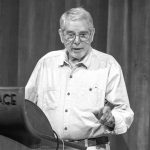
Jeff Glassman has a B.S., M.S., and Ph.D. from the UCLA Engineering Department of Systems Science, specializing in electronics, applied mathematics, applied physics, and communication and information theory. For more than half of his three decades at Hughes Aircraft Company, he was division chief scientist for Missile Development and Microelectronics Systems. Since retiring from Hughes, he has consulted in various high-tech fields. He is the author of the book Evolution in Science: California Dreaming to American Awakening (1992).
He has also worked as a bush pilot for Alaska Helicopters and was a naval aviator in helicopters and single- and multiengine aircraft, instructor pilot, and maintenance test pilot, making lieutenant commander in the reserves before resigning with a total of 12 years.
References

Let's start with the truth!

Support the Broken Science Initiative.
Subscribe today →
recent posts
If you're seeing this page, you are not currently logged into a profile with access to Affiliate Owners / Medical.
At the 2026 Unbreakable Health Retreat in Miami, Emily Kaplan hosted a panel with Bob Kaplan, Professor Thomas Seyfried, and Dr. Derek Lee on what it means to treat cancer as a metabolic disease. They discussed the glucose-ketone index (GKI), nutritional ketosis, and strategies aimed at restricting the fuels cancer cells depend on while considering how metabolic therapy can fit alongside standard cancer treatment.
The conversation also addressed the practical realities patients face when trying to pursue a metabolic approach within the conventional oncology system, including questions about nutrition, repurposed drugs, inherited cancer risk, and how to evaluate different treatment options. Seyfried and Lee connected these clinical questions back to mitochondrial dysfunction, fermentation, and the metabolic vulnerabilities that may offer additional targets for cancer treatment.
An abbreviated version of this discussion is available here, for free.
At the 2026 Unbreakable Health Retreat in Miami, Professor Thomas Seyfried presented the case that cancer is fundamentally a mitochondrial metabolic disease rather than primarily a genetic one. He contrasts the dominant somatic mutation theory with a metabolic model in which impaired mitochondrial respiration drives a shift toward fermentation, dysregulated cell growth, and the mutations commonly associated with cancer.
Citing the work of Otto Warburg and research from his lab at Boston College, Seyfried explains how cancer cells rely heavily on fermentable fuels—particularly glucose and glutamine—and why mitochondrial dysfunction sits upstream of many of the genetic abnormalities seen in tumors. He also discusses reactive oxygen species, altered cellular signaling, and the role of mitochondria in regulating cell growth and behavior.
The presentation then turns to the therapeutic implications of this model. Seyfried explains strategies aimed at placing tumor cells under metabolic stress by restricting the fuels they depend on, including ketogenic metabolic therapy and approaches targeting glucose and glutamine. For Seyfried, the therapeutic target follows directly from the biology: restrict the fuels cancer cells depend on, exploit their metabolic weaknesses, and treat mitochondrial dysfunction as the central feature of the disease.
An abbreviated version of this discussion is available here, for free.
MetFix and BSI Members can view the full 54-minute video.


