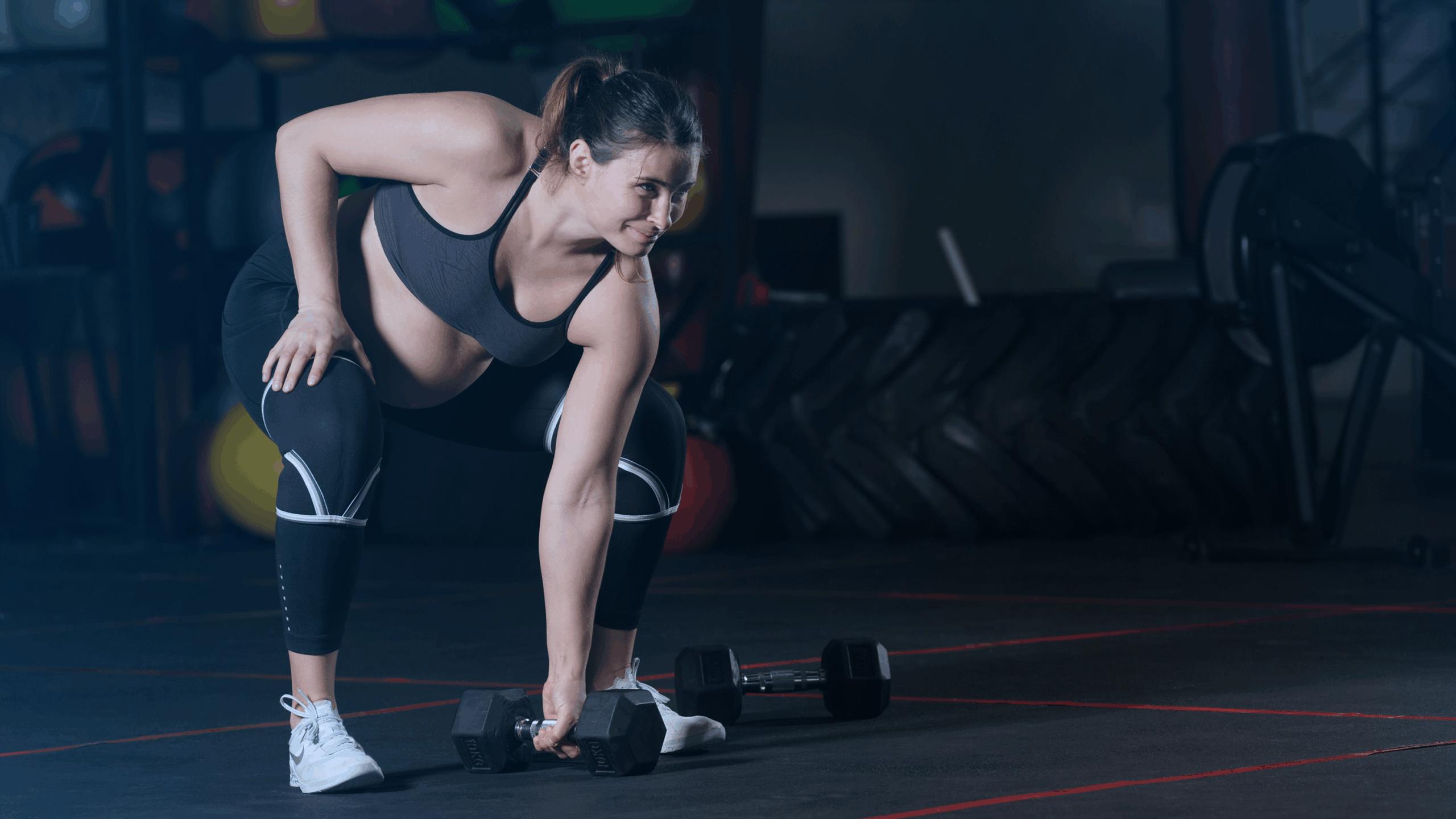
For decades, women have been discouraged from exercising during pregnancy due to outdated beliefs and fear-based messaging about potential harm to the baby. Health professionals once warned that physical activity could cause miscarriage, preterm labor, or restricted fetal growth— claims never supported by strong evidence but that persisted culturally.
This fearmongering created lingering anxiety around movement in pregnancy, leading many women to avoid exercise out of caution, despite modern research showing that staying active is both safe and beneficial for both mother and baby.
It’s time to shift the narrative from exercise being “dangerous” to being strongly recommended.
What the Guidelines Actually Say
The 2019 Canadian Guidelines for Physical Activity throughout Pregnancy, based on all available randomized controlled trials prescribing exercise, state that: “Prenatal physical activity should be considered a front-line therapy for reducing the risk of pregnancy complications and enhancing maternal physical and mental health.” (Mottola et al., 2018, British Journal of Sports Medicine)
Despite clear evidence and guidance from governing bodies, many women are still being discouraged from exercise during pregnancy. And ironically, this avoidance messaging out of “what if something goes wrong” may very well be the dangerous messaging considering regular physical activity has been shown to reduce the risk of:
- Gestational diabetes
- Pre-eclampsia
- Gestational hypertension
- Prenatal depression
- Excess gestational weight gain and postpartum retention
Cesarean section and instrumental delivery - Back and pelvic pain
- Urinary incontinence
How Much Exercise is Recommended?
The benefits of exercise don’t suddenly go away once you are pregnant. Pregnant women should aim to accumulate at least 150 minutes of moderate-intensity activity per week, spread over at least three days (ideally daily), and include resistance training for added benefits. And yes, you can start exercising during pregnancy, even if you weren’t active before. The recommendation is simply to begin gradually, increasing intensity and duration as tolerated.
The 2019 guidelines note that data on high-intensity activity were limited (with the highest intensities studied being around 7 METs, or light jogging). For that reason, they advised performing higher-intensity exercise under supervision. These guidelines were published before more research has come out demonstrating the safety of high intensity exercise in pregnancy discussed below.
What About Athletes, Lifters, and Active Women?
Conservative exercise guidelines often don’t reflect the needs of women who are already athletic—powerlifters, CrossFitters, or those who simply prefer vigorous training. For these women, overly cautious advice can lead to detraining, which isn’t supportive of a strong, healthy pregnancy or postpartum recovery.
Thankfully, recent research challenges this overly conservative stance.
Heavy Resistance Training in Pregnancy
Dr. Christina Prevett—who has been instrumental in this area—conducted a large online survey of 679 women who lifted at least 80% of their 1RM during pregnancy, most of whom were experienced CrossFitters or weightlifters.
Key finding: Heavy resistance training, including Olympic lifts, supine exercises, and the Valsalva maneuver (breath hold during lift), was not associated with increased risk of adverse maternal, fetal, or pelvic floor outcomes in experienced lifters. (Prevett et al., 2023, International Urogynecology Journal)
Rates of gestational hypertension, diabetes, and pre-eclampsia were similar to, or lower than, those in the general population, with no differences found between women who performed or avoided Olympic lifting, supine lifts, or Valsalva.
Important considerations:
- Experience matters. Most participants had nearly 10 years of lifting experience. Starting heavy lifting for the first time while pregnant remains unstudied.
- Consultation is recommended. Women training above guideline levels should work with a healthcare provider familiar with high-intensity exercise during pregnancy.
- Self-monitor. Although common in pregnancy, 37% of participants reported urinary incontinence. Women should know when to stop exercise (e.g., vaginal bleeding, severe pain, or persistent dizziness).
Dr. Prevett’s team concluded that fears about heavy lifting during pregnancy are largely theoretical and unsupported by real-world data, though more prospective studies are needed; some of which have now arrived.
New Research: Safety of Heavy Lifting During Pregnancy
Two recent studies provide direct evidence that women with lifting experience can safely engage in resistance training—including with the Valsalva maneuver and in the supine position—without placing themselves or their babies at risk.
The first of the two studies compared the cardiovascular response to heavy lifting in pregnant and non-pregnant women with at least 2 years of lifting experience. The participants worked their way up to 10 reps at 90% of their 10RM with both free breathing and Valsalva maneuver for back squat, bench press, and deadlift. Immediately after each set, fetal HR and umbilical blood flow was assessed. The results showed no changes in fetal HR across all lifts, no fetal bradycardia or tachycardia at any timepoint, and all umbilical blood flow parameters remained within normal ranges. (Moolyk et al., 2025, British Journal of Sports Medicine)
The second of these two resistance training studies took 48 healthy pregnant women with weight lifting experience. This study had the participants lifting 3 sets of 8 at 76% of 1RM for sumo deadlift, bench press, and incline bench press. Fetal cardiovascular response was assessed between each set. No adverse fetal responses were reported, with the exception of one case of fetal bradycardia (drop in fetal HR) after the bench press that recovered within 3 minutes and was not considered clinically significant. Even bench pressing in the supine position (typically advised against) at high intensity was well tolerated, with umbilical blood flow metrics remaining normal. (Dalhaug et al., 2025, BMJ Open Sport & Exercise Medicine)
High-Intensity Aerobic Exercise, Also Safe?
Concerns about raising heart rate above ~150 bpm during pregnancy stem from outdated theories about fetal oxygen delivery and overheating. But new data challenge this.
In a randomized crossover trial, 15 healthy pregnant women in their second or third trimester completed both:
- High-intensity interval training (HIIT): 10×1 min at ~90% HRmax (≈180 bpm)
- Moderate-intensity continuous training (MICT): 30 min at ~150 bpm
The purpose of this study was to test and compare the maternal and fetal cardiovascular response to these two exercise bouts. There was no restriction on pre-pregnancy activity levels, the point being that you didn’t have to be accustomed to exercise to participate in this study.
Both MICT and HIIT were well tolerated by mom and baby, and importantly, the investigators found no evidence of fetal distress. Fetal HR and umbilical blood flow indices all remained within normal ranges and were not negatively impacted during or immediately after the acute bout of HIIT or MICT. These findings suggest that short bouts of near-maximal aerobic exertion can be performed during pregnancy without compromising fetal or maternal well-being in healthy women during their second/third trimester. (Wowdzia et al., 2023, Sports Medicine)
The Takeaway
The studies discussed above far exceed the intensity levels covered in current guidelines, yet no adverse outcomes were observed. This growing body of evidence supports that, for healthy women—especially those with prior experience—vigorous training can be safe and beneficial during pregnancy.
Overly conservative advice risks deconditioning, slower postpartum recovery, and poorer long-term health. Exercise should be something women feel safe and confident doing throughout pregnancy, not something they fear.
Cautions and Contraindications to be aware of, according to the 2019 Guidelines:
Pregnant women should avoid:
- Exercise in extreme heat or humidity
- Contact sports
- Scuba diving
- Exercise at altitudes >2500 m
- Underfueling or dehydration
- Compete or exercise significantly above the recommended guidelines without seeking supervision from an obstetric care provider who is familiar with the impact of high-intensity exercise on maternal and fetal health*
*This may be outdated due to these more recent prospective studies, though seeking guidance from a professional is still recommended!
Stop and seek medical attention if you experience:
- Severe chest pain
- Persistent shortness of breath
- Regular painful contractions
- Vaginal bleeding or fluid loss
- Persistent dizziness or faintness
Contraindications:
- Ruptured membranes, premature labor, unexplained bleeding
- Placenta previa after 28 weeks, pre-eclampsia, incompetent cervix
- Intrauterine growth restriction, high-order multiple pregnancy (e.g., triplets)
- Uncontrolled type 1 diabetes, hypertension, thyroid disease, or other serious disorders
Women with recurrent pregnancy loss, gestational hypertension, a history of spontaneous preterm birth, mild or moderate cardiovascular or respiratory disease, symptomatic anemia, malnutrition, eating disorder, twin pregnancy after the 28th week, and other significant medical conditions are advised to discuss with their care providers the benefits and risks of engaging in physical activity.

As a PhD candidate in muscle physiology Kristi Storuschuk’s research has focused on the interplay between nutrition and high-intensity exercise.

Support the Broken Science Initiative.
Subscribe today →
recent posts
Understanding why high-intensity effort can send glucose higher before it comes back down.

How a Low-Carb Ketogenic Diet Naturally Activates the Same Pathways