

In the September 2003 CrossFit Journal we introduced our first benchmark workouts—“The Girls”: Angie, Barbara, Chelsea, Diane, Elizabeth, and Fran. In the following months we introduced two more: Grace and Helen.
These benchmark workouts serve to measure and benchmark your performance and improvements through repeated, irregular appearances in the Workout of the Day.
This month we introduce six new beauties, Isabel, Jackie, Karen, Linda, Mary, and Nancy. You will certainly be seeing them in the lineup.
Isabel
Snatch 135 pounds, 30 reps for time
This workout is clearly Grace’s (135X30 C&J for time) best friend.
Jackie
For time:
Row 1,000 meters
Thruster 45 pounds, 50 reps
30 Pull-ups
Not everyone has a rower, but Jackie is reason enough to buy one. A second round at 500/25/15 and a third at 250/15/10 make for a perfect workout.
Karen
Wall-ball 150 shots
Simple and elegant, Karen, has the effect of three girls. Mike Weaver’s 4:52 is the mark to beat. The target is at ten feet, the ball is 20 pounds, and each shot requires a full squat.
Linda
10-9-8-7-6-5-4-3-2- and 1 rep rounds for time
of:
Clean 3/4 bodyweight
Bench bodyweight
Deadlift 1 1/2 bodyweight
This workout first appeared July 5th, 2003. More than a year later, September 23, 2004, Steve M., Rutman, Steve S., Ross Hunt, Barry Cooper, and Scott Kustes offered it as the toughest WOD to date. Mr. Kustes referred to this workout as “Three Bars of Death”.
Mary
Complete as many rounds in 20 minutes as you can of:
5 Handstand push-ups
10 1-legged squats, alternating legs
15 Pull-ups
Chelsea (pull-up, push-up, squat 5/10/15) proved that a powerful cardiorespiratory stimulus could be generated through simple calisthenic workouts. Mary, shows how tough calisthenic workouts can be. First seen October 30th, 2004, the time to beat is Dr. Todd Hockenbury’s blistering 12 and 2/3 rounds. (This West Point gymnast and Orthopedic Surgeon can be counted on to keep the bar high.)
Nancy
Five rounds for time of:
Run 400 meters
Overhead squat 95 pounds, 15 reps
Finesse and control at high heart rate is critical. Nancy demands it.

This article, by BSI’s co-founder, was originally published in The CrossFit Journal. While Greg Glassman no longer owns CrossFit Inc., his writings and ideas revolutionized the world of fitness, and are reproduced here.
Coach Glassman named his training methodology ‘CrossFit,’ which became a trademarked term owned by CrossFit Inc. In order to preserve his writings in their original form, references to ‘CrossFit’ remain in this article.

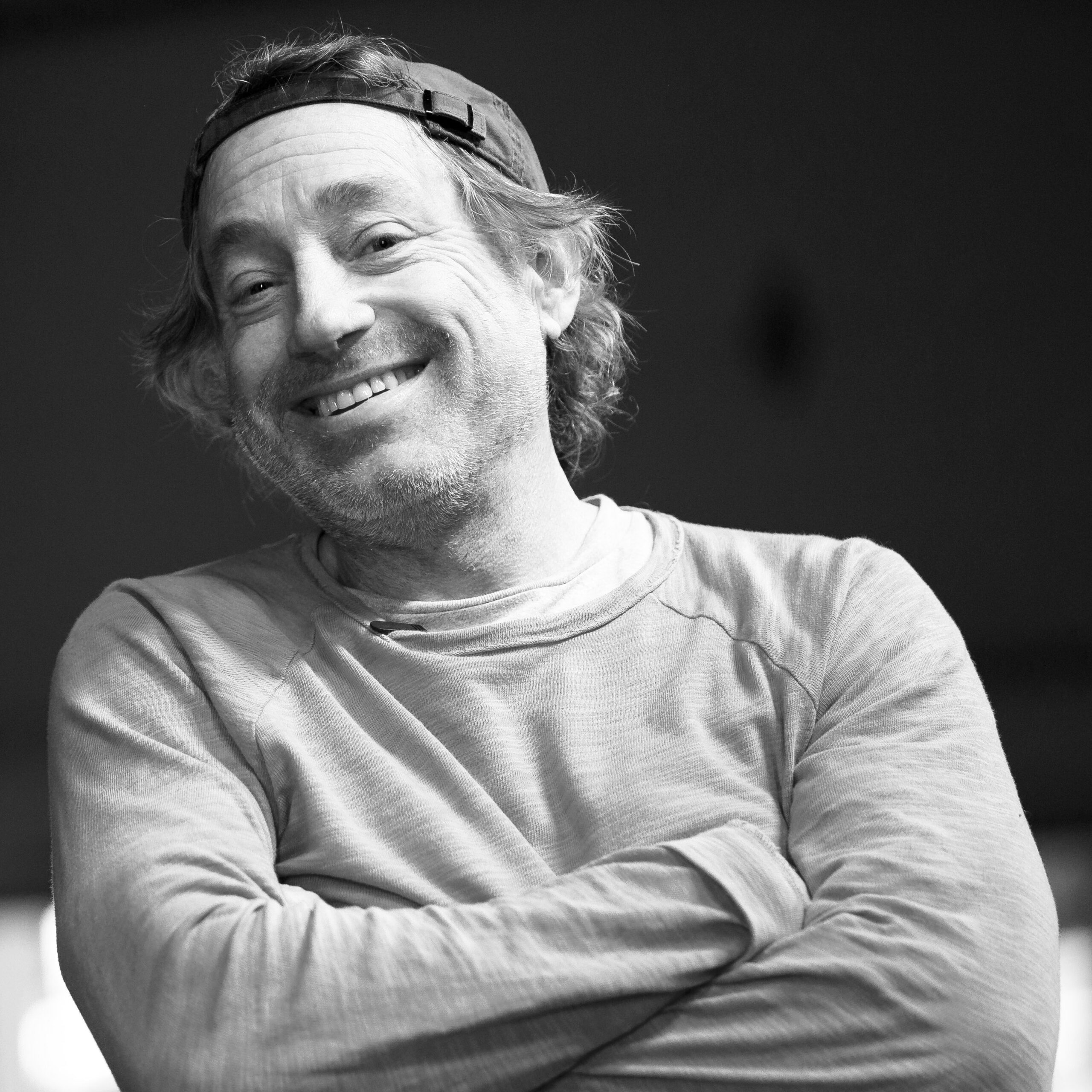
Greg Glassman founded CrossFit, a fitness revolution. Under Glassman’s leadership there were around 4 million CrossFitters, 300,000 CrossFit coaches and 15,000 physical locations, known as affiliates, where his prescribed methodology: constantly varied functional movements executed at high intensity, were practiced daily. CrossFit became known as the solution to the world’s greatest problem, chronic illness.
In 2002, he became the first person in exercise physiology to apply a scientific definition to the word fitness. As the son of an aerospace engineer, Glassman learned the principles of science at a young age. Through observations, experimentation, testing, and retesting, Glassman created a program that brought unprecedented results to his clients. He shared his methodology with the world through The CrossFit Journal and in-person seminars. Harvard Business School proclaimed that CrossFit was the world’s fastest growing business.
The business, which challenged conventional business models and financially upset the health and wellness industry, brought plenty of negative attention to Glassman and CrossFit. The company’s low carbohydrate nutrition prescription threatened the sugar industry and led to a series of lawsuits after a peer-reviewed journal falsified data claiming Glassman’s methodology caused injuries. A federal judge called it the biggest case of scientific misconduct and fraud she’d seen in all her years on the bench. After this experience Glassman developed a deep interest in the corruption of modern science for private interests. He launched CrossFit Health which mobilized 20,000 doctors who knew from their experiences with CrossFit that Glassman’s methodology prevented and cured chronic diseases. Glassman networked the doctors, exposed them to researchers in a variety of fields and encouraged them to work together and further support efforts to expose the problems in medicine and work together on preventative measures.
In 2020, Greg sold CrossFit and focused his attention on the broader issues in modern science. He’d learned from his experience in fitness that areas of study without definitions, without ways of measuring and replicating results are ripe for corruption and manipulation.
The Broken Science Initiative, aims to expose and equip anyone interested with the tools to protect themself from the ills of modern medicine and broken science at-large.

Support the Broken Science Initiative.
Subscribe today →
One Comment
recent posts

Metabolic health, medical education, and the case for bringing clinicians and coaches together
At the 2026 Unbreakable Health Retreat in Miami, Emily Kaplan hosted a panel with Bob Kaplan, Professor Thomas Seyfried, and Dr. Derek Lee on what it means to treat cancer as a metabolic disease. They discussed the glucose-ketone index (GKI), nutritional ketosis, and strategies aimed at restricting the fuels cancer cells depend on while considering how metabolic therapy can fit alongside standard cancer treatment.
The conversation also addressed the practical realities patients face when trying to pursue a metabolic approach within the conventional oncology system, including questions about nutrition, repurposed drugs, inherited cancer risk, and how to evaluate different treatment options. Seyfried and Lee connected these clinical questions back to mitochondrial dysfunction, fermentation, and the metabolic vulnerabilities that may offer additional targets for cancer treatment.
An abbreviated version of this discussion is available here, for free.
At the 2026 Unbreakable Health Retreat in Miami, Professor Thomas Seyfried presented the case that cancer is fundamentally a mitochondrial metabolic disease rather than primarily a genetic one. He contrasts the dominant somatic mutation theory with a metabolic model in which impaired mitochondrial respiration drives a shift toward fermentation, dysregulated cell growth, and the mutations commonly associated with cancer.
Citing the work of Otto Warburg and research from his lab at Boston College, Seyfried explains how cancer cells rely heavily on fermentable fuels—particularly glucose and glutamine—and why mitochondrial dysfunction sits upstream of many of the genetic abnormalities seen in tumors. He also discusses reactive oxygen species, altered cellular signaling, and the role of mitochondria in regulating cell growth and behavior.
The presentation then turns to the therapeutic implications of this model. Seyfried explains strategies aimed at placing tumor cells under metabolic stress by restricting the fuels they depend on, including ketogenic metabolic therapy and approaches targeting glucose and glutamine. For Seyfried, the therapeutic target follows directly from the biology: restrict the fuels cancer cells depend on, exploit their metabolic weaknesses, and treat mitochondrial dysfunction as the central feature of the disease.
An abbreviated version of this discussion is available here, for free.
MetFix and BSI Members can view the full 54-minute video.


Great read! We absolutely need more of this!! I can’t wait to see how far we go!