
Week 1 Session
Based on a 60-minute session
1. Welcome & Icebreaker (5 min):
- Deliver handouts (see Printouts for Week 1 section) to participants and have them fill in notes as the coach delivers the presentation.
- Ask “Why improve your health?”
- Quick partner up and share answers.
- Write some of their goals on the board (to be used later during Sick-Well-Fit briefing)
2. What Is MetFix Spark? (5 min)
a) What is MetFix:
- “Metabolic Fix”
- “Diet and exercise program that improves health.”
- Nutrition Starts Now
b) MetFix Spark is a 4-week intro to the metabolic fix
c) Will focus on nutrition primarily, plus consistent exercise.
d) Simple nutrition themes:
- Awareness
- Quality
- Quantity
- Health Metrics
e) Define “metabolism”
- The set of chemical reactions in the body that sustains life.
- Metabolic health is when those chemical reactions allow you to live a quality life.
3. Why Are You Here? (10 min)
a) Health is measurable.
- Work capacity across a lifetime.
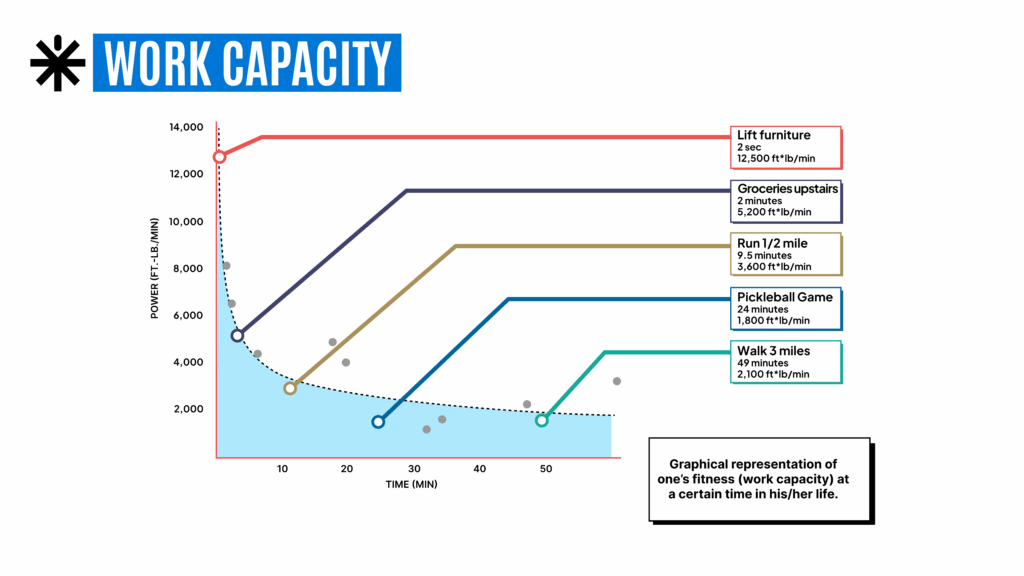

- Work capacity (fitness) is necessary, but not sufficient, for health. You also need a healthy metabolism.
- A healthy metabolism forms the foundation for health.
- By eating the MetFix diet, we can burn fat, improve our health markers, and maintain functional capacity into the later years of life.
b) Teach sick-well-fit continuum, link to metabolism (use reference chart linked at the bottom)
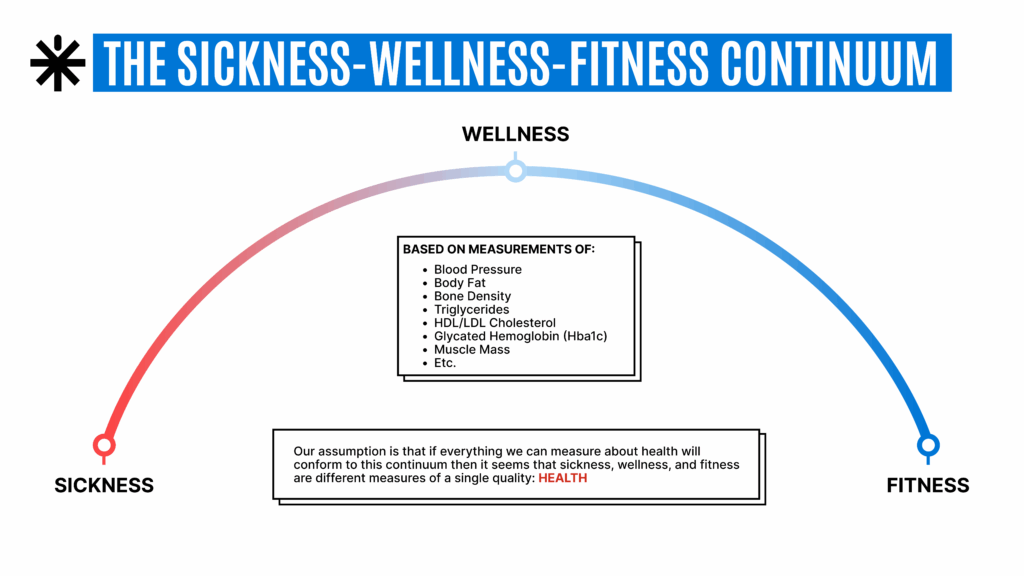
- Use a combination of convenient metabolic measures to track health outcomes.
- Link goals (energy, weight loss) to fixing metabolism and the continuum.
- Things you can measure to track health (models)
- Health marker improvement
- Fitness improvement
- Metabolic flexibility
4. Problem: Metabolic Dysfunction (10 min)
a) High intake of processed foods and sugar leads to metabolic dysfunction.
- Humans are not evolved to eat these man made foods.
b) Chronically high insulin leads to inflammation and cellular nutrient overload
- A.k.a. too many “calories” going into your muscle and fat cells all the time.
5. Solution: The Fix (10 min)
a) Proper diet
- High fat, moderate protein, low carb
- Meat and vegetables, nuts and seeds, some starch, little fruit, no sugar and no seed oils
b) Proper exercise
- Constantly varied high intensity functional movement
- Major lifts, basic gymnastics, conditioning, hard and fast, mixing elements 5-6 days a week
c) Avoid processed foods and cook at home. Cooking at home will be critical.
- Belly: Rx Recipes
- Touch on how to scale.
- Body: Rx Workouts
- Touch on how to scale if they can’t make it to the gym.
- Brain: Validation of our approach
6. Tools (5 min)
a) Review and briefly explain the use of the cooking tools (see handout) and what they will be used for.
b) Explain the use of a dumbbell and any other possible at home workout equipment they can use on days they can’t make the gym group class (backpack/ruck, bodyweight, walk/run, bike, etc.)
- Consistency is king when it comes to home cooking and workouts. Even if it’s not perfect.
7. Wrap-up & Homework Review (15 min)
a) Emphasize that change will be slow and at times may even look like it’s going the wrong way, but stick with it long enough and you won’t believe what you’ve accomplished.
- These 4 weeks are to establish a baseline
- You may see some improvement in a month, but the biggest improvement will be in how you feel.
- Remember change is always hard, if you’re sore still show up we can modify the movement, if you’re struggling with what to eat we can help. Don’t let these things stop you from making progress, they are all natural parts of the adaptation.
b) Summarize Key points:
- Avoid seed oils, processed foods and sugar – keep a food log
- Exercise/move 5-6 days per week – track what you do and how you feel
c) Q&A.
- With help from our provided list, clean out anything in the kitchen that you already know does not contribute to your health.
e) Food Log:
- Track all intake for 7 days.
- Take a picture of every meal/snack using your phone and keep it in a shared album. (shared album with the class/cohort is a great idea, will see mistakes and also get lots of good ideas going and connection between members, aka community!)
f. Review focus for the week: Awareness
Coaching Tips:
- Keep a strict clock—wear a watch to ensure timeline adherence
- Move through teaching points at a pace that gives participants time to write things down
- Use seminar notes and resources to help explain technical mechanisms
- Stick to the basics when possible