



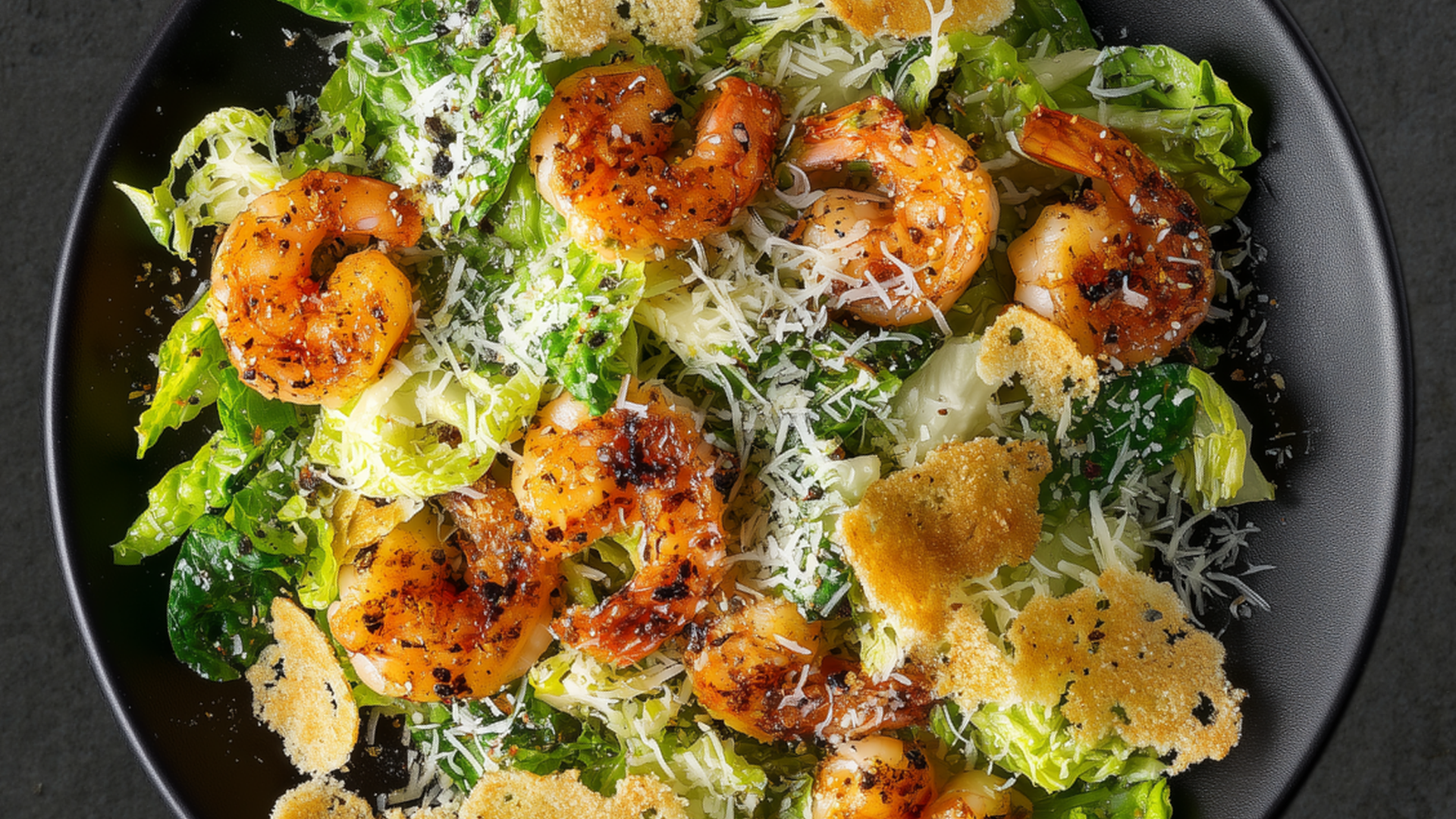
Shrimp Caesar Salad with Crispy Parmesan Chips
Juicy sautéed shrimp served over crisp romaine with a creamy Caesar dressing and crunchy Parmesan crisps.
Ingredients
½ lb large shrimp, peeled and deveined
Salt and pepper, to taste
½ tsp garlic powder
½ tsp smoked paprika
1 Tbsp butter or tallow (for cooking)
4 cups chopped romaine lettuce
¼ cup shaved or shredded Parmesan cheese
Optional garnish: 4–6 small Parmesan crisps (see below)
¼ cup mayonnaise
1 Tbsp olive oil (cold use only)
1½ tsp Dijon mustard
1 tsp anchovy paste (or 1 anchovy filet, minced)
1 tsp lemon juice
1 clove garlic, minced
2 Tbsp grated Parmesan
Salt and pepper, to taste
Macronutrients
(makes 2 servings)
Protein: 25g
Fat: 17g
Carbs: 2g
Preparation
In a small bowl, whisk together mayonnaise (¼ cup), olive oil (1 Tbsp), Dijon mustard (1½ tsp), anchovy paste (1 tsp), lemon juice (1 tsp), garlic (1 clove), Parmesan (2 Tbsp), and salt and pepper. Chill until ready to use.
Pat shrimp dry and season with salt, pepper, garlic powder (½ tsp), and smoked paprika (½ tsp). Heat butter or tallow (1 Tbsp) in a skillet over medium heat. Sauté shrimp for 2–3 minutes per side, or until pink and opaque. Set aside.
Preheat oven to 375°F (190°C). Place small mounds (1 Tbsp each) of shredded Parmesan on a parchment-lined baking sheet. Flatten slightly and bake for 5–7 minutes, until golden and crispy. Cool completely.
Toss chopped romaine (4 cups) with Caesar dressing. Top with sautéed shrimp, shaved Parmesan (¼ cup), and Parmesan crisps if using. Drizzle with more olive oil (optional) and season to taste.



Weight in kg: 65-65-67.5-67.5-70-70-72.5