




Feijoada-Inspired Pork Bowl
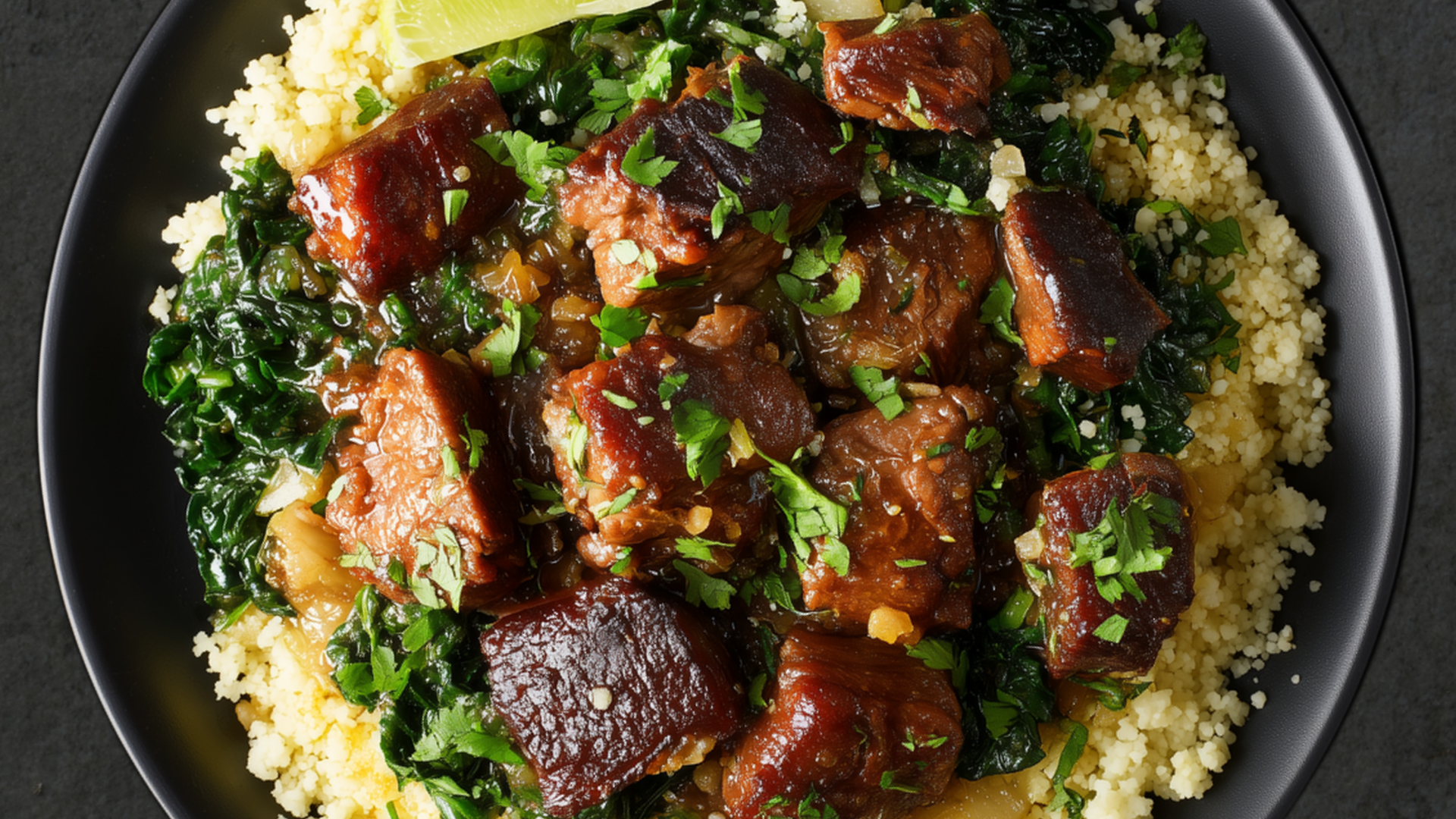
Slow-cooked pork shoulder with smoky spices and greens, served over garlicky cauliflower rice in a hearty bowl with all the soul of Brazilian feijoada.
Ingredients
For the Pork:
8 oz pork shoulder or pork belly, cut into bite-sized pieces
1 Tbsp ghee or butter
1 clove garlic, minced
¼ cup onion, diced
½ tsp smoked paprika
¼ tsp cumin
¼ tsp oregano
¼ tsp chili flakes (optional)
¾ cup beef or chicken broth
Salt and pepper, to taste
For the Cauliflower Rice:
1 cup cauliflower rice
1 clove garlic, minced
1 Tbsp butter or ghee
Salt, to taste
For the Greens:
½ cup collard greens or kale, finely chopped
1 tsp olive oil (finishing only)
Salt and pepper, to taste
Optional Toppings:
Lime wedge
Chopped parsley or cilantro
Fried egg (for extra richness)
Macronutrients
(makes 2 servings)
Protein: 30g
Fat: 38g
Carbs: 4g
Preparation
Sear and simmer the pork: In a skillet or Dutch oven, melt ghee over medium-high heat. Sear pork pieces on all sides until browned, about 6–8 minutes. Add onion, garlic, paprika, cumin, oregano, and chili flakes. Stir well.
Pour in broth, bring to a simmer, then reduce heat to low. Cover and cook for 30–40 minutes until pork is tender and the sauce is reduced. Season with salt and pepper to taste.
Make the cauliflower rice: In a separate skillet, melt butter. Add garlic and sauté 30 seconds. Stir in cauliflower rice and cook 5–6 minutes until golden and tender. Season with salt.
Sauté the greens: In the same pan, quickly sauté greens in leftover pork fat or a little olive oil. Cook until wilted, 2–3 minutes. Finish with a pinch of salt and pepper.
Assemble the bowl: Layer cauliflower rice on the bottom, top with feijoada-style pork, sautéed greens, and optional toppings like lime, herbs, or a fried egg.



FRIDAY 251205