




The
Daily
Fix
For load:
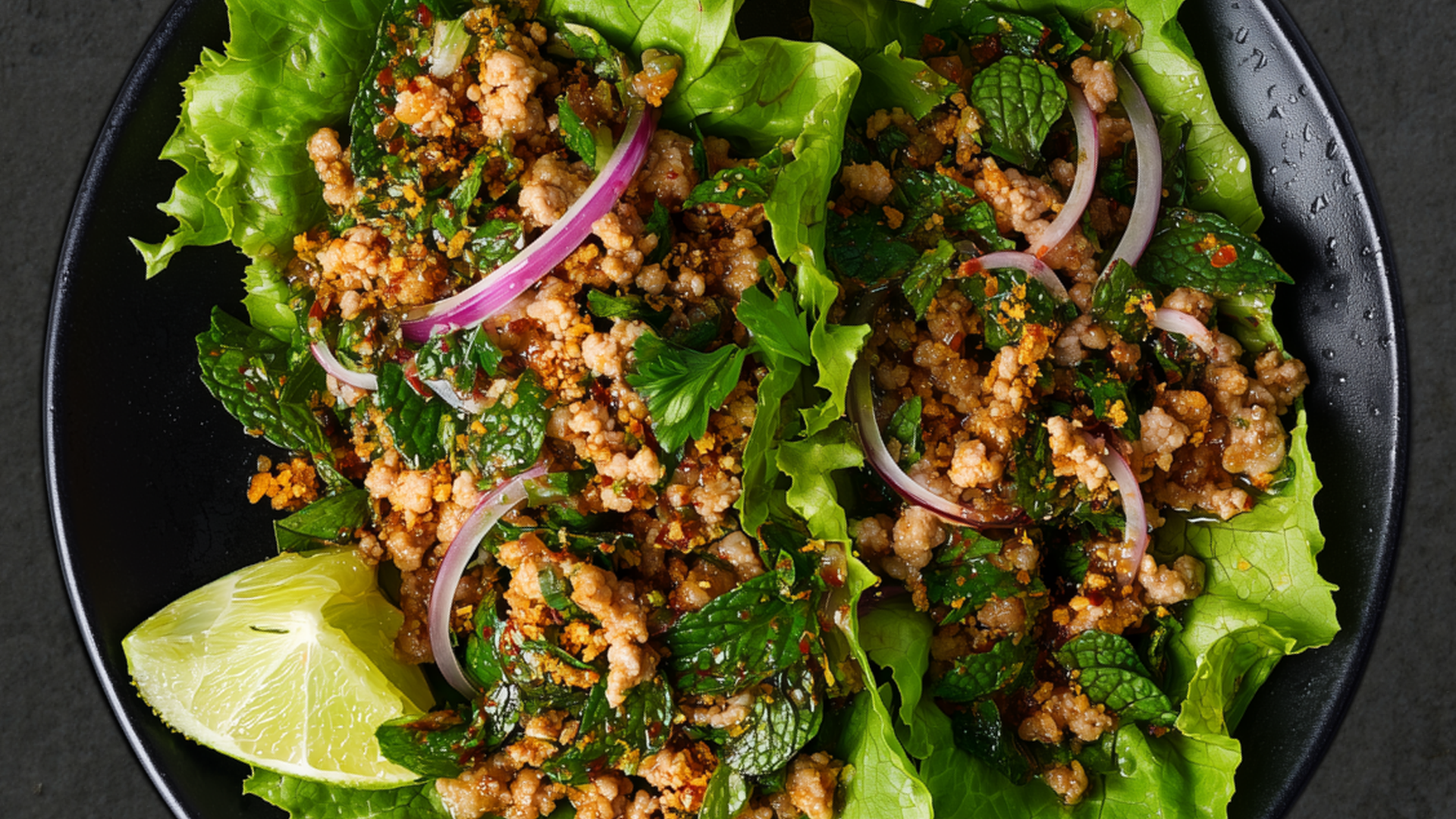
Larb (Thai/Laotian Meat Salad)
Insulin, Energy, and the Real Drivers of Disease
Thruster 3-3-3-3-3-3-3 reps
A fresh and flavorful larb made with seasoned ground meat, fish sauce, lime, herbs, and crunchy lettuce wraps.
Why insulin—not calories or body fat—is the central regulator of health, disease, and body composition.
Additionally, stretch for 20 minutes.
Post loads to comments.
Compare to 251113.
Ingredients
For the Meat:
1 ½ lb ground pork, chicken, beef, or turkey (dark meat preferred for more fat)
2 Tbsp butter or beef tallow (for cooking)
Salt and black pepper, to taste
For the Dressing:
3 Tbsp fish sauce
3 Tbsp fresh lime juice
½ tsp red pepper flakes (adjust to heat preference)
½ tsp chili powder or cayenne (optional)
½ tsp garlic powder
For the Herbs & Veg:
½ cup fresh mint leaves, chopped
½ cup fresh cilantro, chopped
2 scallions, thinly sliced
¼ small red onion, thinly sliced
Optional Garnish & Serving:
Crisp lettuce leaves (romaine, butter, or iceberg) for wraps
Extra lime wedges
Crushed pork rinds (as a keto substitute for toasted rice powder)
Macronutrients
(per serving, makes 4)
Protein: 30g
Fat: 35g
Carbs: 4g
Preparation
Heat butter or tallow in a large skillet over medium heat. Add ground meat, season lightly with salt and pepper, and cook 6–8 minutes, breaking it up until fully cooked. Drain excess liquid if necessary.
In a small bowl, whisk together fish sauce, lime juice, red pepper flakes, chili powder, and garlic powder.
Transfer cooked meat to a large bowl. Pour dressing over and toss well to coat. Stir in mint, cilantro, scallions, and red onion. Adjust seasoning to taste.
Spoon larb into crisp lettuce leaves. Garnish with lime wedges and crushed pork rinds if desired. Serve immediately while warm.

In this wide-ranging conversation from 2010, Dr. Scott Connelly reframes metabolism through the lens of insulin and glucose homeostasis, arguing that insulin is the primary regulator of energy allocation, disease risk, and body composition. Drawing on cancer biology, epidemiology, and comparative physiology, he revisits the Warburg observation that malignant cells exhibit extreme “glucose avidity,” clarifying that while high glycolytic rates do not initiate cancer, they are driven by insulin-pathway signaling (notably AKT) and are a shared feature of transformed cells. Connelly emphasizes that glucose is both essential and toxic: the brain’s absolute dependence on glucose forces the body to tightly regulate blood sugar, using insulin to direct fuel toward oxidation or long-term storage—primarily fat.
Rejecting the simplistic “calories in, calories out” model, Connelly explains that humans are open, non-equilibrium systems in which insulin dynamically alters how efficiently energy is stored or dissipated. Dramatic changes in fat mass can occur without changes in caloric intake when insulin sensitivity shifts, as seen in diabetes, steroid use, fatty-acid ratios, and evolutionary adaptations. He distinguishes between metabolically healthy obesity and pathological insulin resistance, identifying dysregulated liver glucose production alongside insulin-sensitive fat storage as a key driver of cardiovascular disease. The practical takeaway is that in modern Western populations, controlling carbohydrate intake is the most powerful lever for health. His baseline prescription—heavy resistance training, high protein intake, restrained carbohydrates, and particular caution with fructose—targets insulin first, with improvements in body composition and disease risk following downstream.
SATURDAY 260124