




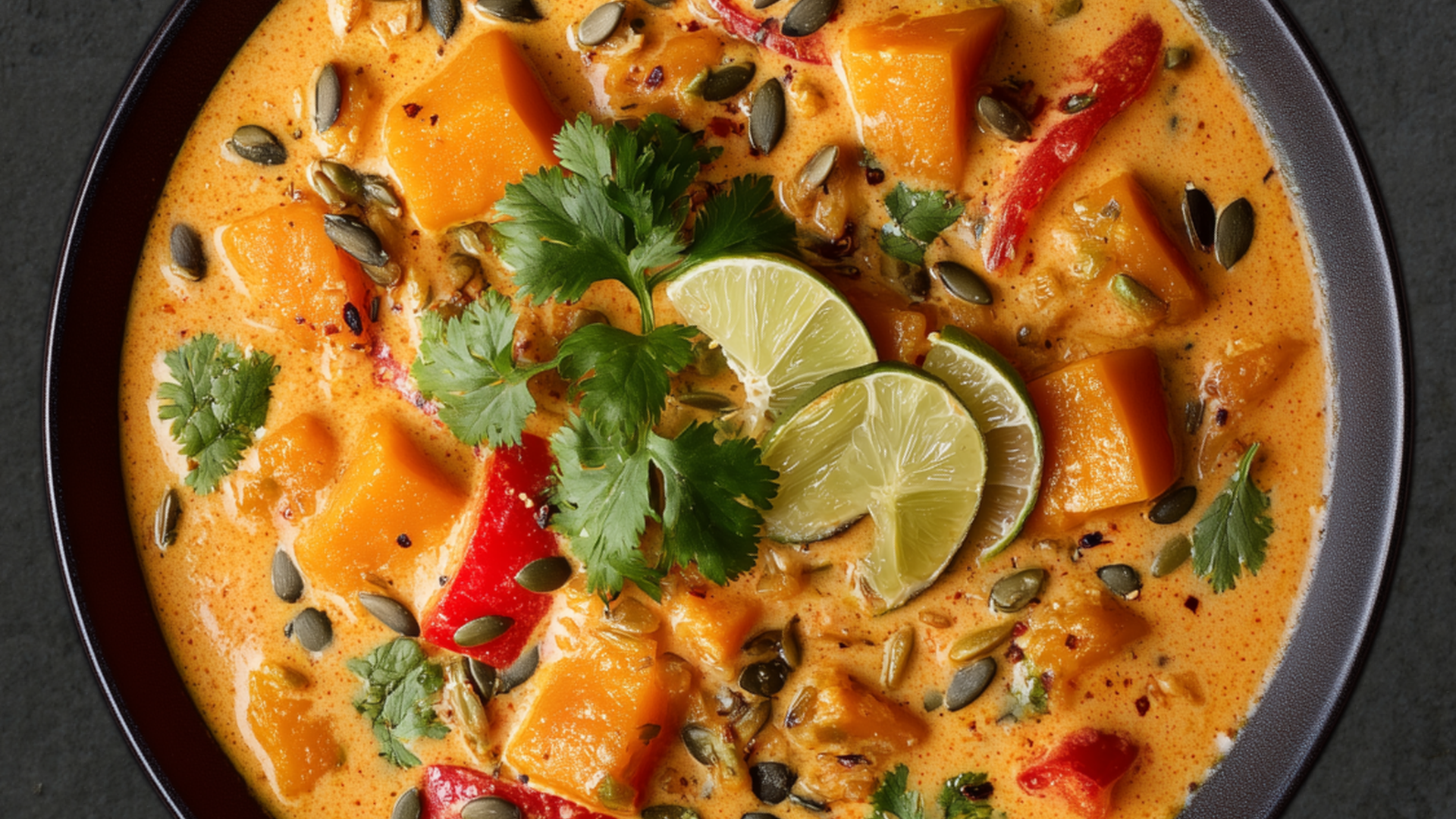
Pumpkin Coconut Curry
A creamy, fragrant curry made with pumpkin, coconut milk, aromatics, and warm spices.
Ingredients
For the Curry:
3 cups cooked chicken
2 Tbsp butter, tallow, or coconut oil
1 small onion, diced
3 cloves garlic, minced
1 Tbsp fresh ginger, grated
2 Tbsp red curry paste (or yellow/green if preferred)
2 cups pumpkin, peeled and cubed
1 red bell pepper, sliced
1 can (13.5 oz) full-fat coconut milk
1 cup chicken or vegetable broth (unsalted)
1 tsp ground turmeric
1 tsp ground cumin
½ tsp cinnamon
Salt and black pepper, to taste
Optional Add-ins:
2 cups spinach or kale
1 fresh chili, sliced (for extra spice)
Garnish:
Fresh cilantro, chopped
Lime wedges
Toasted pumpkin seeds
Macronutrients
(per serving, serves 4)
Protein: 27g
Fat: 29g
Carbs: 17g
Preparation
Heat butter or oil in a large skillet over medium heat. Add onion, garlic, and ginger. Cook 3–4 minutes until softened and fragrant.
Stir in curry paste, turmeric, cumin, and cinnamon. Cook for 1 minute to bloom the spices.
Stir in pumpkin cubes and red bell pepper. Toss well to coat with spices.
Pour in coconut milk and broth. Stir, bring to a gentle simmer, and cook for 15–20 minutes, until the pumpkin is fork-tender.
Add cooked chicken and leafy greens. Simmer for another 2–3 minutes until heated through. Adjust seasoning with salt and pepper.
Garnish with cilantro, lime wedges, and pumpkin seeds. Serve hot.



SUNDAY 260215