



The
Daily
Fix

260410

FRIDAY 260410
0 0 0

12-minute AMRAP

Garlic Shrimp Tapas (Gambas al Ajillo)

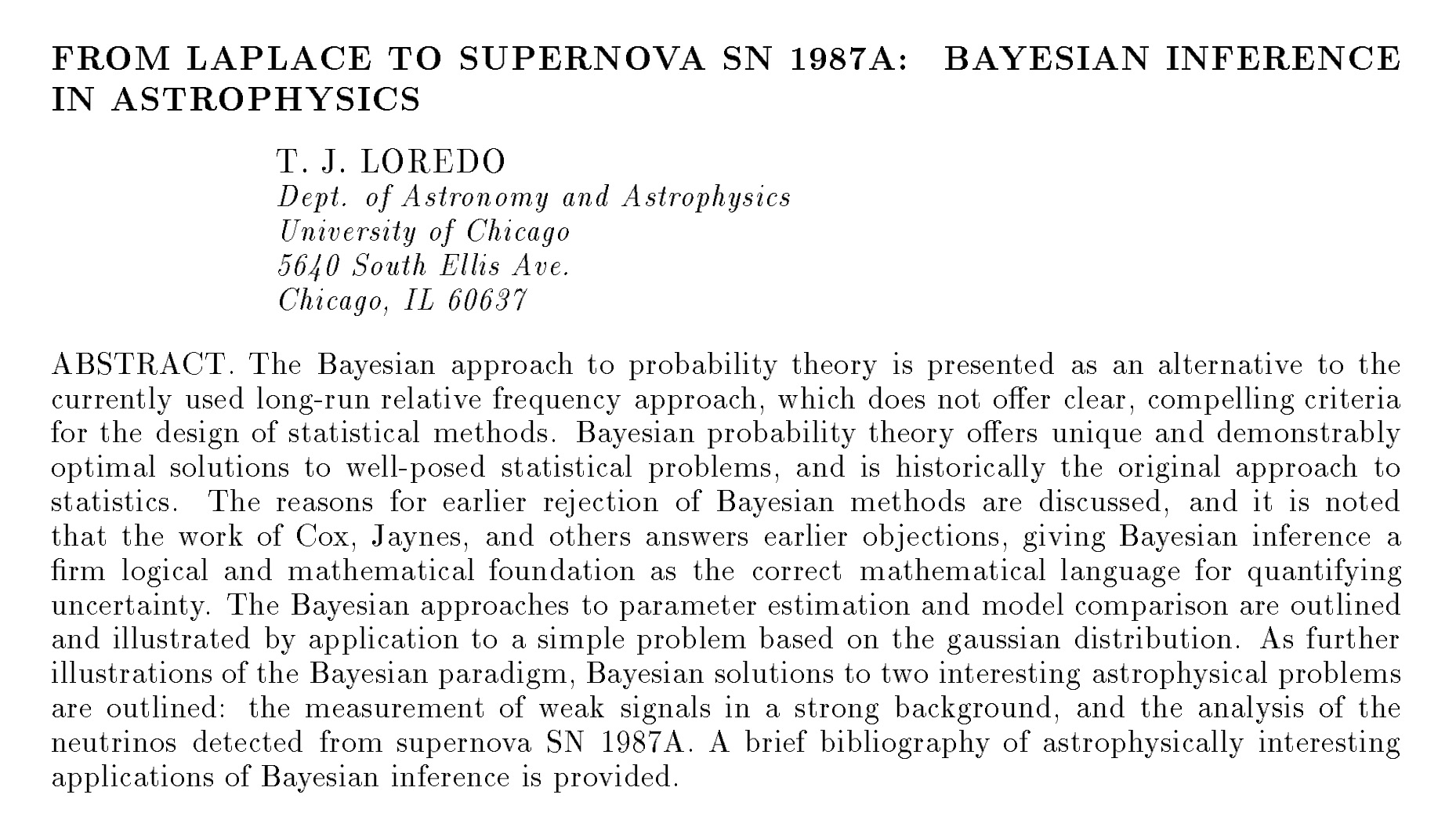
From Laplace To Supernova SN 1987a: Bayesian Inference In Astrophysics

Article Heading Photo
Photo of Garlic Shrimp Tapas (Gambas al Ajillo)

Complete as many rounds as possible in 12 minutes of:

5 kipping chest-to-bar pull-ups
3 strict pull-ups
1 strict chest-to-bar pull-up
30-second L-sit hold

A classic Spanish tapas dish featuring juicy shrimp sautéed in bubbling garlic butter with a touch of heat.

Bayesian probability provides a clearer and more consistent framework for scientific inference than traditional frequentist statistics.

Tab Photo

The
Daily
Fix

Photo of Garlic Shrimp Tapas (Gambas al Ajillo) Article Heading Photo

For the pull-ups, choose variations that range from medium, to hard, to really hard, but still allow you to stay on the bar for the first couple of rounds.

Post number of rounds completed to comments.

Ingredients

1 lb large shrimp, peeled and deveined
3 Tbsp butter or tallow
4 cloves garlic, thinly sliced
½ tsp red pepper flakes (optional, for spice)
1 Tbsp lemon juice
Salt and black pepper, to taste
1 Tbsp chopped parsley (for garnish)
Lemon wedges (for serving)

Macronutrients
(per serving, serves 4)

Protein: 28g
Fat: 22g
Carbs: 1g

Preparation

Pat shrimp dry and season lightly with salt and black pepper.

Melt butter or tallow in a large skillet over medium heat until it begins to bubble.

Add sliced garlic and red pepper flakes, cooking 30–45 seconds until fragrant but not browned.

Add shrimp in a single layer and cook 1–2 minutes per side until pink and opaque.

Stir in lemon juice and toss to coat the shrimp in the garlic butter.

Remove from heat and sprinkle with chopped parsley.

Serve immediately with lemon wedges — perfect as an appetizer or paired with sautéed vegetables for a full meal.

In this paper, T. J. Loredo explains the Bayesian approach to probability and argues that it offers a more coherent framework for scientific inference than the traditional frequentist interpretation of statistics. Bayesian probability treats probability as a measure of uncertainty and uses prior knowledge together with new data to update beliefs through Bayes’ theorem. The paper outlines the mathematical foundations of Bayesian inference and shows how it can be used for parameter estimation and comparing competing models. These concepts are illustrated through astrophysical examples, including detecting weak signals in noisy data and analyzing the small number of neutrinos observed from supernova SN 1987A. The work highlights how Bayesian methods can provide clearer reasoning and more consistent conclusions when scientists must draw inferences from limited or uncertain data.

Read More

COMMENTS

0 COMMENTS 0 COMMENTS 0 COMMENTS SHARE LOGIN PRINT
Log In to leave a comment - Log In?
Go to Top