




Flank Steak Rolls
Thinly sliced flank steak rolled around a melty mild cheese and herb filling, seared in butter and finished with a savory pan sauce.
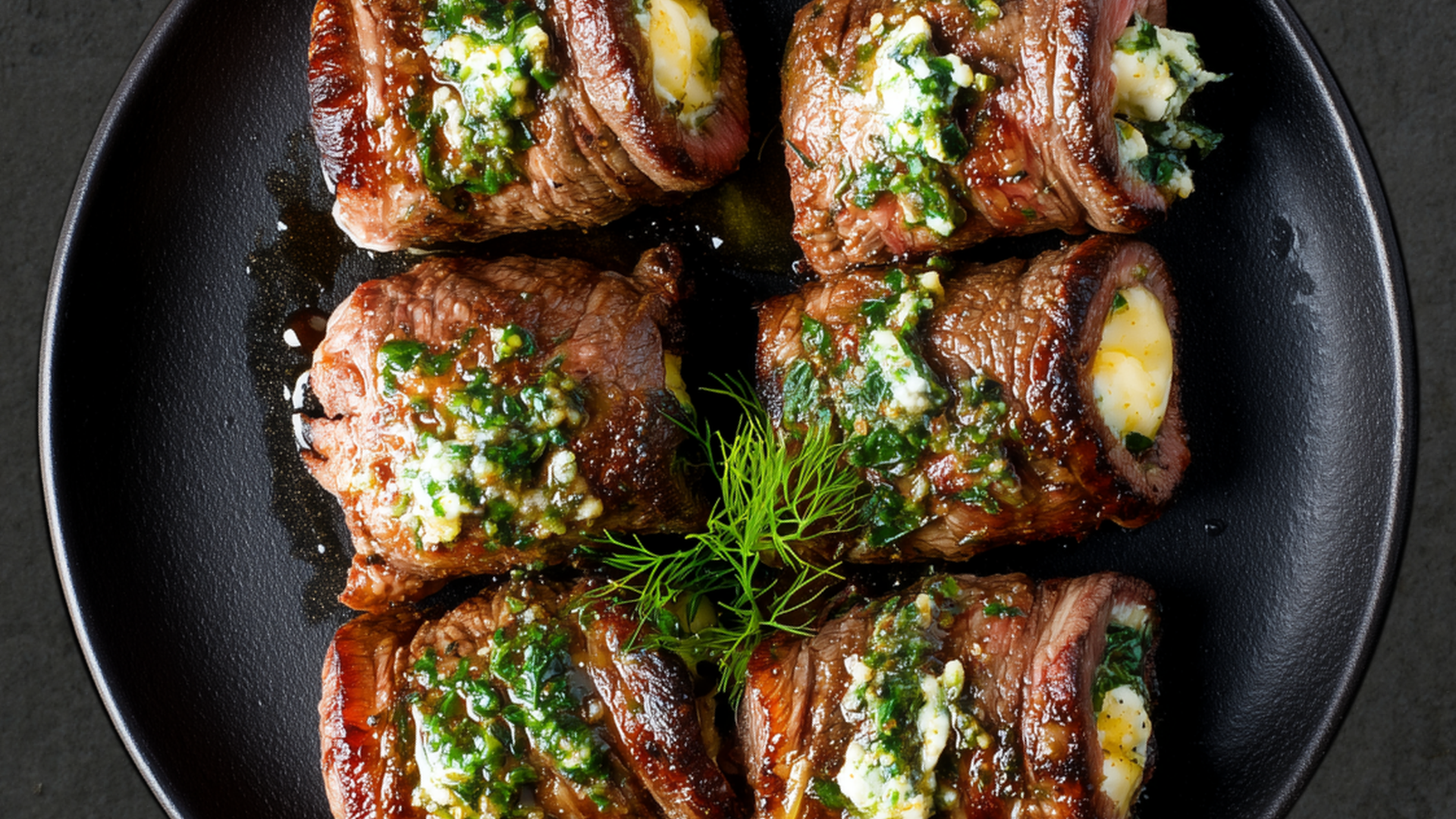
Ingredients
1 lb flank steak, sliced into 4 thin pieces (about ¼" thick, pounded if needed)
4 oz mild cheese (like provolone, young mozzarella, or Monterey Jack), cut into strips
2 Tbsp fresh parsley, finely chopped
1 Tbsp fresh basil or thyme, chopped
2 cloves garlic, minced
1 Tbsp butter (for filling)
2 Tbsp butter or tallow (for searing)
Salt & pepper, to taste
Butcher’s twine or toothpicks to secure rolls
1 tsp olive oil (for finishing – optional)
Optional Pan Sauce:
¼ cup beef broth
1 Tbsp butter
½ tsp Dijon mustard or lemon juice (for balance)
Macronutrients
(per serving, makes 3)
Protein: 42g
Fat: 35g
Carbs: 2g
Preparation
In a small pan, melt 1 Tbsp butter over medium heat. Add garlic and sauté for 30 seconds until fragrant. Remove from heat and stir in chopped herbs. Let cool slightly, then mix with the mild cheese strips.
Season each piece of flank steak with salt and pepper. Place a portion of the cheese and herb mixture at one end of each steak slice. Roll tightly and secure with butcher’s twine or toothpicks.
Heat 2 Tbsp butter or tallow in a cast iron skillet over medium-high heat. Sear steak rolls on all sides until browned, about 2–3 minutes per side. Reduce heat to medium, cover, and cook another 5–6 minutes until steak is cooked to desired doneness and cheese is melted.
Remove steak rolls and rest. Deglaze the pan with beef broth, scraping up brown bits. Stir in butter and Dijon (or lemon juice) to emulsify. Simmer for 2–3 minutes until slightly thickened.
Slice rolls or serve whole. Spoon pan sauce over top and finish with a light drizzle of olive oil and fresh herbs if desired.



SATURDAY 260530