



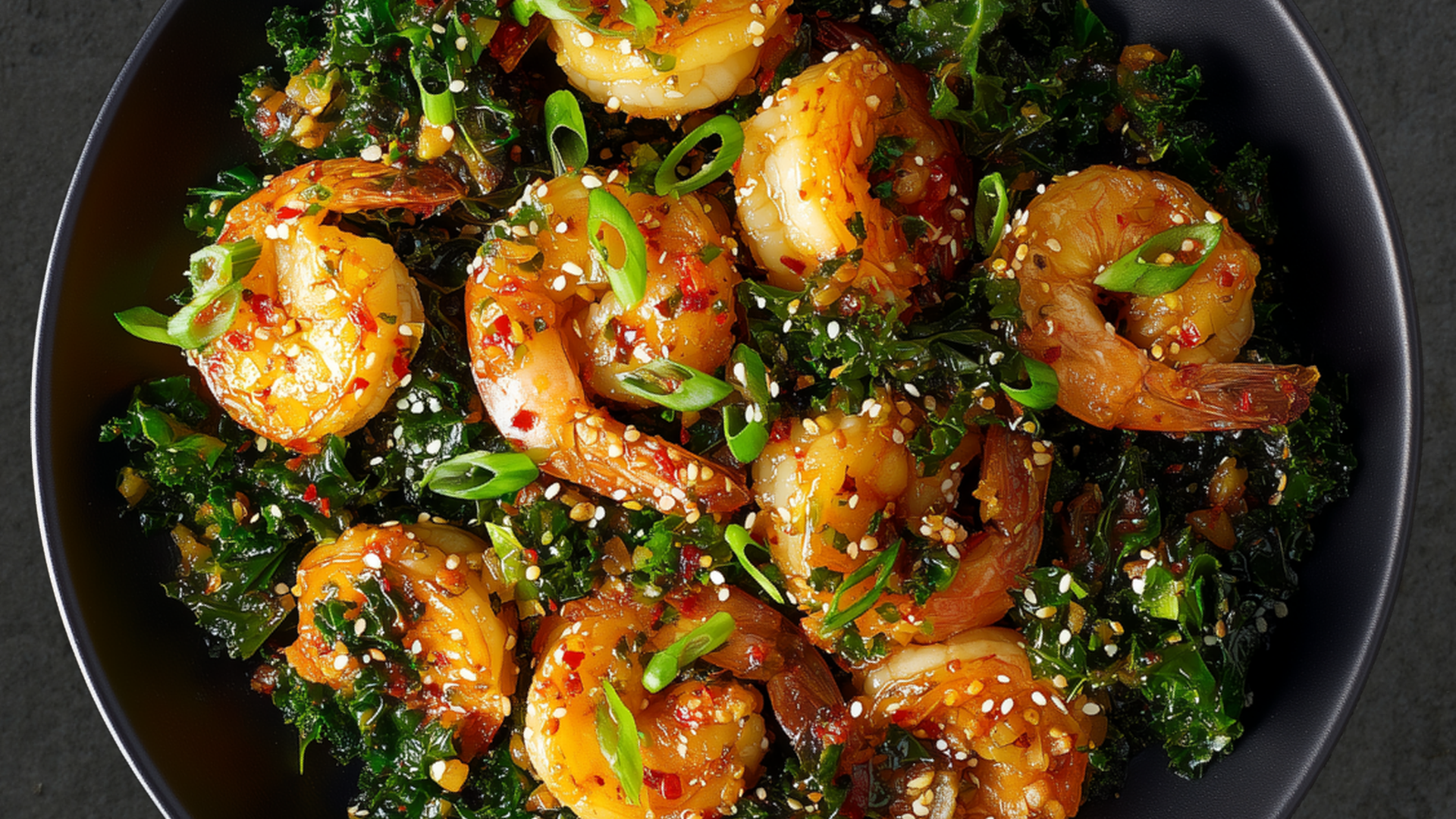
Ginger Garlic Shrimp Skillet
Succulent shrimp sautéed with fresh ginger and garlic, served over buttery sesame kale with a kick of chili.
Ingredients
For the Shrimp:
1 lb shrimp, peeled and deveined
2 cloves garlic, minced
1 Tbsp fresh ginger, grated
2 Tbsp butter or ghee
¼ tsp chili flakes (adjust to taste)
Salt & black pepper, to taste
1 tsp coconut aminos (optional, for umami)
For the Sesame Kale:
4 cups chopped kale, stems removed
1 Tbsp butter
Salt, to taste
1 tsp toasted sesame oil (added after cooking)
Optional Garnish:
Additional chili flakes
Sliced scallions
Sesame seeds
Macronutrients
(per serving, serves 4):
Protein: 28g
Fat: 12g
Carbs: 4g
Preparation
In a large skillet over medium heat, melt 1 Tbsp butter. Add chopped kale and a pinch of salt. Sauté 4–5 minutes until wilted and tender. Turn off heat and drizzle with sesame oil. Set aside.
In another skillet, melt 2 Tbsp butter or ghee over medium-high heat. Add garlic, ginger, and chili flakes; sauté for 30 seconds until fragrant. Add shrimp, season with salt and pepper, and cook 2–3 minutes per side until pink and opaque. Stir in coconut aminos if using.
Plate the kale and top with the ginger-garlic shrimp. Garnish with extra chili flakes, sesame seeds, or scallions if desired.



6:50
1year of doing Daily Fix. Thank you BS team.