




Salmon Piccata
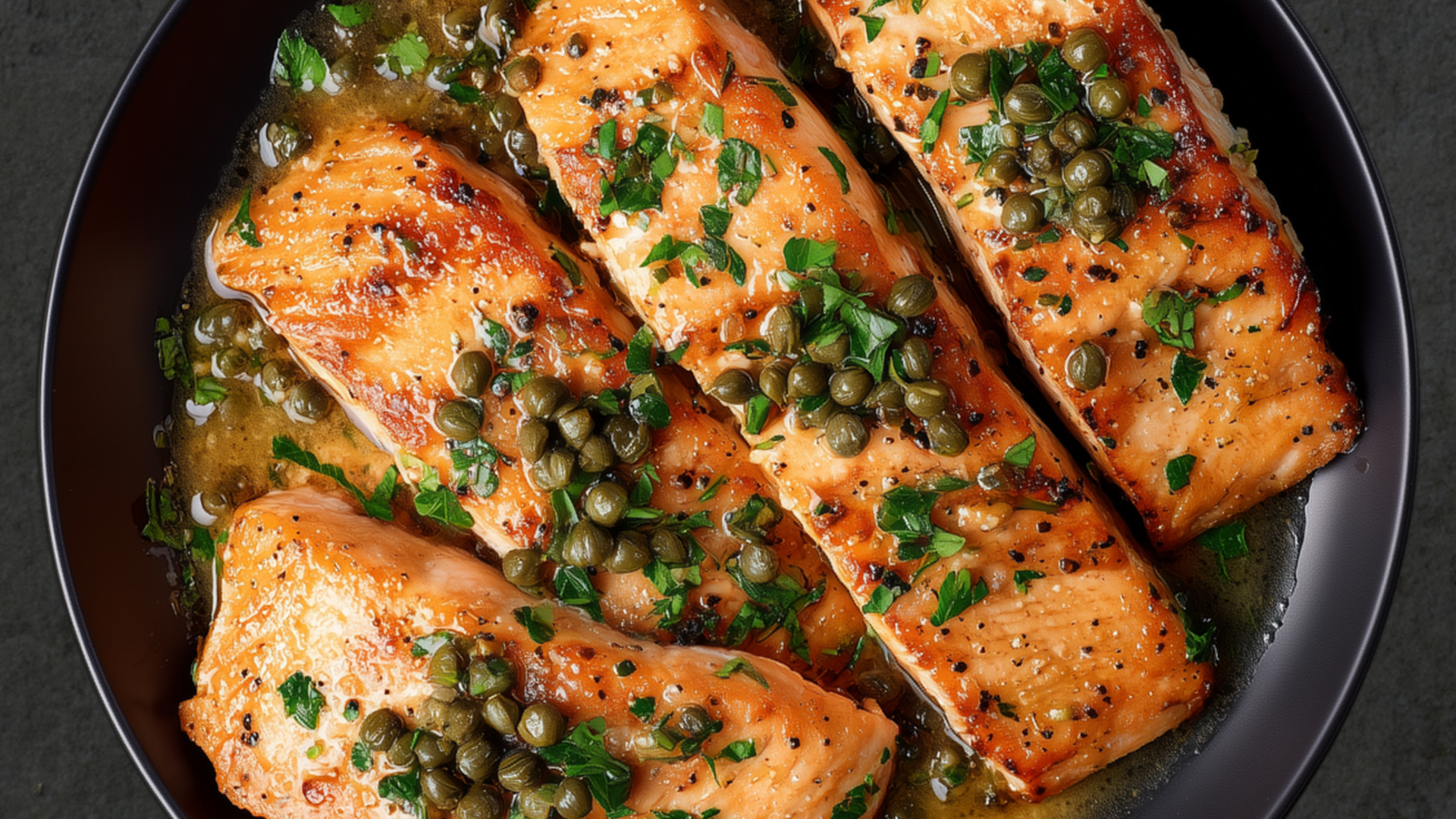
Crispy-seared salmon fillets served in a zesty lemon butter caper sauce—bursting with bright, briny flavor.
Ingredients
4 salmon fillets (5–6 oz each)
Salt & pepper, to taste
¼ tsp garlic powder
2 Tbsp butter (for searing)
For the Piccata Sauce:
3 Tbsp butter
2 cloves garlic, minced
⅓ cup chicken or fish broth (unsweetened)
2 Tbsp fresh lemon juice
2 Tbsp capers, drained
1 tsp lemon zest
Salt & pepper, to taste
Optional: 1 Tbsp chopped fresh parsley
Optional: 1 tsp olive oil (for finishing)
Macronutrients
(per fillet, serves 4)
Protein: 38g
Fat: 32g
Carbs: 2g
Preparation
Pat salmon fillets dry. Season both sides with salt, pepper, and garlic powder.
In a large skillet, heat 2 Tbsp butter over medium-high heat. Place salmon skin-side down (if skin-on) and cook for 4–5 minutes, then flip and cook another 2–3 minutes, until golden and cooked to desired doneness. Remove and set aside.
Lower heat to medium. Add remaining 3 Tbsp butter to the same skillet. Once melted, add garlic and sauté 30 seconds until fragrant. Pour in broth and lemon juice. Bring to a gentle simmer.
Stir in capers and lemon zest. Let the sauce simmer for 2–3 minutes to reduce slightly and concentrate. Taste and adjust seasoning.
Return salmon to the skillet, spooning sauce over each piece. Let it warm through for 1 minute. Serve topped with fresh parsley and an optional drizzle of olive oil.



THURSDAY 260709