




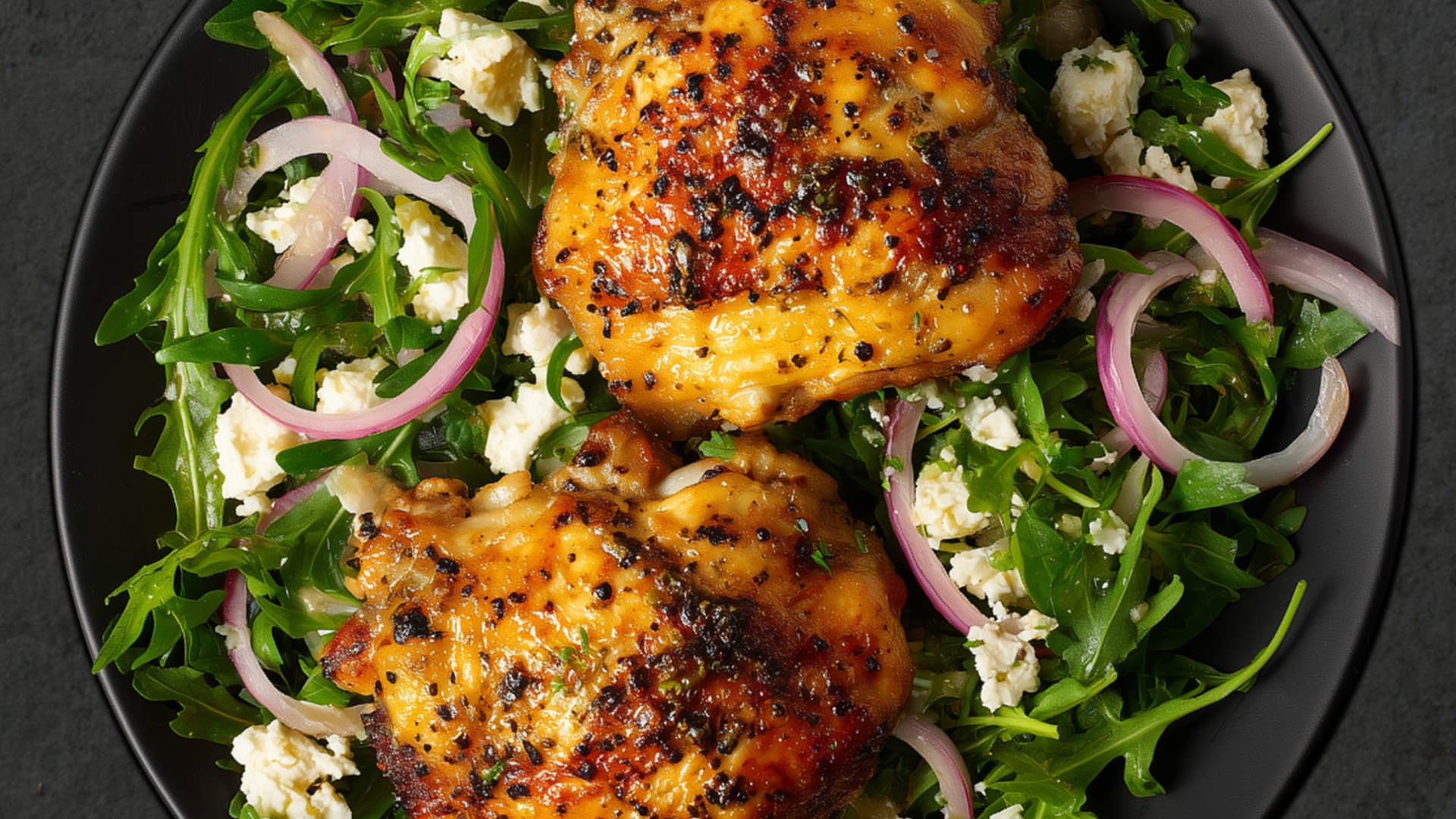
Greek Lemon Chicken with Arugula and Fennel Salad
Pan-seared chicken thighs marinated in lemon, garlic, and oregano, served alongside a crisp arugula and fennel salad with a bright lemon-olive vinaigrette.
Ingredients
2 skin-on, bone-in chicken thighs
2 Tbsp butter (for cooking)
1 Tbsp lemon juice
1 tsp lemon zest
1 clove garlic, minced
½ tsp dried oregano
Salt and pepper, to taste
1 cup arugula
¼ cup fennel bulb, thinly shaved
2 Tbsp red onion, thinly sliced
4 Tbsp crumbled feta cheese
2 Tbsp olive oil (for dressing)
1 Tbsp lemon juice (for dressing)
½ tsp Dijon mustard (for dressing)
Salt and pepper, to taste (for dressing)
Macronutrients
Protein: 45g
Fat: 65g
Carbs: 7g
Preparation
In a small bowl, combine lemon juice (1 Tbsp), lemon zest (1 tsp), minced garlic (1 clove), dried oregano (½ tsp), salt, and pepper. Rub the marinade over chicken thighs (2) and let sit for at least 15 minutes or up to 2 hours refrigerated.
Heat a skillet over medium heat and melt butter (2 Tbsp). Add marinated chicken thighs and cook for 6–7 minutes per side until skin is golden brown and meat is cooked through. Let rest for 5 minutes before slicing.
Meanwhile, assemble the salad: toss arugula (1 cup), shaved fennel (¼ cup), sliced red onion (2 Tbsp), and crumbled feta (4 Tbsp) in a bowl.
Whisk together olive oil (2 Tbsp), lemon juice (1 Tbsp), Dijon mustard (½ tsp), and salt and pepper to taste. Drizzle the dressing over the salad and toss gently to coat.
To serve, place dressed salad on plates, top with sliced lemon chicken, and garnish with an extra squeeze of lemon if desired.



TUESDAY 260721