



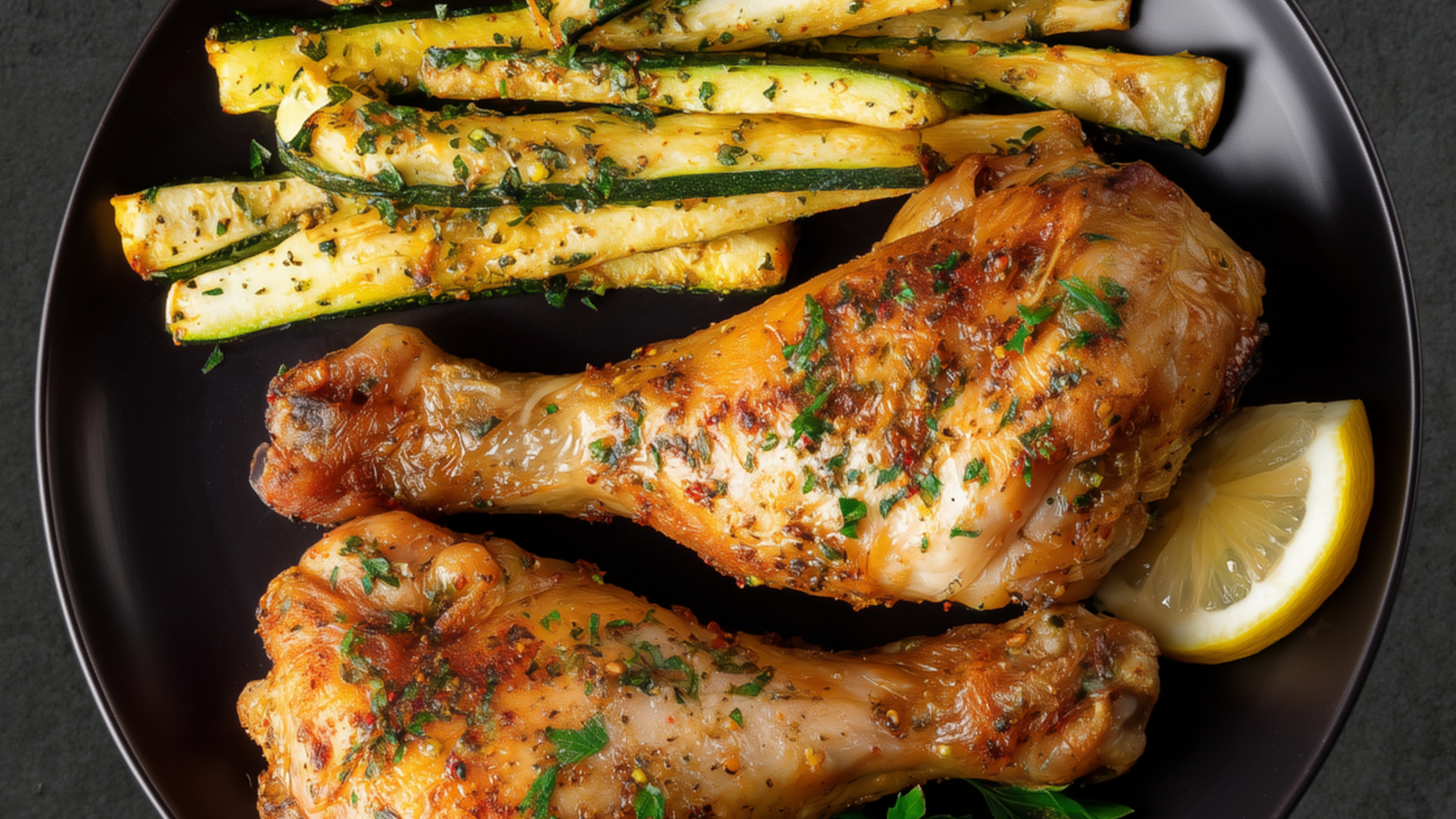
Chicken Drumsticks with Zucchini Wedges
Crispy, oven-roasted chicken drumsticks coated in fresh herbs and spices, served alongside golden, caramelized zucchini wedges roasted in ghee.
Ingredients
For the Chicken Drumsticks:
6 chicken drumsticks (skin-on)
1½ Tbsp ghee, melted
1 tsp dried thyme
1 tsp dried oregano
½ tsp garlic powder
½ tsp smoked paprika
Salt & black pepper, to taste
For the Zucchini Wedges:
2 medium zucchini, cut into thick wedges
1½ Tbsp ghee, melted
½ tsp dried basil or Italian seasoning
Salt & pepper, to taste
Optional Finishing:
1 tsp olive oil (off heat drizzle)
Fresh parsley or lemon wedges (optional garnish)
Macronutrients
(per serving, makes 3)
Protein: 42g
Fat: 35g
Carbs: 4g
Preparation
Preheat oven to 425°F (220°C). Line a baking sheet with parchment paper.
In a bowl, toss chicken drumsticks with melted ghee, thyme, oregano, garlic powder, paprika, salt, and pepper. Coat well. Arrange on one half of the baking sheet.
In another bowl, toss zucchini wedges with melted ghee, basil, salt, and pepper. Spread out on the other half of the baking sheet in a single layer.
Roast for 35–40 minutes, flipping the zucchini halfway through. Chicken should be golden with crispy skin and reach 165°F internal temp. Optional: Broil for 2–3 minutes at the end for more crisp.
Plate the chicken and zucchini together. Drizzle with olive oil (if using) and garnish with fresh parsley or lemon wedges.



FRIDAY 260731