




Chicken Meatball Soup
Chicken meatballs simmered in a savory broth with vegetables and herbs for a nourishing, high-protein soup.
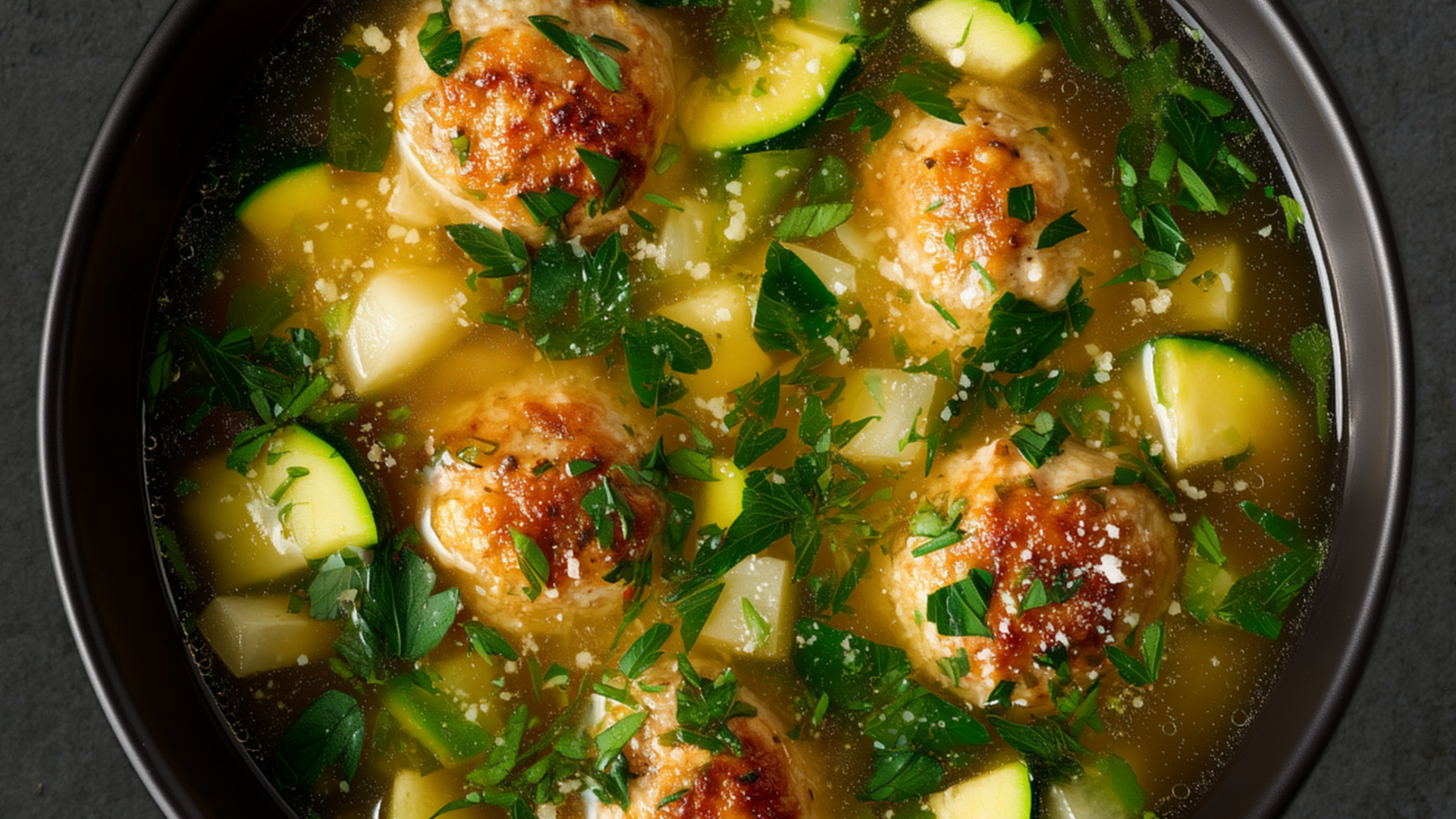
Ingredients
For the Meatballs:
1 lb ground chicken (dark meat preferred for juiciness)
1 egg
¼ cup grated Parmesan cheese
2 Tbsp almond flour (or finely ground pork rinds)
2 cloves garlic, minced
2 Tbsp fresh parsley, chopped
½ tsp onion powder
½ tsp dried oregano
½ tsp salt
¼ tsp black pepper
For the Soup:
1 Tbsp butter (for sautéing)
½ cup onion, finely diced
½ cup celery, sliced
½ cup zucchini, diced
6 cups chicken bone broth
1 bay leaf
½ tsp dried thyme
Salt and pepper, to taste
Optional Garnish:
Fresh parsley or dill
Extra Parmesan
Macronutrients
(per serving, serves 4)
Protein: 34g
Fat: 16g
Carbs: 5g
Preparation
In a bowl, mix ground chicken, egg, Parmesan, almond flour, garlic, parsley, oregano, onion powder, salt, and pepper. Form into small meatballs (about 1 inch).
Heat oven to 400°F. Place meatballs on a parchment-lined sheet and bake for 12–15 minutes until lightly browned and just cooked through.
In a large pot, melt butter over medium heat. Sauté onion, celery, and zucchini for 4–5 minutes until softened.
Add chicken bone broth, bay leaf, thyme, salt, and pepper. Bring to a gentle boil.
Add baked meatballs to the pot and let simmer for 10–15 minutes so flavors meld together.
Remove bay leaf, garnish with parsley or dill, and top with extra Parmesan if desired.



4 C2B Jumping Pull-ups
3 Close to Parallel Ring Rows
4 Standard Ring Rows
5 RingThing Dips