




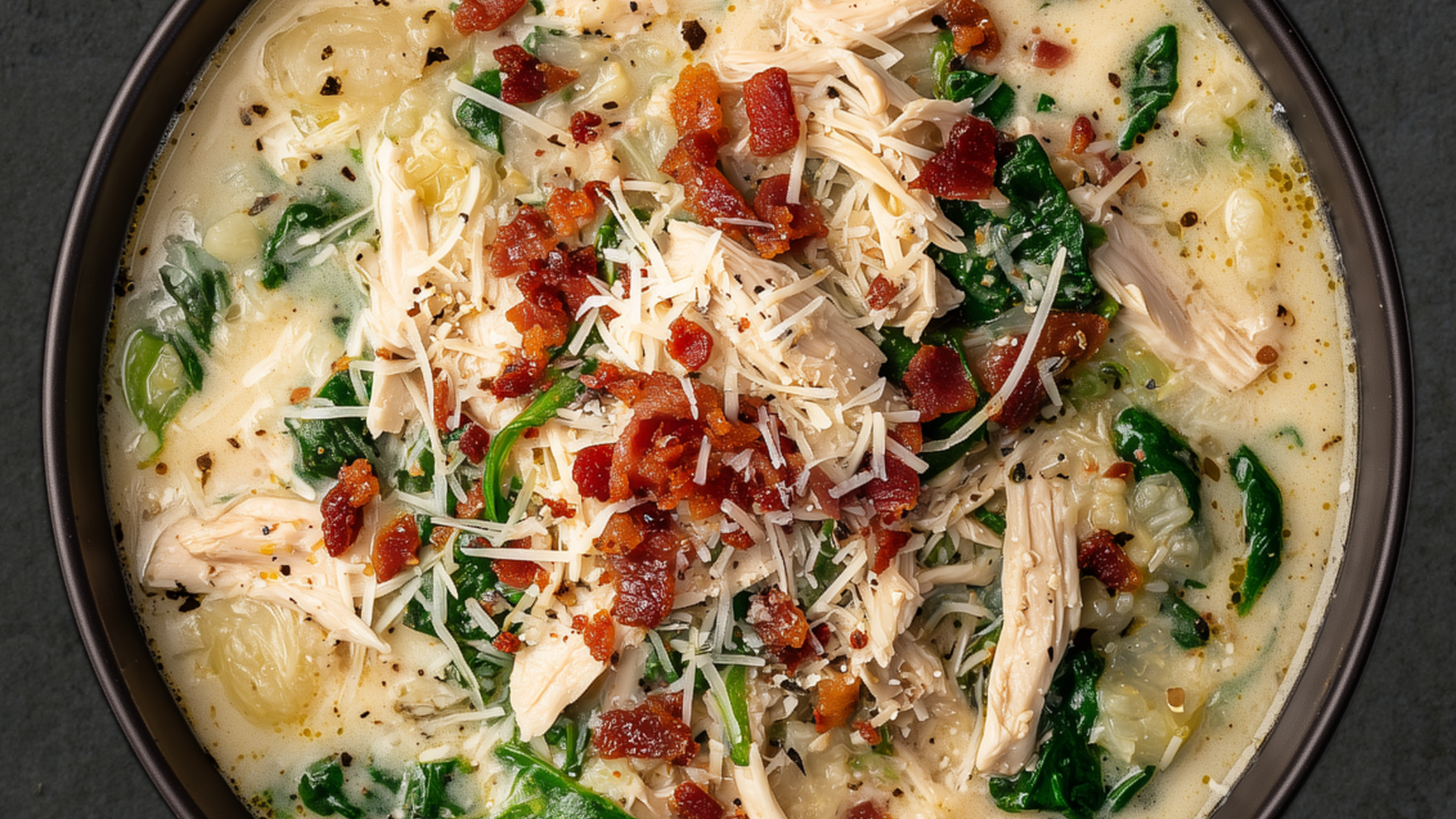
Creamy Chicken & Cauliflower Soup
Creamy soup with shredded chicken, buttery cauliflower, and cream cheese
Ingredients
1 Tbsp butter
½ cup chopped onion (optional)
2 cloves garlic, minced
1 cup cauliflower florets, chopped small
1 cup shredded cooked chicken (skin on, if possible)
½ cup chopped spinach or kale
2 cups chicken broth
½ cup heavy cream
2 oz cream cheese, cubed
2 Tbsp grated Parmesan, plus extra for garnish
2 slices bacon, cooked crisp and crumbled (optional)
½ tsp dried thyme
½ tsp dried oregano
½ tsp paprika
Salt and freshly ground pepper, to taste
Macronutrients
Protein: 70g
Fat: 90g
Carbs: 20g
Preparation
In a medium soup pot over medium heat, melt butter (1 Tbsp). Add chopped onion (½ cup) and minced garlic (2 cloves) and sauté until translucent and fragrant, about 2–3 minutes.
Add cauliflower florets (1 cup) and sauté 3–4 minutes, stirring occasionally, until they begin to soften and lightly brown. Pour in chicken broth (2 cups) and stir in dried thyme (½ tsp), oregano (½ tsp), paprika (½ tsp), and season with salt and pepper. Bring to a gentle simmer.
Season both sides of the chicken breast with salt and pepper, then place it in a hot skillet with a little butter. Cook for 5–7 minutes per side, or until golden brown.
Reduce heat to low, cover, and cook for 8–10 minutes or until cauliflower is fork-tender. Stir in shredded cooked chicken (1 cup), chopped spinach or kale (½ cup), heavy cream (½ cup), cream cheese (2 oz), and grated Parmesan (2 Tbsp). Cook 2–3 minutes, stirring until cream cheese melts and the soup becomes creamy.
Taste and adjust salt and pepper as needed. If using bacon, fold in crumbled bacon just before serving for extra richness. Ladle into bowls and garnish with extra Parmesan (and crumbled bacon if desired). Serve hot.



SUNDAY 260816