




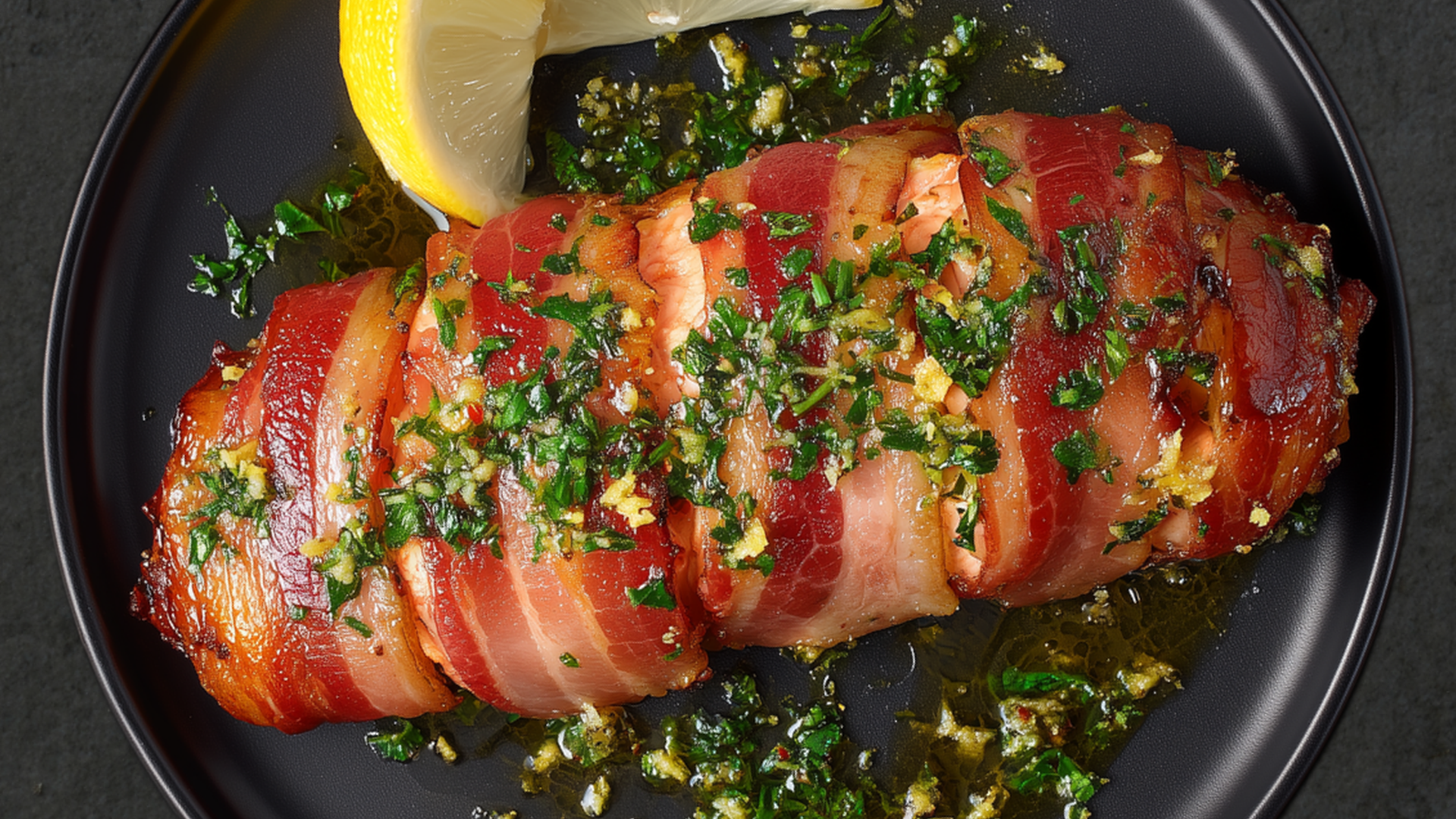
Bacon-Wrapped Salmon
Smoky bacon wrapped around tender salmon fillets, basted in garlic butter.
Ingredients
1½ Tbsp butter or tallow (for basting and greasing)
2 (6 oz) wild-caught salmon fillets, skin removed
Salt and pepper, to taste
½ tsp garlic powder
½ tsp smoked paprika
4 slices sugar-free bacon (thin-cut works best for wrapping)
1 tsp lemon juice
½ tsp dried thyme or rosemary
1 clove garlic, minced
Optional: 1 tsp olive oil (cold drizzle for finishing)
Optional garnish: chopped parsley or lemon zest
Macronutrients
(makes 2 per servings)
Protein: 38g
Fat: 30g
Carbs: 1g
Preparation
Preheat the oven to 400°F (205°C). Line a baking sheet with parchment paper or lightly grease with butter or tallow.
Pat salmon fillets (2 x 6 oz) dry and season with salt, pepper, garlic powder (½ tsp), and smoked paprika (½ tsp).
Wrap each fillet with 2 slices of bacon, overlapping slightly to cover the salmon evenly. Tuck the ends of the bacon under the fillet or secure with toothpicks if needed.
In a small pan, melt butter or tallow (1½ Tbsp) over low heat. Add minced garlic (1 clove), lemon juice (1 tsp), and dried thyme (½ tsp). Cook for 1 minute to infuse the butter, then remove from heat.
Place the bacon-wrapped salmon on the prepared baking sheet. Brush generously with the garlic butter mixture.
Roast for 15–18 minutes, or until the bacon is crisp and the salmon is cooked through (internal temp 125–130°F for medium). If needed, broil for 1–2 minutes at the end to crisp the bacon.
Let rest for 2 minutes. Drizzle with olive oil (1 tsp) if desired and garnish with parsley or lemon zest before serving.



WEDNESDAY 261118