




Hearty Chicken Soup with Parmesan
Shredded chicken simmered in rich broth with buttery vegetables, fresh herbs, and melted Parmesan for a creamy, flavorful soup.
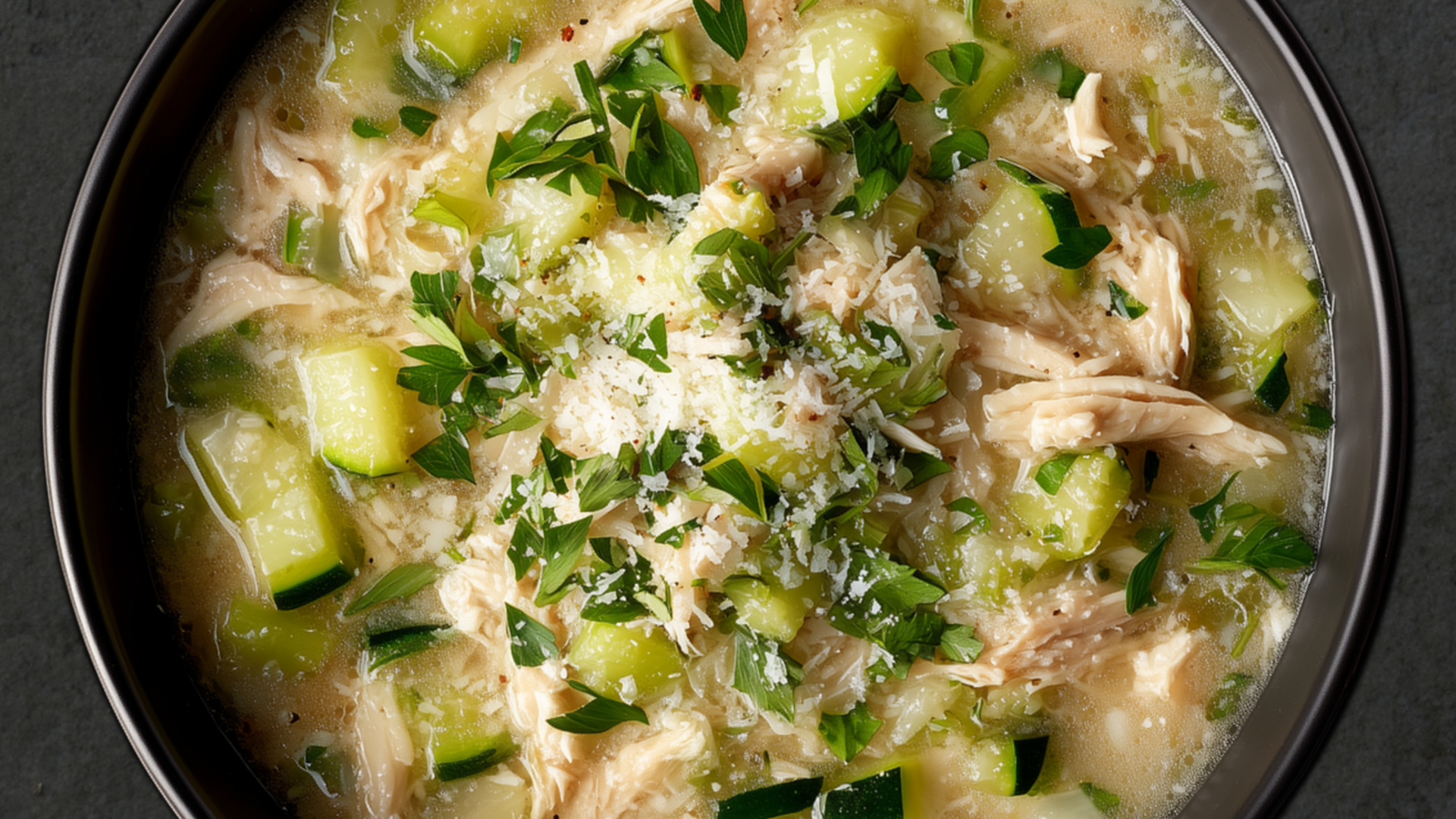
Ingredients
6 oz cooked chicken breast or thighs, shredded
2 cups chicken bone broth
¼ cup celery, diced
¼ cup zucchini, diced
2 Tbsp butter
¼ cup Parmesan cheese, finely grated
1 Tbsp olive oil (for finishing)
1 Tbsp fresh parsley, chopped
1 tsp fresh thyme leaves
Salt and pepper, to taste
Macronutrients
Protein: 30g
Fat: 49g
Carbs: 5g
Preparation
Heat a soup pot over medium heat and melt the butter (2 Tbsp). Add the diced celery (¼ cup) and diced zucchini (¼ cup) and sauté for 4–5 minutes until softened but not browned.
Season both sides of the chicken breast with salt and pepper, then place it in a hot skillet with a little butter. Cook for 5–7 minutes per side, or until golden brown. When finished cooking, shred the chicken and set aside.
Pour in the chicken bone broth (2 cups) and bring to a simmer. Add the shredded chicken (6 oz), fresh parsley (1 Tbsp), and fresh thyme leaves (1 tsp). Season with salt and pepper to taste.
Simmer the soup gently for 10–15 minutes to allow the flavors to blend. Stir in the grated Parmesan cheese (¼ cup) and continue simmering until the cheese is melted and the soup is rich and slightly creamy.
Drizzle the olive oil (1 Tbsp) over the soup just before serving for added richness. Serve hot, optionally garnished with extra fresh herbs.



FRIDAY 261120