
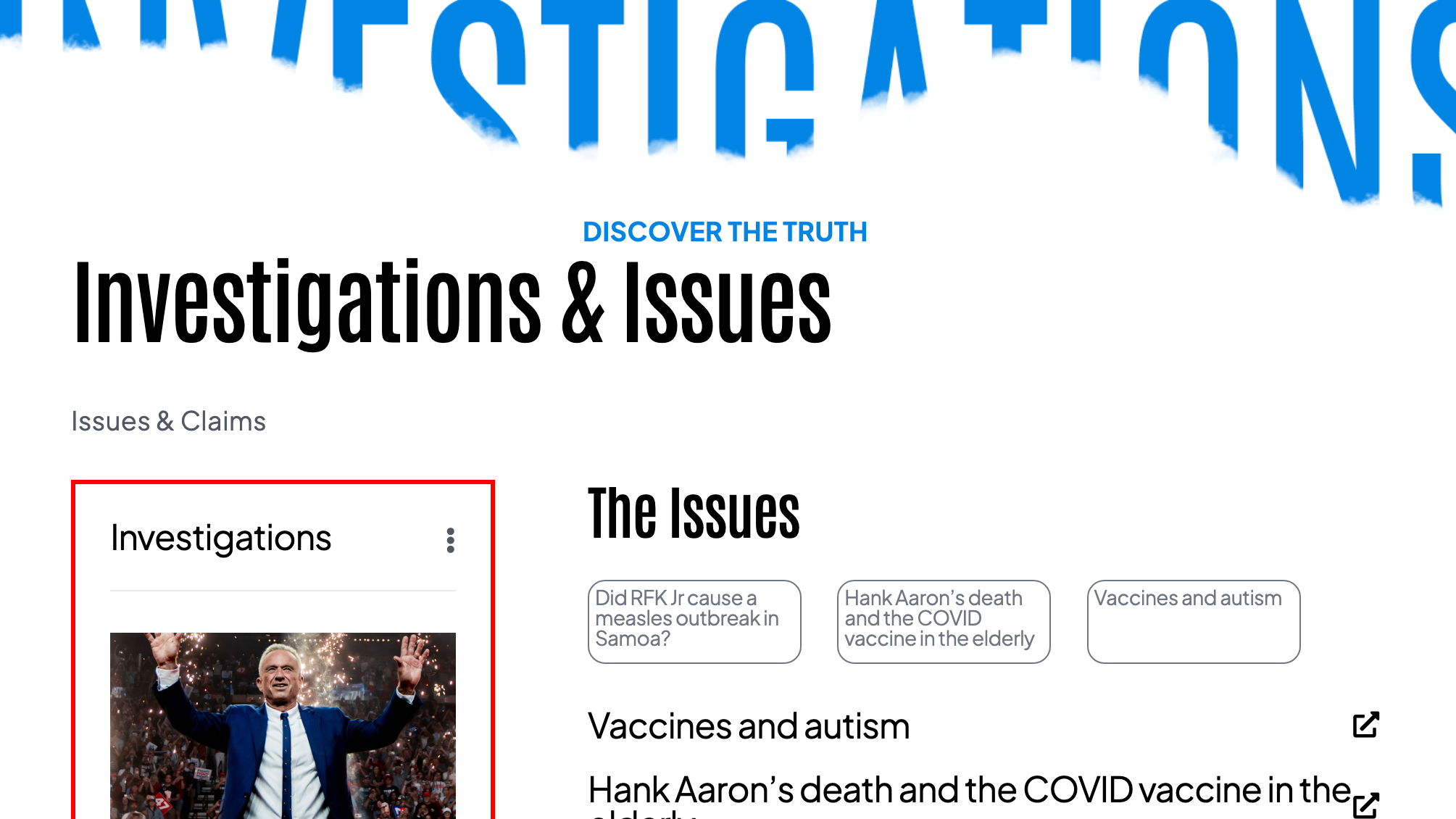
Last week we released our Investigation section of the Broken Science web site. This page features investigative work we’ve been doing in the background. If you follow us on our social media channels (FB, X, IG, LI)
you’re familiar with our reels that expose corruption in academic institutions and the larger medical environment. All those mini-investigations videos will live on this section of the site.
We are also sharing some deeper work looking into wrongful portrayals in the media, extensive cases of scientific misconduct, and more. This brings to the forefront cofounder Emily Kaplan’s work as an investigative reporter. The investigative team also includes Bob Kaplan, who is integral to the digging needed to pull this together.
We are launching with a look at Robert F. Kennedy Jr., President Trump’s Secretary of Health and Human Services nominee. Kennedy is often called an anti-vaxxer, despite being fully vaccinated minus the Covid vaccine, as are all his children. He has been called all kinds of names for his work trying to bring more transparency to the health landscape, from what we eat to how medications are tested.
In our deep dive into the accusations lobbied by the media and industries he’s primed to upset, we find that he is guilty of asking inconvenient questions. He asks why parents are not made aware of the risk factors that vaccines have, which are listed on the inserts, but not required to be shared with parents. He asks why vaccine manufacturers are released from all liability when all other medications are held accountable for their products. Where is the accountability for problems if the manufacturer cannot be sued by those with adverse effects? Why aren’t vaccines held to the same standards that other clinical trials are, like having to be grounded in a study with a true placebo group? He also advocates for informed consent by the individuals who receive them. In summary, Kennedy is asking rational questions and being smeared for it.
One big area of investigation for us was the measles outbreak in Samoa in 2019. Kennedy is routinely blamed for this. We found that the timeline for events in Samoa relieves Kennedy of these claims. Two babies died from the MMR vaccine after a nurse reconstituted the powder form of the vaccine with a muscle relaxer rather than sterile water. That happened on a Friday. By Monday, the Samoan government had shut down their entire vaccine program. Their vaccine program remained suspended for 9 months (July 9, 2018, to April 14, 2019). What did Kennedy, who was in the US for that entire period, have to do with that? It struck us that this narrative is incredibly infantilizing of the Samoan government, by inferring that some white, famous man in another country was dictating their health policy, and they were just blindly following his advice. They suggest the Prime Minister and others had no agency, intelligence, or influence. The media likes to mention that Kennedy visited Samoa, but this, too, is out of context, he visited after the government had reinstated the vaccine program.
The measles outbreak in Samoa resulted from the government shutting down their vaccine program for 9 months, not because Kennedy told people not to get vaccinated.


We have identified the media sources, the issues, and laid out how facts are being mischaracterized. There is a tremendous amount of reporting off of other reporting; errors are amplified and left uncorrected when the media neglects original sourcing in favor of relying on each other’s accounts. Best practices in the media used to prohibit a news outlet from relying on another outlet as a source. You had to go out and find actual sources. That is what we’re doing here. All our sources are linked, so you can check for yourself and dig in deeper if you would like.
These Investigations are large undertakings. We’ve been looking into Kennedy for 6 months. The goal here is to correct or confirm the record, and we hope the media will come to rely on BSI as a trusted source, with open sourcing, so they can get the story right.

Let's start with the truth!

Support the Broken Science Initiative.
Subscribe today →
One Comment
recent posts
Metabolic health, medical education, and the case for bringing clinicians and coaches together
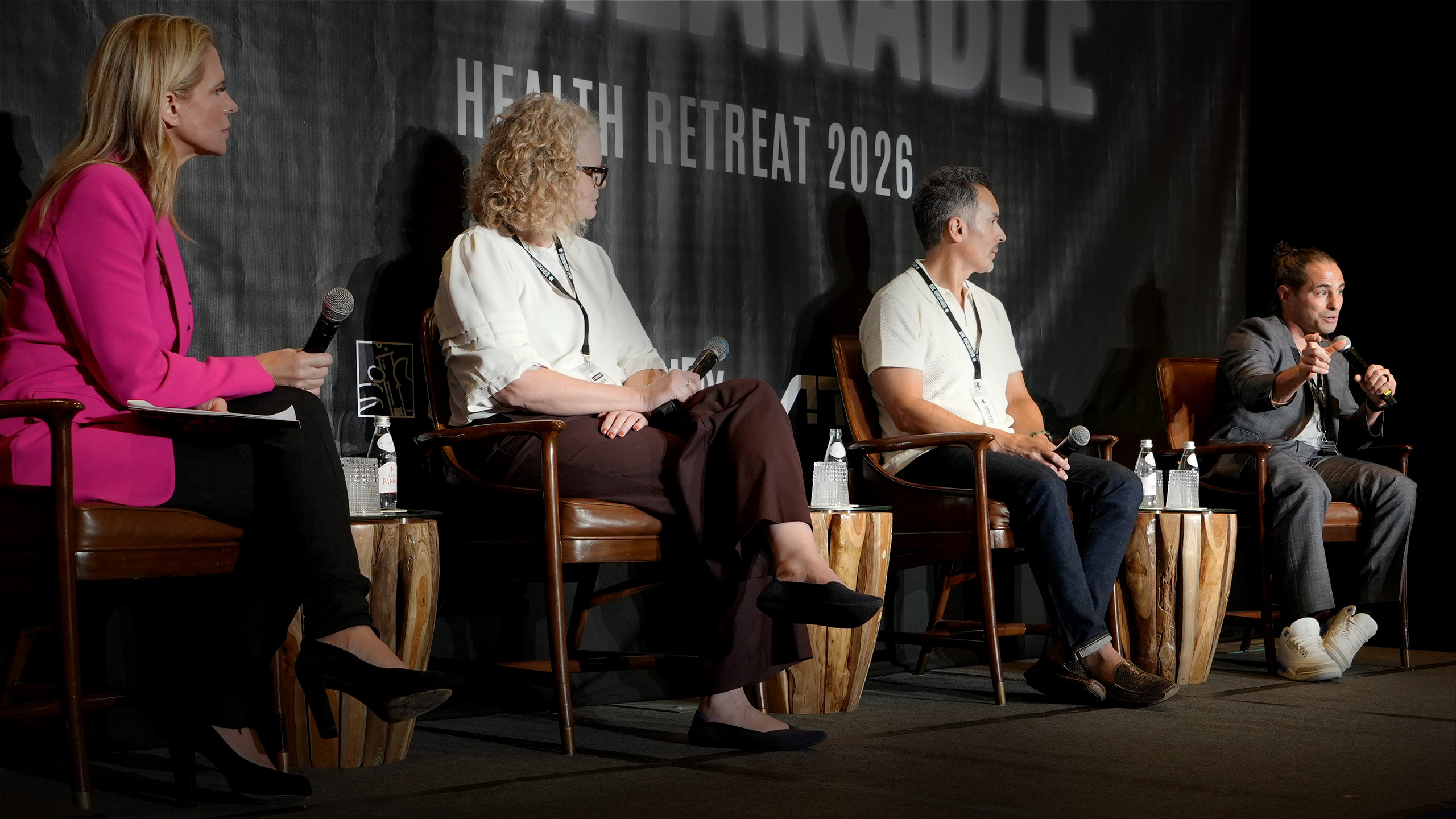
At the 2026 Unbreakable Health Retreat in Miami, Emily Kaplan hosted a panel with Bob Kaplan, Professor Thomas Seyfried, and Dr. Derek Lee on what it means to treat cancer as a metabolic disease. They discussed the glucose-ketone index (GKI), nutritional ketosis, and strategies aimed at restricting the fuels cancer cells depend on while considering how metabolic therapy can fit alongside standard cancer treatment.
The conversation also addressed the practical realities patients face when trying to pursue a metabolic approach within the conventional oncology system, including questions about nutrition, repurposed drugs, inherited cancer risk, and how to evaluate different treatment options. Seyfried and Lee connected these clinical questions back to mitochondrial dysfunction, fermentation, and the metabolic vulnerabilities that may offer additional targets for cancer treatment.
An abbreviated version of this discussion is available here, for free.
At the 2026 Unbreakable Health Retreat in Miami, Professor Thomas Seyfried presented the case that cancer is fundamentally a mitochondrial metabolic disease rather than primarily a genetic one. He contrasts the dominant somatic mutation theory with a metabolic model in which impaired mitochondrial respiration drives a shift toward fermentation, dysregulated cell growth, and the mutations commonly associated with cancer.
Citing the work of Otto Warburg and research from his lab at Boston College, Seyfried explains how cancer cells rely heavily on fermentable fuels—particularly glucose and glutamine—and why mitochondrial dysfunction sits upstream of many of the genetic abnormalities seen in tumors. He also discusses reactive oxygen species, altered cellular signaling, and the role of mitochondria in regulating cell growth and behavior.
The presentation then turns to the therapeutic implications of this model. Seyfried explains strategies aimed at placing tumor cells under metabolic stress by restricting the fuels they depend on, including ketogenic metabolic therapy and approaches targeting glucose and glutamine. For Seyfried, the therapeutic target follows directly from the biology: restrict the fuels cancer cells depend on, exploit their metabolic weaknesses, and treat mitochondrial dysfunction as the central feature of the disease.
An abbreviated version of this discussion is available here, for free.
MetFix and BSI Members can view the full 54-minute video.


Ah yes. Neglecting original sources. This is why in the sciences we are cognizant of the propagation of error and being careful with significant figures in quantification.