
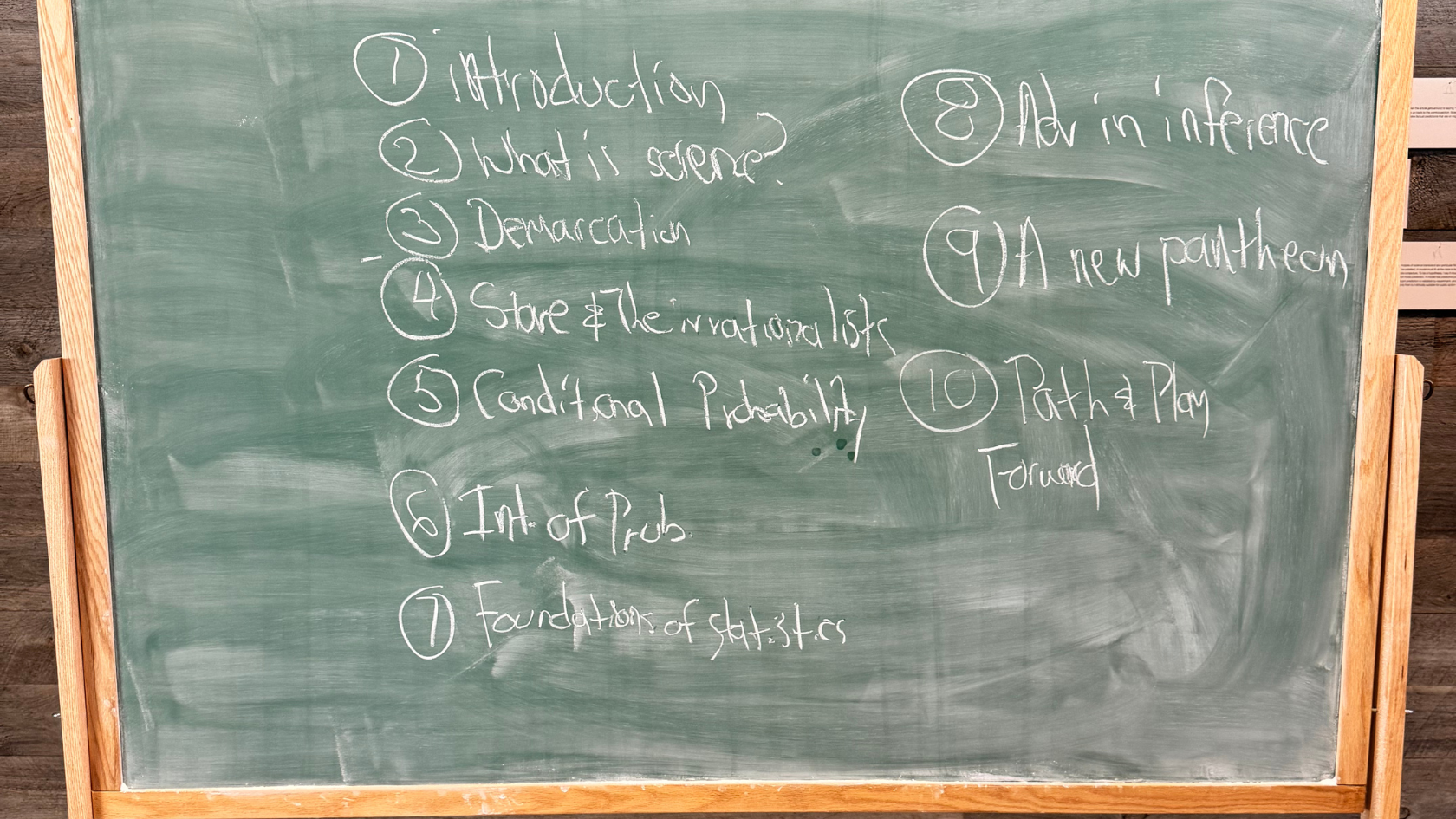
This two-day lecture series, held on January 11th and 12th, explored the foundational ideas in scientific irrationalism, focusing on David Stove’s critique of modern philosophical trends and the application of Bayes’ Theorem in scientific reasoning. Topics included the pitfalls of statistical misuse, such as the inverse fallacy and the misuse of p-values. These resources serve as a guide for further exploration of the ideas discussed. Through these works, we see the critical relevance of logical rigor in maintaining the reliability of science. Below are key references from the event, with a brief description of their importance in the context of the lectures.
Core Sources
1. Scientific Irrationalism by David Stove
This book critiques the rise of irrationalist tendencies in modern philosophy, particularly those that challenge the rationality and objectivity of science. Stove’s arguments form the cornerstone of this lecture series, emphasizing the importance of induction and logical consistency in scientific inquiry.
2. Probability Theory: The Logic of Science by E.T. Jaynes
Jaynes’ work offers a comprehensive framework for understanding probability as an extension of logic, challenging frequentist approaches. His principles underpin many discussions in this series, particularly in demonstrating the practical utility of Bayesian reasoning in scientific methodology.
Foundational Thinkers
David Hilbert & Richard Cox
These figures provide critical insights into the foundations of probability and its role in inference. Their contributions help contextualize Bayesian probability as a rational alternative to traditional significance testing.
Gerd Gigerenzer: “Mindless Statistics”
Gigerenzer’s essay critiques the over-reliance on statistical rituals, such as p-values, that have become entrenched in scientific research. His work resonates strongly with the lecture’s theme of challenging “mindless” adherence to flawed methodologies.
David Bakan: The Test of Significance in Psychological Research (1966)
Bakan’s seminal critique of significance testing in psychology highlights the inverse fallacy—interpreting p-values as direct evidence of a hypothesis. His analysis remains a pivotal point in understanding the replication crisis.
Additional Resources for Exploration
Charles Lambdin: “Significance Tests as Sorcery: Science is Empirical” (2012)
Lambdin argues that significance tests often act as magical rituals rather than empirical evidence, aligning with Stove’s view that modern science risks veering into irrationalism.
David Trafimow & Michael Marks: “Editorial” in Basic and Applied Social Psychology (2014)
This editorial is famous for banning p-values in their journal, making a bold statement about the limitations of significance testing and sparking widespread discussion in the scientific community.
Ronald L. Wasserstein & Nicole A. Lazar: “The ASA Statement on P-Values” (2016)
Regina L. Nuzzo
Jum Nunnally
Greg references this in his talk as an example of a poor description of p values.
Further Exploration
David Stove
- Probability and Hume’s Inductive Skepticism (1973)
- The Rationality of Induction (1986)
William M. Briggs
- Uncertainty: The Soul of Modeling, Probability & Statistics (2016)
- The Replacement for Hypothesis Testing (2019)
Gerd Gigerenzer
- “Mindless Statistics” (2004)
- “Surrogate Science: The Idol for a Universal Method for Scientific Inference” (2015)
- “Statistical Rituals: The Replication Delusion and How We Got There” (2018)

Let's start with the truth!

Support the Broken Science Initiative.
Subscribe today →
3 Comments
recent posts
Metabolic health, medical education, and the case for bringing clinicians and coaches together
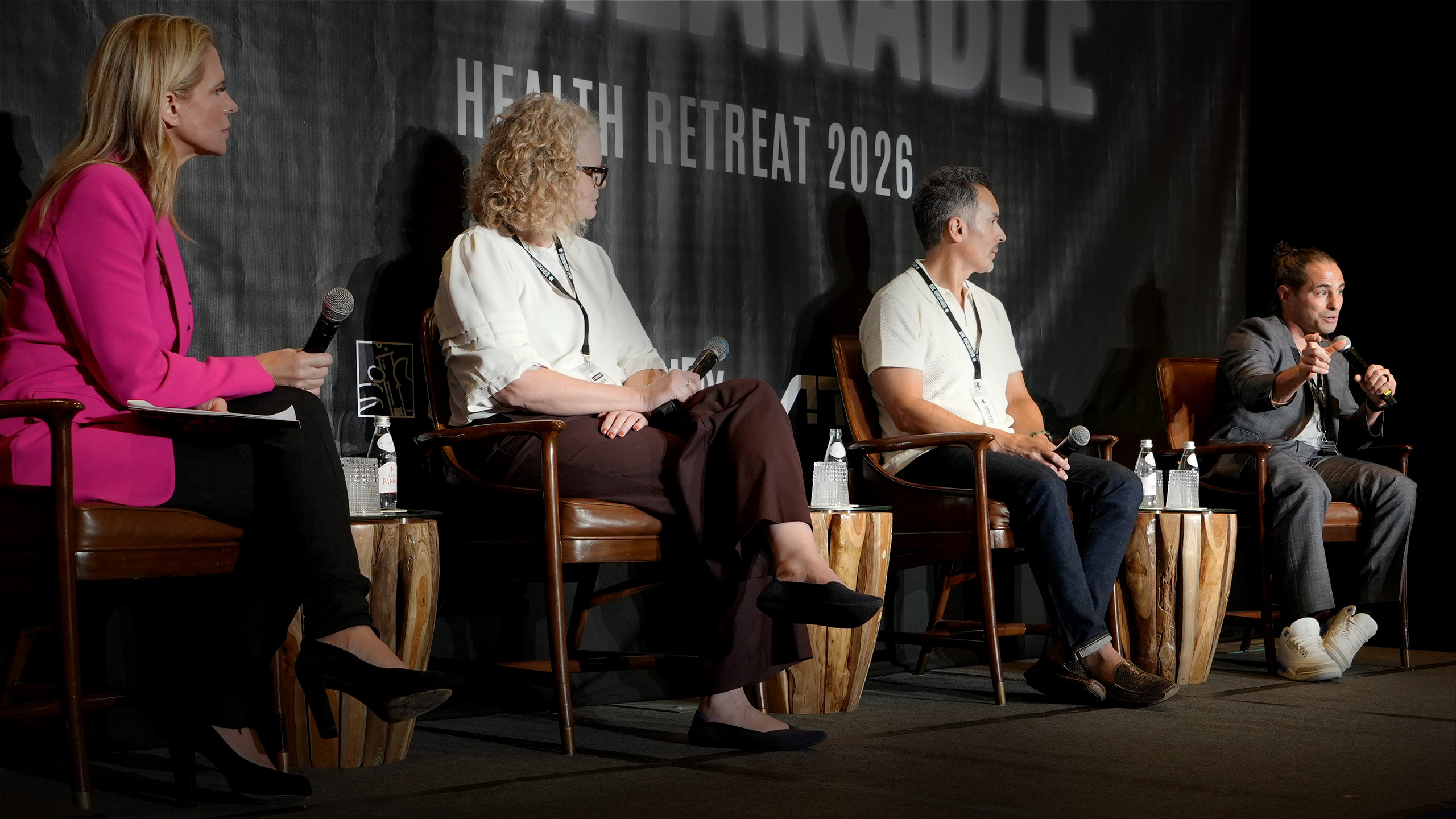
At the 2026 Unbreakable Health Retreat in Miami, Emily Kaplan hosted a panel with Bob Kaplan, Professor Thomas Seyfried, and Dr. Derek Lee on what it means to treat cancer as a metabolic disease. They discussed the glucose-ketone index (GKI), nutritional ketosis, and strategies aimed at restricting the fuels cancer cells depend on while considering how metabolic therapy can fit alongside standard cancer treatment.
The conversation also addressed the practical realities patients face when trying to pursue a metabolic approach within the conventional oncology system, including questions about nutrition, repurposed drugs, inherited cancer risk, and how to evaluate different treatment options. Seyfried and Lee connected these clinical questions back to mitochondrial dysfunction, fermentation, and the metabolic vulnerabilities that may offer additional targets for cancer treatment.
An abbreviated version of this discussion is available here, for free.
At the 2026 Unbreakable Health Retreat in Miami, Professor Thomas Seyfried presented the case that cancer is fundamentally a mitochondrial metabolic disease rather than primarily a genetic one. He contrasts the dominant somatic mutation theory with a metabolic model in which impaired mitochondrial respiration drives a shift toward fermentation, dysregulated cell growth, and the mutations commonly associated with cancer.
Citing the work of Otto Warburg and research from his lab at Boston College, Seyfried explains how cancer cells rely heavily on fermentable fuels—particularly glucose and glutamine—and why mitochondrial dysfunction sits upstream of many of the genetic abnormalities seen in tumors. He also discusses reactive oxygen species, altered cellular signaling, and the role of mitochondria in regulating cell growth and behavior.
The presentation then turns to the therapeutic implications of this model. Seyfried explains strategies aimed at placing tumor cells under metabolic stress by restricting the fuels they depend on, including ketogenic metabolic therapy and approaches targeting glucose and glutamine. For Seyfried, the therapeutic target follows directly from the biology: restrict the fuels cancer cells depend on, exploit their metabolic weaknesses, and treat mitochondrial dysfunction as the central feature of the disease.
An abbreviated version of this discussion is available here, for free.
MetFix and BSI Members can view the full 54-minute video.


Thank you for an incredible weekend of learning.
Hope to be at the next one!
I would love to be at the next one! Looks and sounds amazing.