



Chicken Marsala
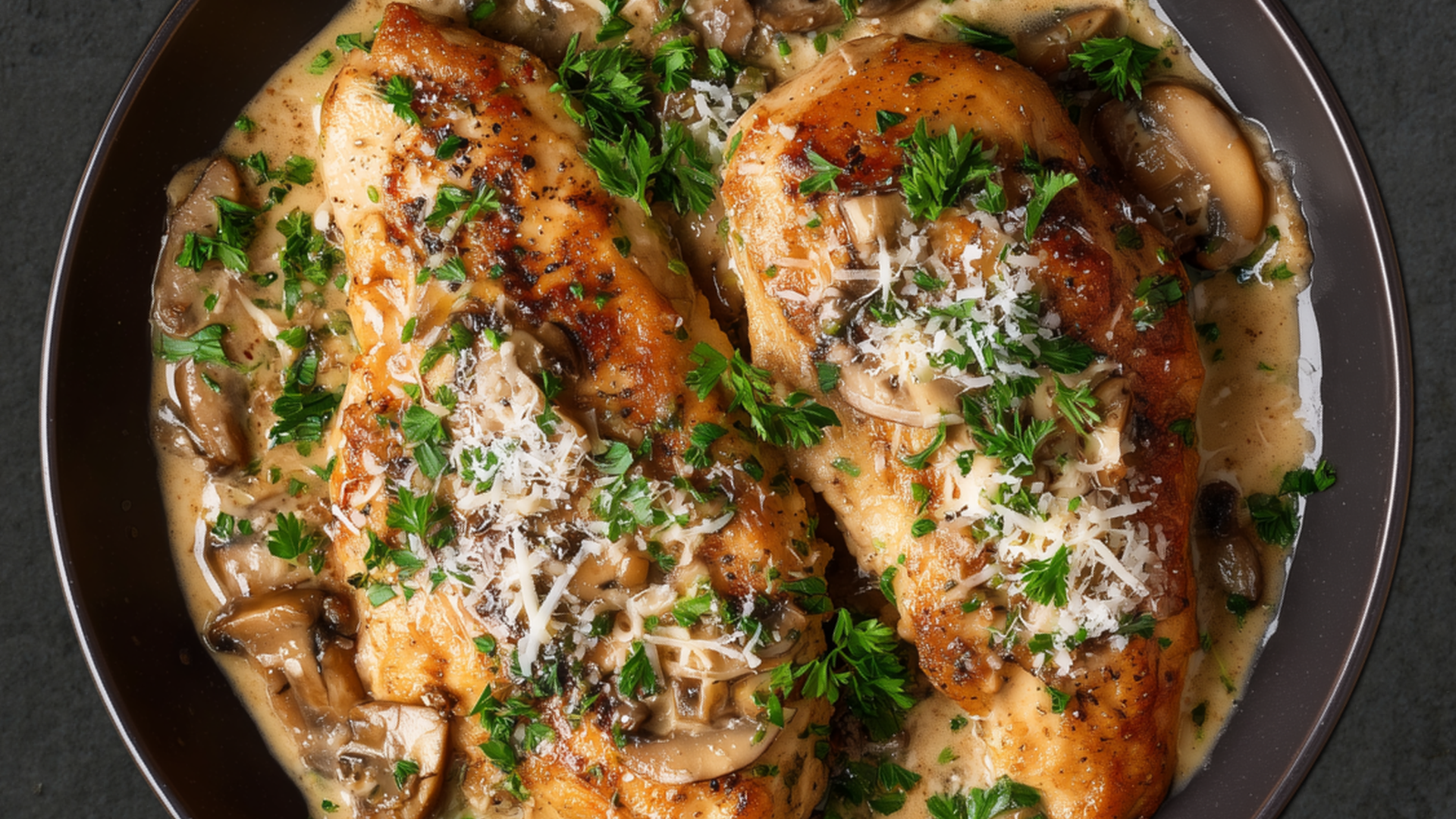
Chicken breasts simmered in a rich Marsala wine and mushroom cream sauce.
Ingredients
For the Chicken:
4 boneless, skinless chicken breasts (6 oz each)
½ cup almond flour (for dredging)
½ cup grated Parmesan cheese
Salt and black pepper, to taste
3 Tbsp butter or beef tallow (for searing)
For the Sauce:
2 Tbsp butter or beef tallow
2 cups cremini or button mushrooms, sliced
2 cloves garlic, minced
1 cup dry Marsala wine (unsweetened, no added sugar)
1 cup chicken broth (unsalted)
½ cup heavy cream
1 tsp fresh thyme (or ½ tsp dried)
Salt and black pepper, to taste
Optional Garnish & Serving:
Fresh parsley, chopped
Extra Parmesan
Cauliflower mash or sautéed spinach (as a keto side)
Macronutrients
(per serving, serves 4)
Protein: 49g
Fat: 39g
Carbs: 8g
Preparation
Pat chicken breasts dry. Season with salt and pepper. Dredge lightly in almond flour mixed with Parmesan.
Heat 3 Tbsp butter or tallow in a large skillet over medium-high. Cook chicken 4–5 minutes per side until golden brown and cooked through (165°F internal). Remove and set aside.
In the same skillet, melt 2 Tbsp butter or tallow. Add mushrooms and sauté 5–6 minutes until browned. Stir in garlic and cook 1 minute.
Pour in Marsala wine, scraping up browned bits. Simmer 2–3 minutes. Add chicken broth, thyme, and heavy cream. Cook 5–7 minutes until sauce reduces and thickens slightly.
Return chicken to the skillet, spoon sauce over the top, and simmer 2–3 minutes to warm through.
Garnish with parsley and extra Parmesan. Serve hot with cauliflower mash or spinach.



20 - 25 - 30
205 - 225 - 245
(No pull-ups - shoulder injury)