




Stuffed Pork Chops
Thick-cut pork chops filled with a creamy spinach, mushroom, and cheese stuffing, pan-seared in butter and finished in the oven.
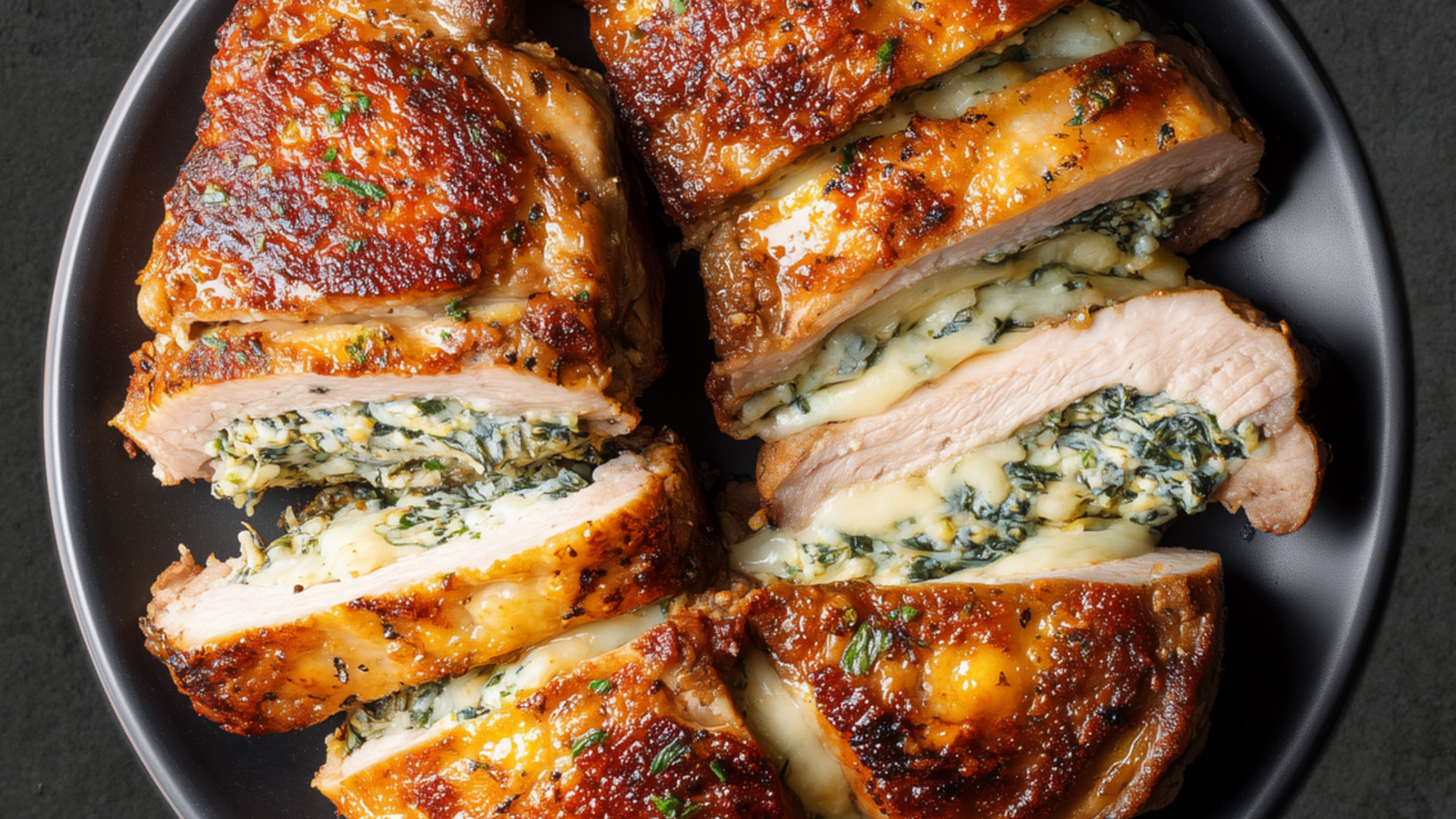
Ingredients
For the Pork Chops:
4 thick-cut pork chops (bone-in or boneless, about 1 ½ inches thick)
2 Tbsp butter or tallow (for searing)
Salt and black pepper, to taste
For the Stuffing:
1 Tbsp butter
1 cup mushrooms, finely diced
2 cups fresh spinach, chopped
2 cloves garlic, minced
½ cup cream cheese, softened
½ cup shredded mozzarella cheese
¼ cup grated Parmesan cheese
1 tsp fresh thyme (or ½ tsp dried)
½ tsp smoked paprika
Salt and pepper, to taste
Optional Garnish:
Fresh parsley, chopped
Extra Parmesan
Macronutrients
(per serving, serves 4)
Protein: 47g
Fat: 38g
Carbs: 4g
Preparation
Using a sharp knife, cut a deep pocket into the side of each pork chop, being careful not to cut through. Season generously with salt and pepper.
In a skillet, melt 1 Tbsp butter over medium heat. Sauté mushrooms 3–4 minutes until softened. Add spinach and garlic, cooking until wilted. Remove from heat, stir in cream cheese, mozzarella, Parmesan, thyme, paprika, salt, and pepper until creamy and well combined.
Spoon stuffing into each pork chop pocket, pressing filling inside. Secure with toothpicks if needed.
Heat 2 Tbsp butter or tallow in a cast iron skillet over medium-high. Sear pork chops 3–4 minutes per side until golden brown.
Transfer skillet to a preheated 375°F oven. Bake 12–15 minutes, until pork reaches 145°F internal temperature.
Let rest 5 minutes before serving. Garnish with parsley and Parmesan if desired.



TUESDAY 260224