




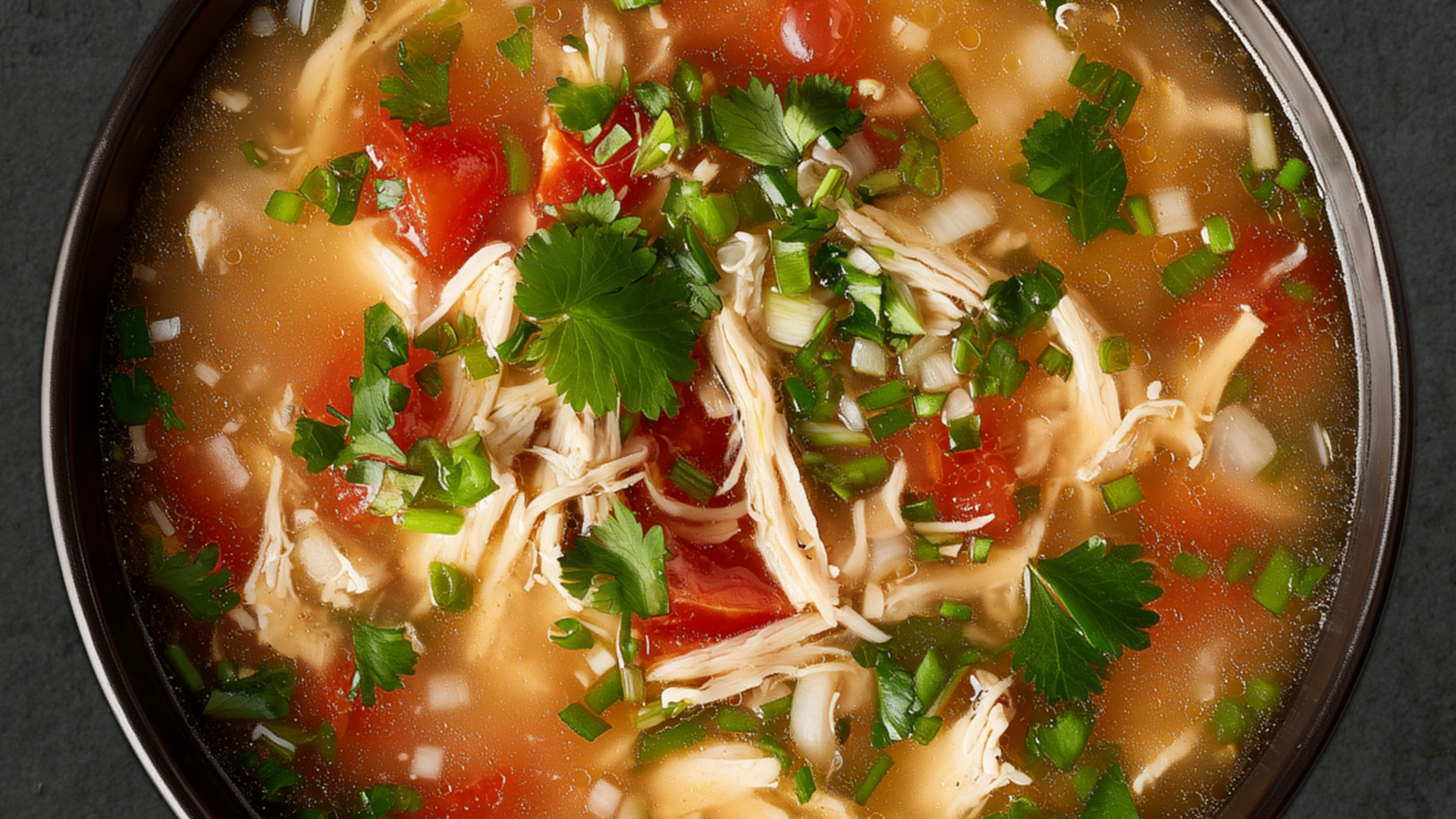
Ginger and Tomato Chicken Soup
A light yet hearty chicken soup infused with fresh ginger and simmered tomatoes.
Ingredients
For the Soup:
2 lbs boneless, skin-on chicken thighs (or bone-in for extra flavor)
2 Tbsp butter or tallow (for searing)
1 medium onion, diced
4 cloves garlic, minced
2 Tbsp fresh ginger, grated or finely minced
2 medium tomatoes, diced (or 1 can 14 oz no-sugar-added diced tomatoes)
6 cups chicken broth (unsalted)
1 Tbsp soy sauce or coconut aminos
1 tsp fish sauce (optional, for depth)
1 tsp turmeric powder (optional, for color and warmth)
Salt and black pepper, to taste
For Finishing:
½ cup coconut cream or heavy cream (optional, for richness)
Juice of ½ lemon or lime
Fresh cilantro or scallions, chopped
Macronutrients
(per serving, makes 6)
Protein: 28g
Fat: 32g
Carbs: 8g
Preparation
Pat chicken dry, season with salt and pepper. In a large pot, heat butter or tallow over medium-high. Sear chicken 3–4 minutes per side until golden. Remove and set aside.
In the same pot, add onion and sauté 4–5 minutes until softened. Stir in garlic and ginger, cooking 1–2 minutes until fragrant.
Stir in diced tomatoes (or canned) and cook 3–4 minutes until softened and slightly broken down.
Return chicken to the pot. Add broth, soy sauce, fish sauce, and turmeric. Bring to a boil, then reduce heat to low. Cover and simmer for 30–35 minutes, until chicken is tender and flavors meld.
Remove chicken, shred into bite-sized pieces, and return to soup. Stir in coconut cream or heavy cream (if using) and lemon or lime juice.
Ladle soup into bowls and garnish with cilantro or scallions.



5 x
10 ring rows (45" to floor)
20 db snatch (35#)
10:41