



Mediterranean Baked Salmon
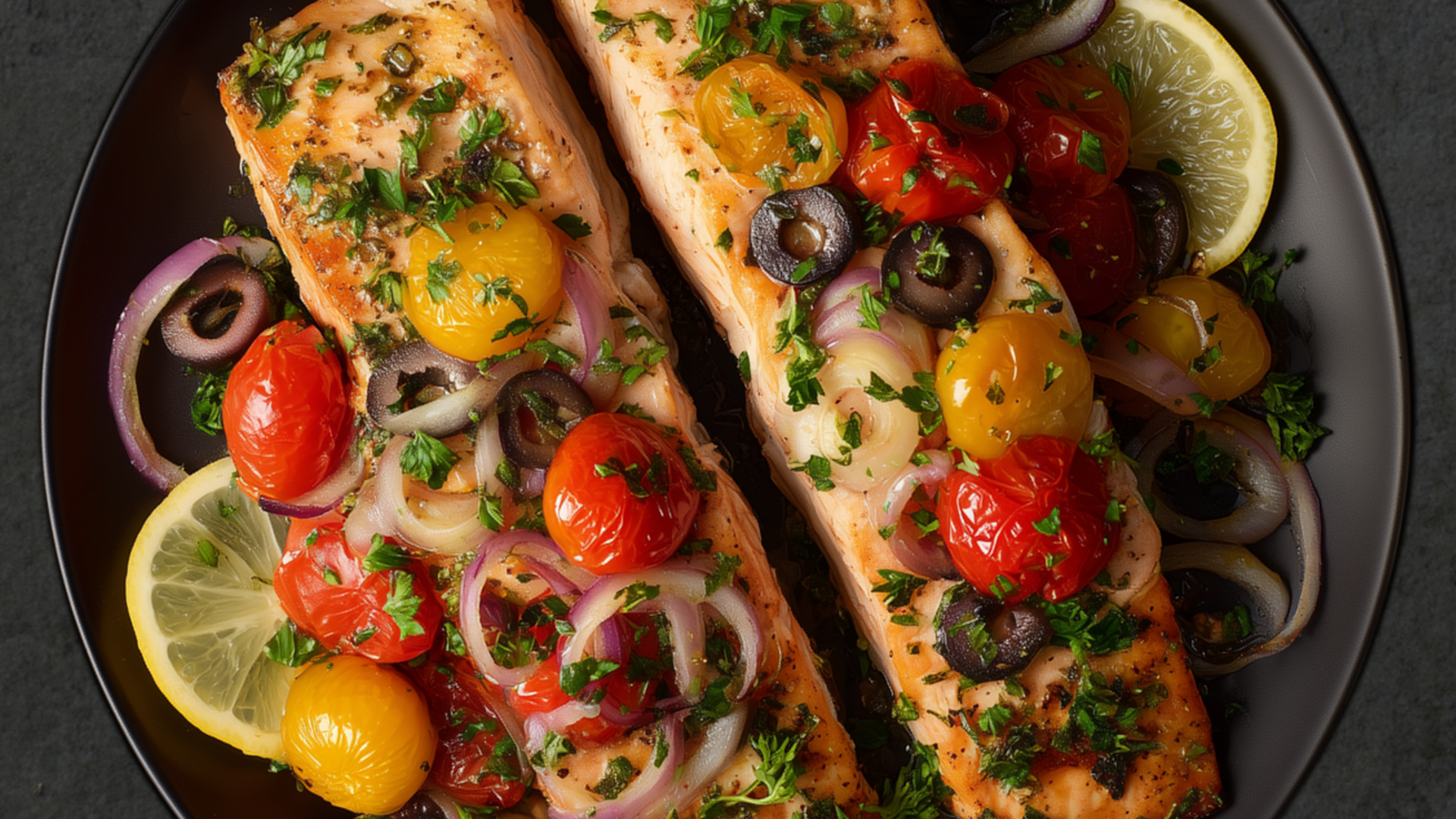
Oven-baked salmon fillets topped with a fresh Mediterranean blend of tomatoes, olives, garlic, lemon, and herbs.
Ingredients
For the Salmon:
4 salmon fillets (6 oz each)
2 Tbsp butter or tallow, melted
Salt and black pepper, to taste
For the Mediterranean Topping:
1 cup cherry tomatoes, halved
½ cup Kalamata olives, pitted and sliced
¼ cup red onion, finely chopped
3 cloves garlic, minced
2 Tbsp capers, drained
2 Tbsp fresh parsley, chopped
1 Tbsp fresh oregano (or 1 tsp dried)
2 Tbsp olive oil
2 Tbsp lemon juice (freshly squeezed)
1 tsp lemon zest
Salt and black pepper, to taste
Optional Garnish:
Extra parsley
Lemon wedges
Crumbled feta cheese (optional for serving)
Macronutrients
(per serving, serves 4)
Protein: 40g
Fat: 38g
Carbs: 7g
Preparation
Set oven to 400°F and line a baking dish with parchment or lightly grease.
Pat salmon dry, brush with melted butter or tallow, and season with salt and pepper. Arrange fillets in the baking dish.
In a bowl, combine tomatoes, olives, onion, garlic, capers, parsley, oregano, olive oil, lemon juice, zest, salt, and pepper. Toss well.
Spoon the topping evenly over the salmon fillets. Bake uncovered for 15–18 minutes, until salmon flakes easily with a fork (145°F internal temperature).
Garnish with fresh parsley, lemon wedges, and optional crumbled feta. Serve warm.



MONDAY 260316