



The
Daily
Fix
Rest
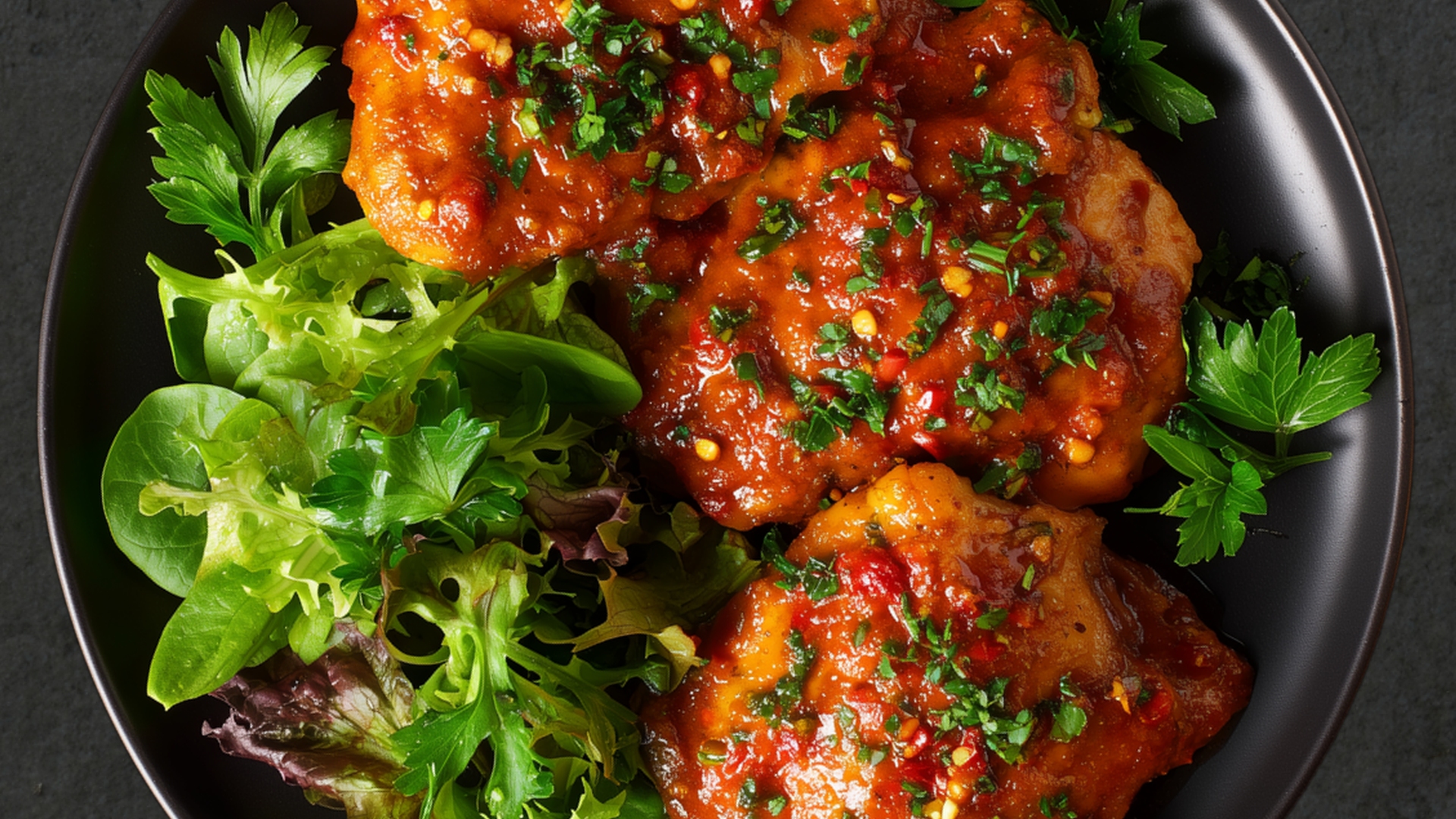
Peri Peri Chicken
The Truth About Salt
Rest day
Spicy chicken marinated in a smoky, garlicky peri peri sauce and seared in butter or tallow for bold, flavorful heat and rich texture.
What they don’t tell us about sodium, blood pressure, and choosing healthier sources
Enjoy the recovery time, or make-up anything you missed from last week.
Ingredients
1 ½ lbs chicken thighs or breasts (boneless, skinless)
2 Tbsp butter or tallow (for cooking)
2 red chili peppers (or 1 Tbsp chili paste)
2 cloves garlic
1 small red bell pepper, chopped
2 Tbsp lemon juice
2 Tbsp apple cider vinegar
1 tsp smoked paprika
½ tsp cayenne pepper (optional, for extra heat)
½ tsp dried oregano
Salt and black pepper, to taste
Fresh parsley, chopped (for garnish)
Macronutrients
(per serving, serves 4)
Protein: 40g
Fat: 24g
Carbs: 4g
Preparation
Add chili peppers, garlic, bell pepper, lemon juice, vinegar, smoked paprika, cayenne, oregano, salt, and black pepper to a blender. Blend until smooth to form the peri peri sauce.
Place chicken in a bowl or bag and pour over half the sauce. Mix well to coat evenly. Marinate for at least 30 minutes or up to 4 hours in the refrigerator.
Heat butter or tallow in a large skillet over medium-high heat. Add chicken and remaining sauce to the pan. Sear 4–5 minutes per side until golden brown and fully cooked through.
Lower heat and toss the chicken to coat, then simmer for 2–3 minutes until the sauce thickens slightly.
Remove from heat, spoon the sauce over the chicken, and garnish with fresh parsley.
Serve hot with cauliflower rice, grilled vegetables, or a crisp green salad.

In this article, A Midwestern Doctor examines the long-standing medical advice to restrict dietary salt, arguing that the case against sodium is often overstated. The modern “war on salt” largely began with the 1977 U.S. dietary guidelines, which promoted sodium restriction despite limited evidence linking typical salt intake to major health risks for most people.
The article reviews research suggesting that reducing sodium generally produces only modest changes in blood pressure and that excessively low sodium intake may carry risks of its own. Evidence cited includes associations between low sodium levels and higher rates of fatigue, confusion, hyponatremia, and cardiovascular complications. The author also highlights a common pattern in physiology—“U-shaped curves”—where both too little and too much of a substance can be harmful, suggesting that sodium likely follows a similar pattern.
The piece further explores how sodium interacts with broader physiological systems, including fluid balance, electrolyte balance, and the electrical properties of blood and tissues (often described through “zeta potential”). From this perspective, extremely low sodium intake may impair circulation and cellular function, while excessively high intake can also create problems—particularly when it comes from highly processed foods.
Finally, the article distinguishes between refined salt commonly found in processed foods and less-processed mineral salts, suggesting that many health issues attributed to salt may actually stem from additives, mineral imbalances, or other ingredients in processed foods. Overall, the author argues that moderate sodium intake, balanced with adequate potassium and whole foods, is likely more consistent with human physiology than salt restriction.
SUNDAY 260315