



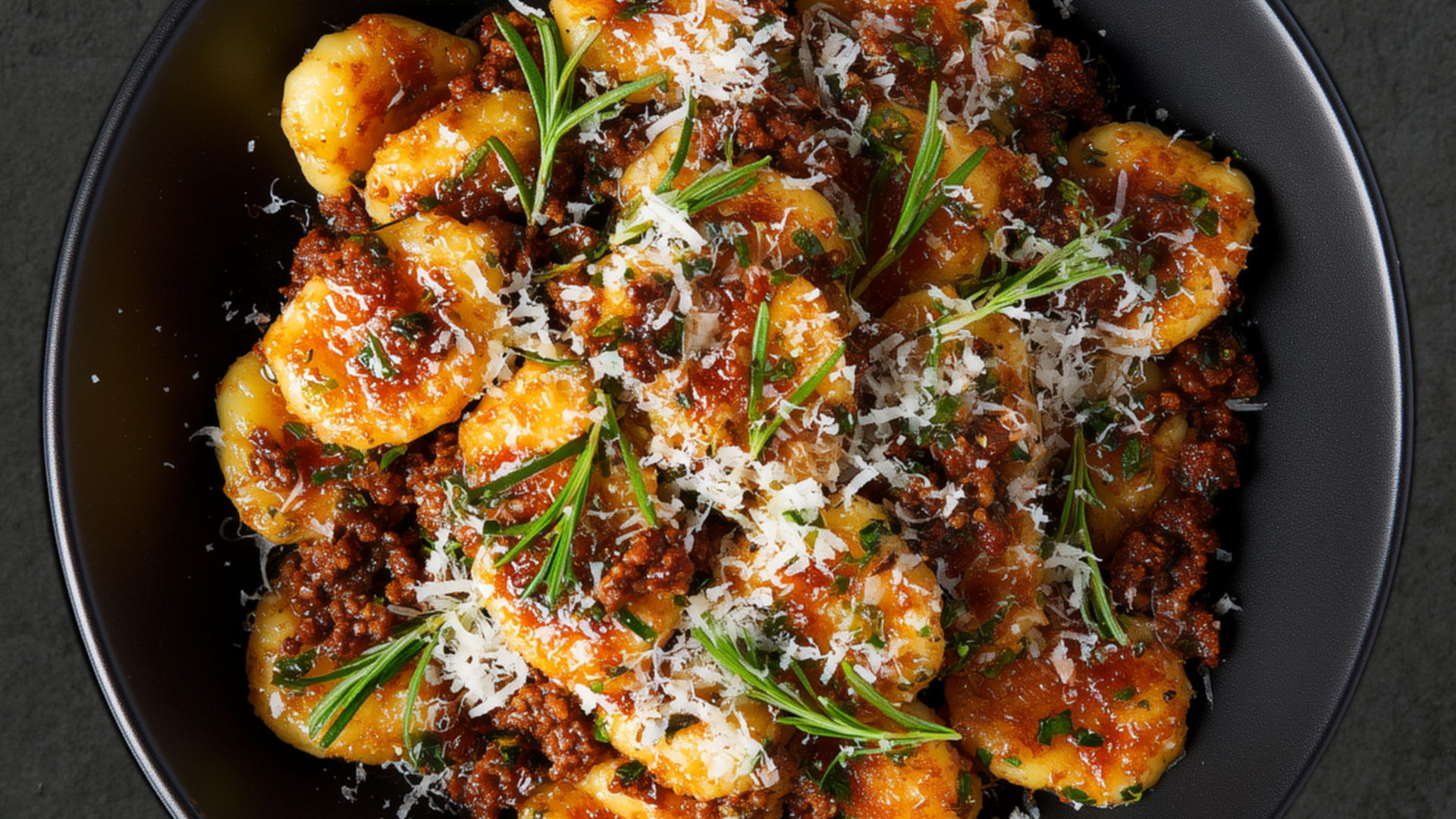
Beef & Herb “Gnocchi” with Brown Butter Sauce
High-protein gnocchi made from ricotta and almond flour, pan-seared in butter and served with savory ground beef, herbs, and a drizzle of olive oil to finish.
Ingredients
For the Gnocchi:
1 cup whole-milk ricotta (drained well)
½ cup finely grated Parmesan cheese
¾ cup almond flour
1 large egg
½ tsp sea salt
¼ tsp garlic powder
For the Beef & Sauce:
6 oz ground beef (80/20)
1 Tbsp butter (for searing beef)
2 Tbsp butter (for browning sauce)
1 clove garlic, minced
1 tsp fresh rosemary, finely chopped
1 tsp fresh thyme leaves
Salt and pepper, to taste
1 tsp olive oil (for finishing)
Optional garnish:
Shaved Parmesan or chopped parsley
Macronutrients
(per serving, makes 2)
Protein: 27g
Fat: 45g
Carbs: 7g
Preparation
In a bowl, mix ricotta, Parmesan, almond flour, egg, salt, and garlic powder until a soft dough forms.
Roll the dough into long logs on a lightly floured surface (use almond flour to dust). Cut into small gnocchi pieces and lightly press with a fork for texture.
Bring a pot of salted water to a gentle simmer. Drop gnocchi in and cook until they float (1–2 minutes). Remove and drain well.
In a skillet over medium-high heat, melt 1 Tbsp butter. Add ground beef, season with salt and pepper, and cook 5–6 minutes until browned. Remove and set aside.
In the same skillet, melt 2 Tbsp butter over medium heat. Add minced garlic, rosemary, and thyme, cooking 1–2 minutes until fragrant and the butter turns golden.
Add the cooked gnocchi and sear for 2–3 minutes until lightly crisped and golden on the edges.
Return the beef to the skillet, toss to coat everything in the brown butter sauce, and remove from heat.
Plate and finish with a drizzle of olive oil and optional Parmesan or parsley.



Took my time. Used a 35 lb bar and band assisted dips. Just happy to be going overhead again.