




The
Daily
Fix

260502

SATURDAY 260502
0 0 0

Rest

Butter-Lemon Salmon with Capers

National War College Speech: Part 2

Article Heading Photo
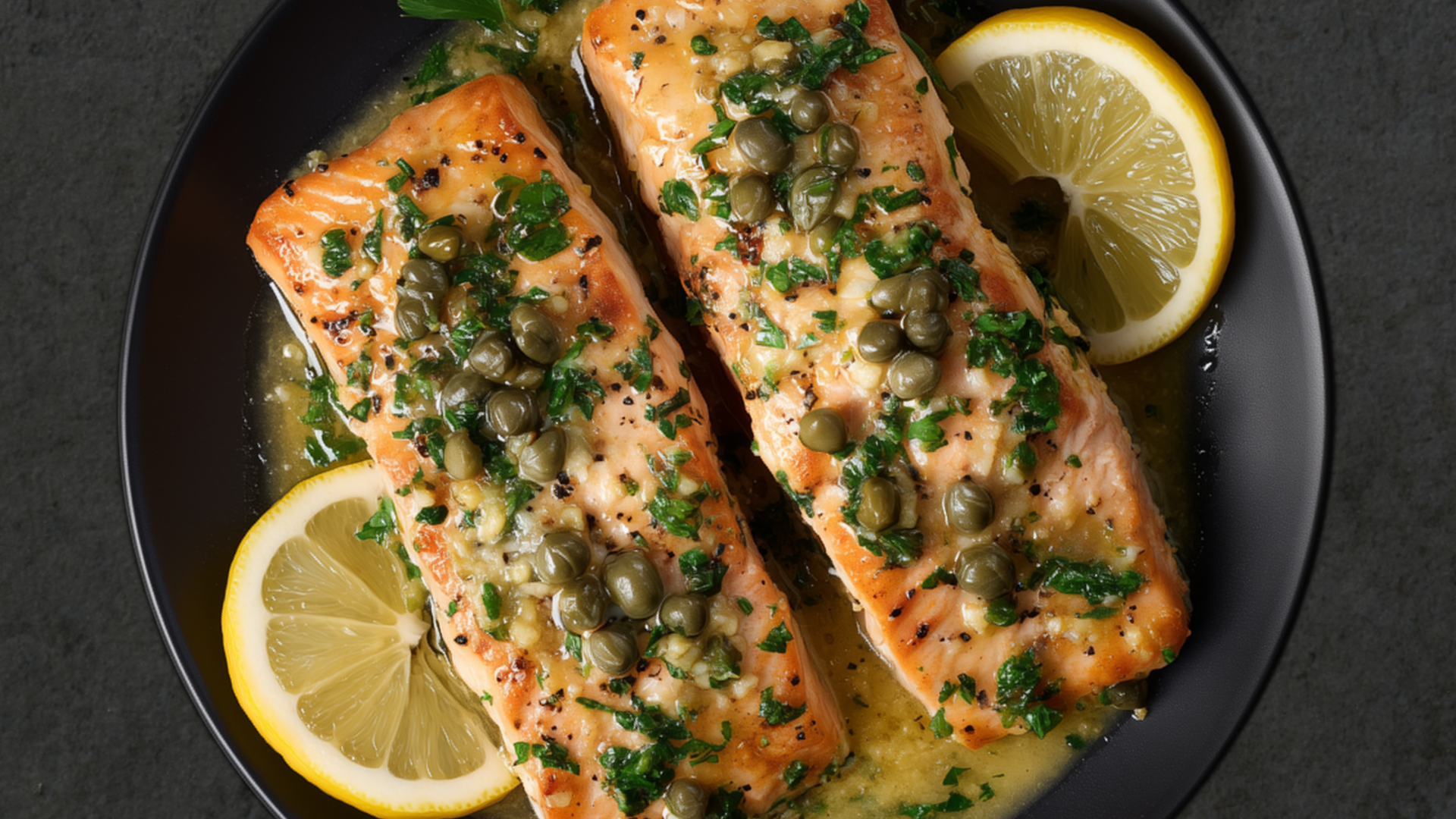
Photo of Butter-Lemon Salmon with Capers

Rest day

Seared salmon finished in a rich butter-lemon sauce with capers—a simple, and elegant meal.
Coach explains a measurable, scientific definition of fitness

Tab Photo

The
Daily
Fix

Photo of Butter-Lemon Salmon with Capers Article Heading Photo

Enjoy the recovery time, or make-up anything you missed from last week.

Ingredients

4 salmon fillets (about 6 oz each)
2 Tbsp butter or tallow (for searing)
2 Tbsp butter (for sauce)
2 cloves garlic, minced
2 Tbsp lemon juice (freshly squeezed)
1 Tbsp capers, drained
Salt and black pepper, to taste
Lemon wedges and chopped parsley (for garnish)

Macronutrients
(per serving, serves 4)

Protein: 39g
Fat: 34g
Carbs: 2g

Preparation

Pat salmon fillets dry and season both sides generously with salt and black pepper.

Heat 2 Tbsp butter or tallow in a skillet over medium-high heat. Add the salmon, skin-side down if applicable, and sear 4–5 minutes until golden and crisp. Flip and cook another 2–3 minutes until just cooked through. Remove and set aside.

Reduce heat to medium and add 2 Tbsp butter to the same skillet. Once melted, stir in garlic and cook for 30 seconds until fragrant.

Add lemon juice and capers, stirring to combine and scrape up any browned bits from the pan. Simmer for 1–2 minutes to slightly reduce.

Return the salmon to the skillet and spoon the sauce over the top to coat.

Remove from heat and garnish with chopped parsley and lemon wedges before serving.

Continuing his presentation at the National War College at National Defense University, Coach Glassman outlines a scientific framework for measuring fitness through human performance. He proposes defining fitness as increased work capacity across broad time and modal domains, using the basic physical units of meters, kilograms, and seconds. In this model, performance can be quantified through power—force multiplied by distance and divided by time—and tracked across a range of efforts, from short bursts to longer endurance work. By graphing power output across these durations, an individual’s total work capacity can be measured in objective, repeatable terms.

Greg criticizes much of the fitness industry for relying on vague claims and physiological markers that are disconnected from real-world performance. Instead, he argues that any training program must be evaluated through measurable outcomes. He proposes three key criteria for assessing training methods: efficacy, efficiency, and safety—what results a program produces, how quickly those results occur, and how many participants are injured in the process. For soldiers preparing for the unpredictable demands of combat, fitness must be developed across many different movements and time domains, and that any program claiming to deliver results should be able to defend those claims with clear, measurable data.

Watch

COMMENTS

0 COMMENTS 0 COMMENTS 0 COMMENTS SHARE LOGIN PRINT
Log In to leave a comment - Log In?
Go to Top