




The
Daily
Fix

260510

SUNDAY 260510
0 0 0

Rest

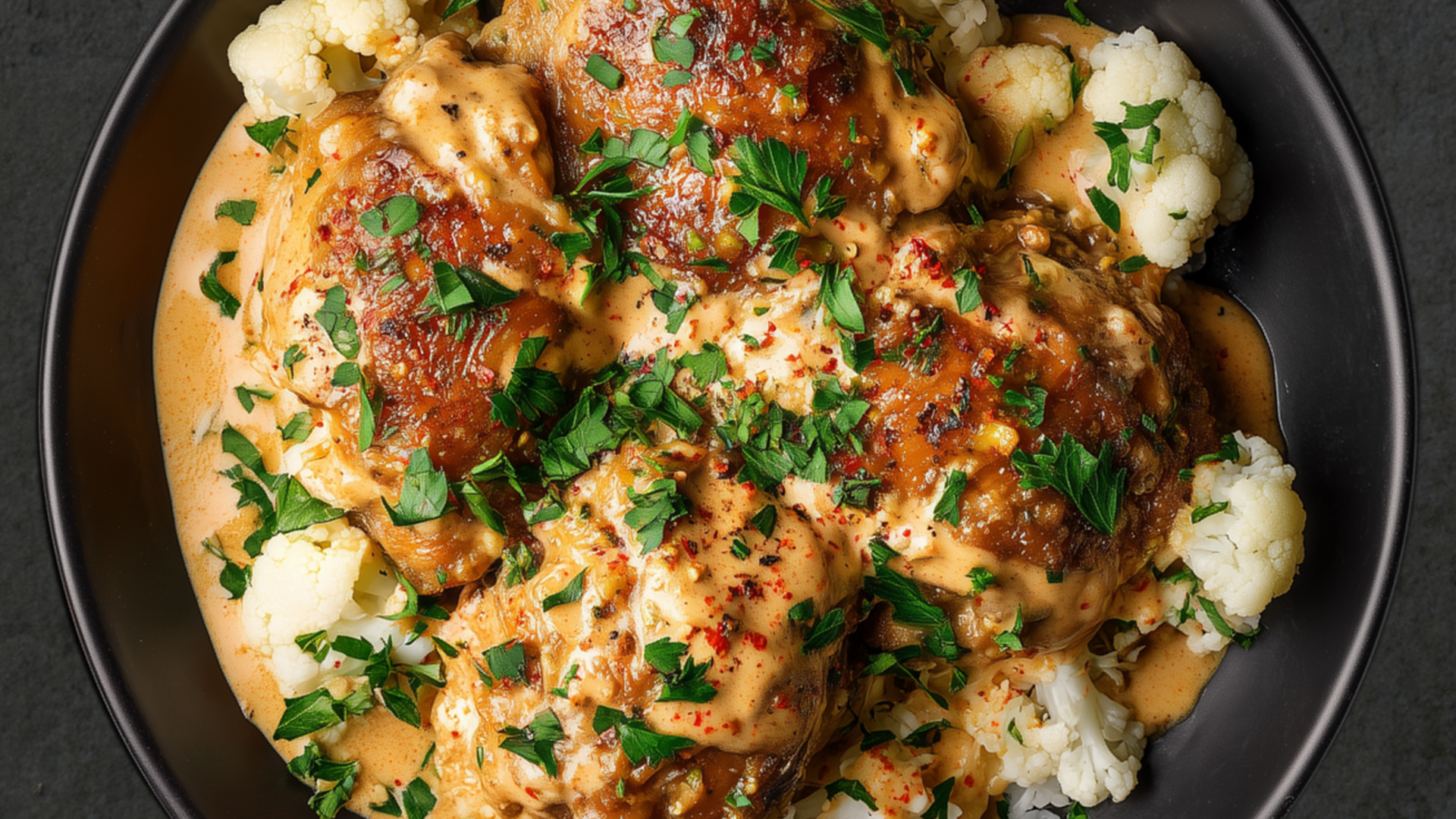
Paprika Chicken with Cauliflower

Is The Viral "Let's Buy Spirit Airlines" Campaign a Scam?

Article Heading Photo
Photo of Paprika Chicken with Cauliflower

Rest day

Chicken thighs simmered in a smoky Hungarian paprika sauce, served over buttery cauliflower florets.
How to actually fact-check TikTok/Instagram campaigns in 2026

Tab Photo

The
Daily
Fix

Photo of Paprika Chicken with Cauliflower Article Heading Photo

Enjoy the recovery time, or make-up anything you missed from last week.

Ingredients

6 oz boneless, skin-on chicken thighs
1½ Tbsp butter or tallow (for searing and cooking)
½ cup cauliflower florets
¼ cup onion, finely chopped
1 clove garlic, minced
1 tsp Hungarian sweet paprika (or smoked paprika)
2 Tbsp sour cream (full-fat)
¼ cup chicken broth
Salt and pepper, to taste
1 tsp olive oil (for finishing)
Optional garnish: chopped parsley or extra paprika dusting

Macronutrients
(makes 1 serving)

Protein: 40g
Fat: 40g
Carbs: 6g

Preparation

Season chicken thighs with salt and pepper. Heat 1 Tbsp butter or tallow in a skillet over medium-high heat. Sear chicken skin-side down for 4–5 minutes until golden. Flip and cook for another 3–4 minutes. Remove and set aside.

In the same skillet, reduce heat to medium. Add remaining butter or tallow, then sauté onion for 3–4 minutes until soft. Add garlic and paprika, stirring for 30 seconds until fragrant. Pour in chicken broth, scraping up browned bits.

Return chicken to skillet. Reduce heat to low, cover, and simmer for 10–12 minutes, or until cooked through. Stir in sour cream at the end. Do not boil once sour cream is added.

Meanwhile, steam or lightly boil cauliflower until fork-tender (about 5–6 minutes). Drain and toss with a pinch of salt and a bit of butter or tallow.

Spoon chicken and sauce over cauliflower. Drizzle with olive oil to finish and garnish with chopped parsley or extra paprika if desired.


This article looks at the viral campaign proposing that the public collectively buy Spirit Airlines, and uses it as a case study in how to evaluate online legitimacy. Mia explains that many traditional signals—like a polished website or rapid launch—are no longer reliable, since AI tools now allow anyone to build professional-looking sites in hours. As a result, surface-level credibility cues have largely lost their value.

Instead, the most important signal is whether money is being requested. In this case, the campaign only collects non-binding pledges, not actual payments, which strongly suggests it is not a scam. However, the real risk comes from impersonators—lookalike domains and social media accounts that exploit viral attention to solicit funds. The article emphasizes practical steps like verifying URLs, checking account history, and following the flow of money as the most reliable ways to avoid fraud.

Overall, as AI has lowered the barrier to launching convincing online projects, making deeper verification—not appearances—is the key to identifying scams.

Read the article

COMMENTS

0 COMMENTS 0 COMMENTS 0 COMMENTS SHARE LOGIN PRINT
Log In to leave a comment - Log In?
Go to Top