




Swedish Meatballs
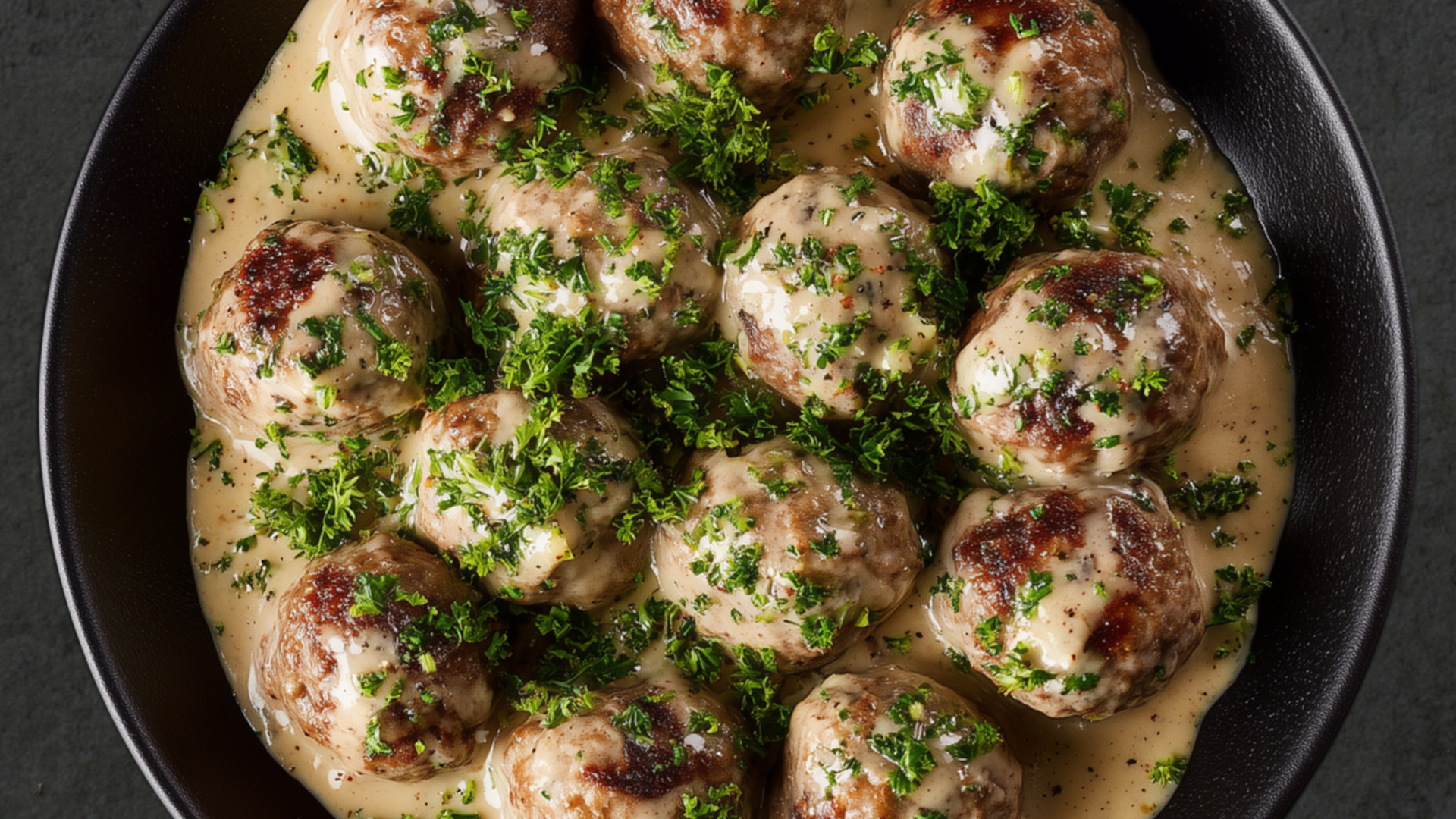
Pan-seared meatballs in a rich, buttery cream sauce — this take on the Swedish classic skips the breadcrumbs but keeps all the comforting flavor.
Ingredients
For the Meatballs:
8 oz ground beef (or a mix of beef and pork)
1 egg
1 Tbsp grated Parmesan cheese (optional binder)
1 tsp onion powder
½ tsp garlic powder
½ tsp allspice
½ tsp salt
¼ tsp black pepper
1 Tbsp butter or tallow (for searing)
For the Sauce:
2 Tbsp butter or tallow
¼ cup beef broth
¼ cup heavy cream
1 tsp Dijon mustard
Salt and pepper, to taste
To Finish:
1 tsp olive oil (for finishing)
Optional: chopped parsley for garnish
Macronutrients
(makes 1 serving)
Protein: 50g
Fat: 55g
Carbs: 4g
Preparation
In a bowl, combine ground beef, egg, Parmesan, onion powder, garlic powder, allspice, salt, and pepper. Mix gently until combined. Form into 10–12 small meatballs.
Heat 1 Tbsp butter or tallow in a skillet over medium heat. Add meatballs and sear for 2–3 minutes per side, until browned. Remove and set aside (they don’t need to be fully cooked yet).
In the same skillet, melt 2 Tbsp butter or tallow. Add beef broth, heavy cream, and Dijon mustard. Stir well, scraping up any browned bits from the pan. Simmer for 2–3 minutes to reduce slightly.
Return meatballs to the pan, cover, and simmer on low for 7–10 minutes until fully cooked through and sauce is thickened.
Drizzle with olive oil just before serving. Garnish with chopped parsley if desired. Serve with buttered cauliflower mash or sautéed cabbage for a full meal.



135-185-225-255-275