




Bacon-Wrapped Shrimp
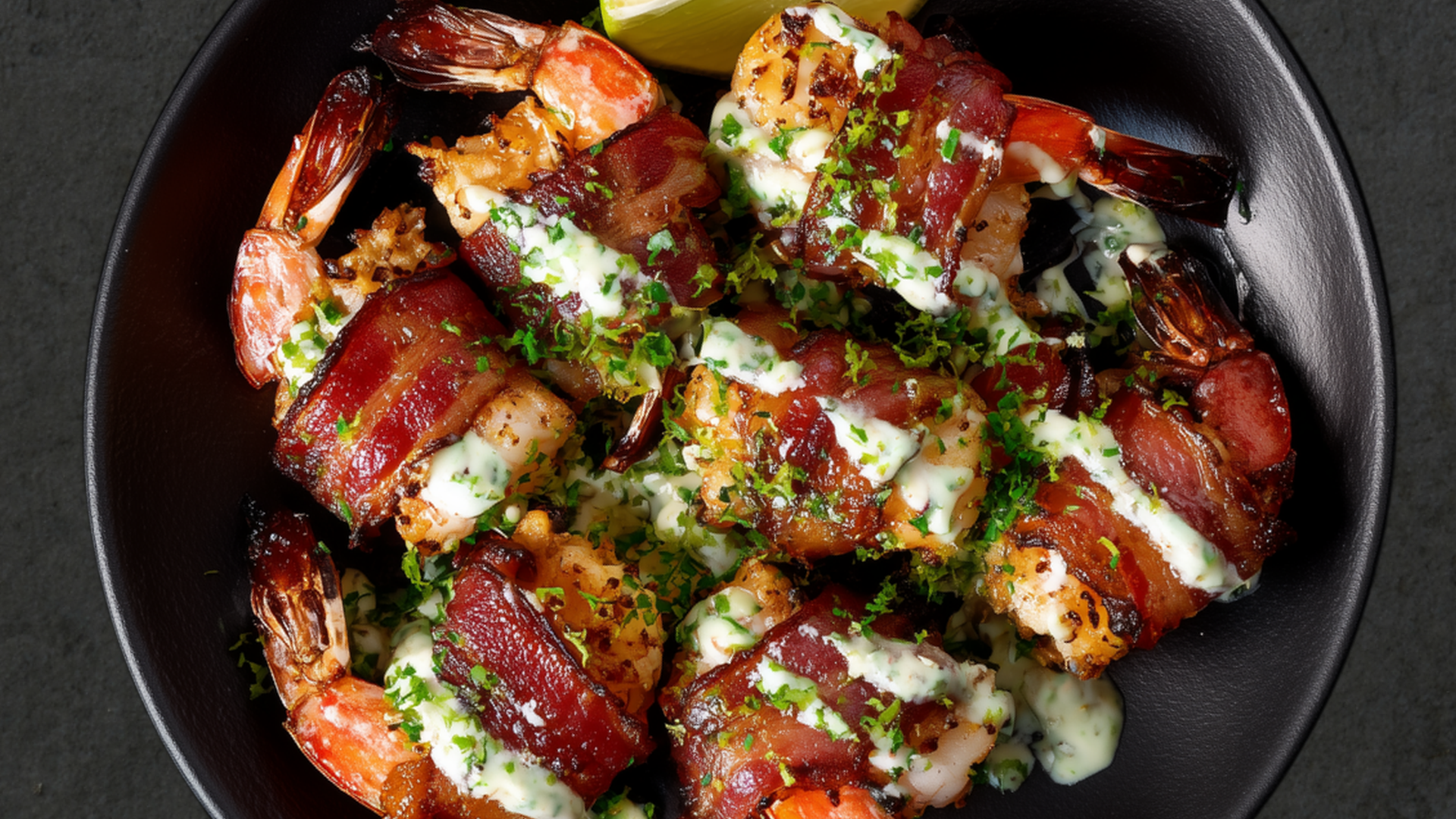
Spicy, crisp bacon-wrapped shrimp served with jalapeño cream and bright lime finish.
Ingredients
6 large shrimp, peeled
3 slices bacon, halved
1 jalapeño, minced
¼ cup heavy cream
1 tsp lime zest
1 Tbsp butter
Macronutrients
(per serving, makes 1)
Protein: 25g
Fat: 35g
Carbs: 3g
Preparation
Pat the shrimp completely dry with paper towels to ensure the bacon crisps properly. Lightly season the shrimp with a small pinch of salt and pepper. Wrap each shrimp tightly with a half slice of bacon, starting at one end and spiraling around. Secure each piece with a toothpick so it holds its shape while cooking.
Heat a skillet over medium heat and add butter. Once melted and lightly bubbling, place the bacon-wrapped shrimp in the pan seam-side down. Let them cook undisturbed for a few minutes so the bacon begins to render and crisp. Turn each piece and continue cooking, rotating as needed, until the bacon is golden and crisp on all sides and the shrimp are opaque and just cooked through, about 6–8 minutes total. Remove from the pan and set aside on a plate.
In the same skillet, reduce heat to medium-low. Add the minced jalapeño and let it cook gently for 1–2 minutes to soften and release its flavor into the pan. Pour in the heavy cream and stir, scraping up any browned bits from the bottom. Let the mixture simmer gently for 3–5 minutes, stirring occasionally, until it thickens slightly into a smooth, lightly spicy cream sauce. Season with a pinch of salt.
Arrange the bacon-wrapped shrimp on a plate and spoon the warm jalapeño cream over or alongside. Finish with a sprinkle of fresh lime zest and a light drizzle of olive oil for brightness. Serve immediately while hot and crispy.



1:44.7/3:50.5/7:54.2 Row
1:44.7/1:55.2/1:58.5 Row/500m