




The
Daily
Fix

260713

MONDAY 260713
0 0 0

Rest

Sesame Salmon with Broccolini

A Fancy Name for Junk Food

Article Heading Photo
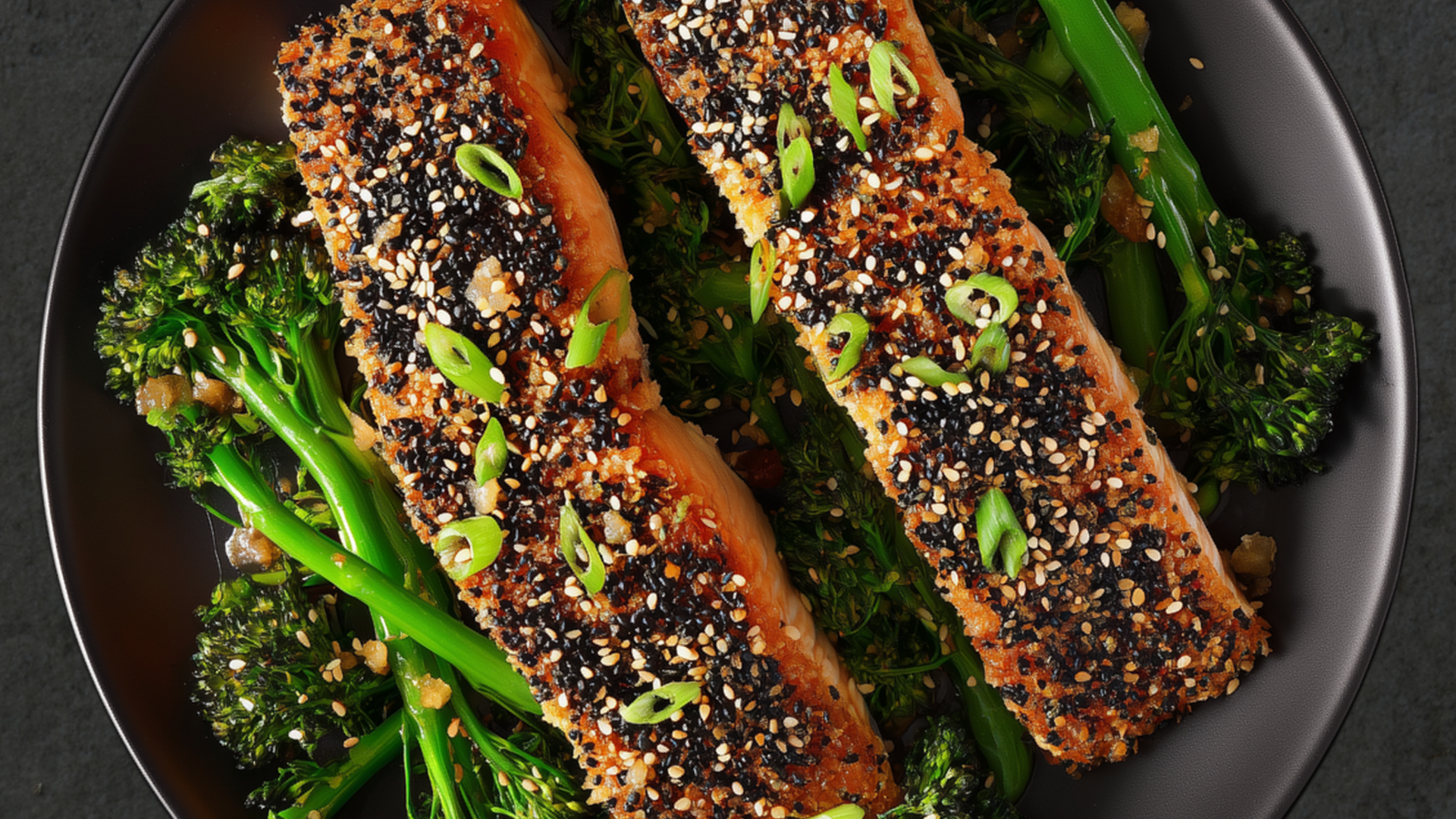
Photo of Sesame Salmon with Broccolini

Rest day

Crispy sesame-crusted salmon fillets pan-seared in butter, served with tender broccolini tossed in fragrant ginger butter.
Does the war on “ultra-processed foods” make any sense?

Tab Photo

The
Daily
Fix

Photo of Sesame Salmon with Broccolini Article Heading Photo

Enjoy the recovery time, or make-up anything you missed from last week.

Ingredients

For the Sesame-Crusted Salmon:
4 salmon fillets (5–6 oz each, skin on or off)
2 Tbsp white sesame seeds
2 Tbsp black sesame seeds (or more white if unavailable)
Salt & pepper, to taste
½ tsp garlic powder
1 Tbsp butter (for searing)

For the Ginger Butter Broccolini:
1 bunch broccolini, trimmed
1½ Tbsp butter
1 tsp fresh ginger, grated
1 clove garlic, minced
Salt, to taste
Optional: 1 tsp sesame oil (added off heat for flavor)

Optional Garnish:
Extra sesame seeds
Lemon wedge or zest
Sliced scallions or cilantro

Macronutrients
(per serving, makes 4):

Protein: 40g
Fat: 35g
Carbs: 4g

Preparation

Pat salmon dry. Season both sides with salt, pepper, and garlic powder. Press sesame seeds onto the top (presentation side) of each fillet to coat.

Heat 1 Tbsp butter in a skillet over medium-high heat. Place salmon sesame-side down and cook for 3–4 minutes, until the crust is golden. Flip and cook for another 2–3 minutes, until the fish reaches desired doneness. Remove and rest.

While salmon rests, melt butter in a skillet over medium heat. Add ginger and garlic; sauté for 30 seconds until fragrant. Add broccolini and a pinch of salt. Cook for 5–6 minutes, stirring occasionally, until crisp-tender. Remove from heat and drizzle with sesame oil (if using).

Plate salmon over broccolini. Garnish with scallions, sesame seeds, or lemon zest if desired.

In this essay, Gary Taubes looks at the growing movement to blame "ultra-processed foods" (UPFs) for obesity, diabetes, and other chronic diseases. While agreeing that many industrially produced foods are unhealthy, he argues that "ultra-processed" is an imprecise label that shifts attention away from nutritional factors that can be studied scientifically—particularly sugar and refined carbohydrates—and toward an ambiguous category based largely on how foods are manufactured.

Taubes traces the rise of the UPF movement through the work of Brazilian epidemiologist Carlos Monteiro and the NOVA classification system. Although diets high in UPFs are consistently associated with poor health, the evidence has not established that industrial processing itself is the cause. Instead, the same foods are typically rich in sugar, refined starches, and other ingredients long associated with metabolic disease, making it difficult to separate processing from nutrient composition.

Taubes argues that the goal should not be to replace one vague dietary concept with another, but to identify the specific components of foods that drive obesity, diabetes, and chronic disease. Calling junk food "ultra-processed" may be a useful political slogan, but it does little to advance the underlying science.

Read More

COMMENTS

0 COMMENTS 0 COMMENTS 0 COMMENTS SHARE LOGIN PRINT
Log In to leave a comment - Log In?
Go to Top