



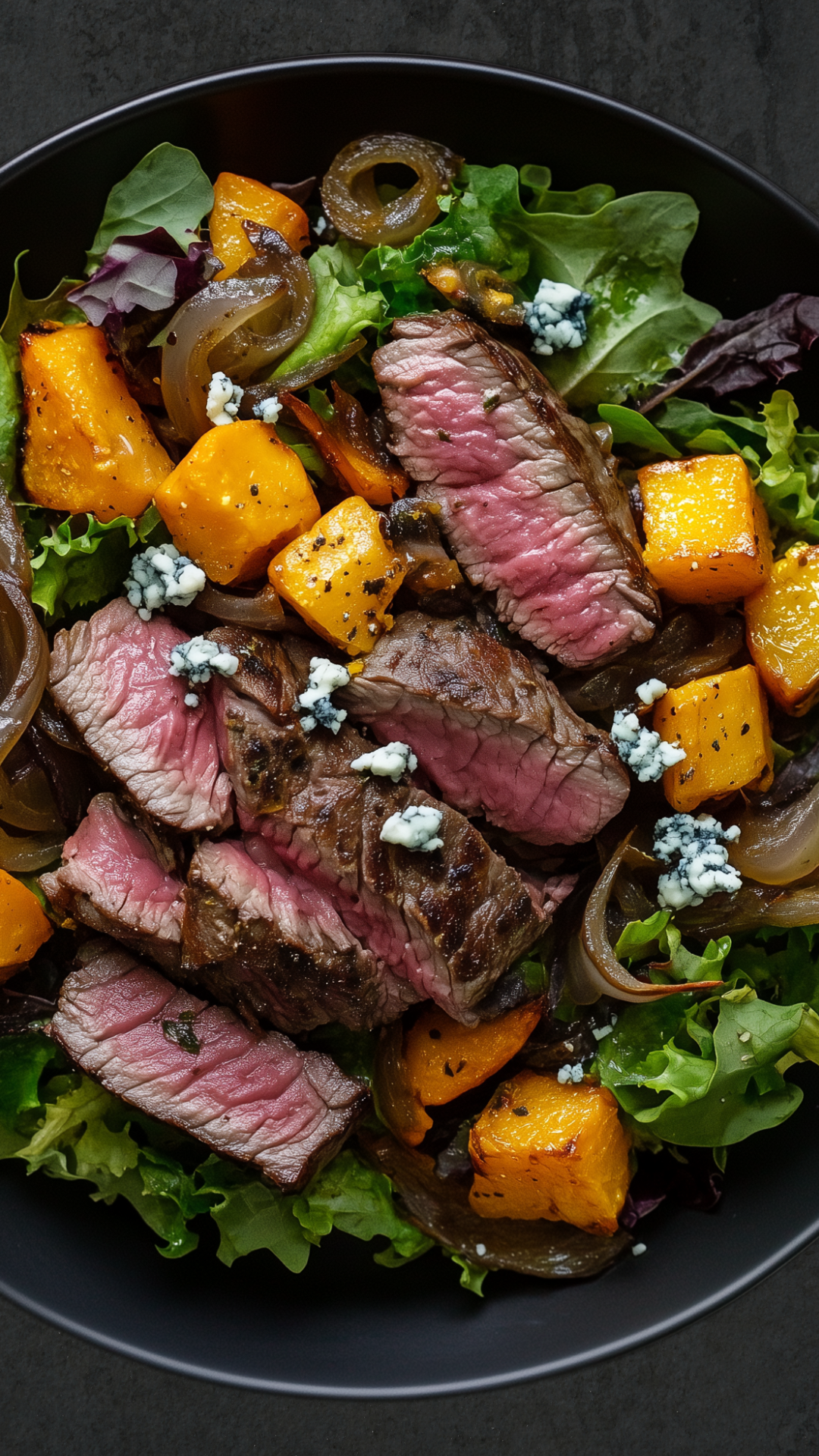
Steak Salad with Butternut Squash and Carmelized Onions
This steak salad is packed with flavor from the juicy steak, sweet caramelized onions, and roasted butternut squash. The blue cheese adds a tangy richness that balances out the dish perfectly.
Ingredients
6 oz ribeye or sirloin steak
½ cup butternut squash, cubed
¼ cup yellow onion, thinly sliced
2 cups mixed salad greens, arugula, spinach, or your choice
2 Tbsp olive oil, divided
3 Tbsp butter
1 Tbsp balsamic vinegar, optional
1 Tbsp fresh rosemary, chopped
2 Tbsp crumbled blue cheese, optional
Salt and pepper to taste
Macronutrients
Protein: 35g
Fat: 50g
Carbohydrates: 12g
Preparation
Prepare the Butternut Squash: Preheat the oven to 400°F (200°C). Toss the butternut squash cubes (½ cup) with ⅓ of the butter, salt and pepper to taste, and chopped fresh rosemary (1 Tbsp.) Spread them out on a baking sheet and roast for about 20-25 minutes until tender and slightly caramelized, turning halfway through.
Caramelize the Onions: While the squash is roasting, heat some butter (1 Tbsp) in a skillet over medium heat. Add the sliced onions (¼ cup) and cook, stirring occasionally, for 10-15 minutes until they are golden brown and caramelized. If the onions start to stick, you can deglaze the pan with a splash of water or balsamic vinegar. Once caramelized, set the onions aside.
Cook the Steak: Season the steak (6 oz) with salt and pepper on both sides. In the same skillet, add the remaining 1 Tbsp butter and heat over medium-high heat. Cook the steak for 3-4 minutes on each side for medium-rare, or longer depending on your preference. Remove the steak from the skillet and let it rest for 5 minutes before slicing thinly.
Assemble the Salad: In a large bowl, toss the mixed salad greens (2 cups) with a light drizzle of olive oil and balsamic vinegar (optional). Add the roasted butternut squash, caramelized onions, and sliced steak on top of the greens. Sprinkle with crumbled blue cheese (2 Tbsp) and serve immediately.



15 Thrusters (65lbs)
15 GHD Sit-ups