



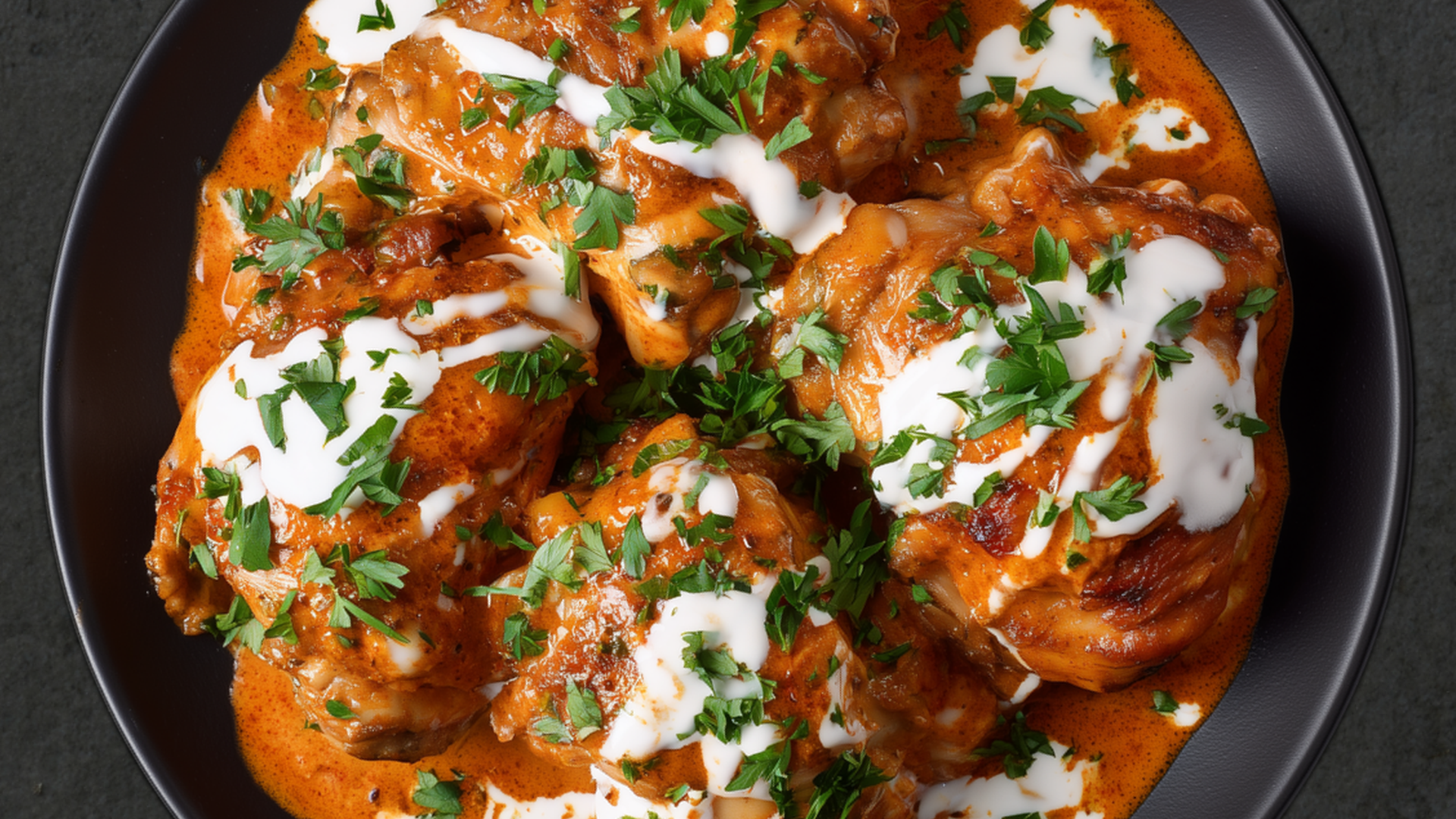
Chicken Paprikas
Tender chicken simmered in a rich paprika cream sauce, served with cauliflower mash or sautéed greens.
Ingredients
For the Chicken:
2 lbs bone-in, skin-on chicken thighs (or drumsticks)
2 Tbsp butter or tallow (for searing)
Salt and black pepper, to taste
For the Sauce:
2 Tbsp butter
1 medium onion, diced
3 cloves garlic, minced
2 Tbsp sweet paprika
1 tsp smoked paprika
½ tsp cayenne (optional, for heat)
1 cup chicken broth (unsalted)
1 cup heavy cream
½ cup sour cream
1 Tbsp tomato paste
1 tsp dried thyme (or 2 tsp fresh)
Salt and pepper, to taste
Optional Garnish:
Fresh parsley, chopped
Extra dollop of sour cream
Macronutrients
(per serving, serves 4)
Protein: 30g
Fat: 67g
Carbs: 9g
Preparation
Pat chicken dry and season with salt and pepper. Heat butter or tallow in a large Dutch oven or deep skillet over medium-high. Sear chicken 3–4 minutes per side until golden. Remove and set aside.
In the same pan, add onion and sauté 4–5 minutes until softened. Add garlic and cook 1 minute more. Stir in both paprikas, cayenne, thyme, and tomato paste; cook 1–2 minutes to bloom the spices.
Pour in chicken broth, scraping up browned bits. Stir in heavy cream, then return chicken to the pan. Reduce heat to low, cover, and simmer 25–30 minutes until chicken is tender and cooked through.
Remove chicken briefly. Whisk sour cream into the sauce until smooth and rich. Return chicken and coat with sauce.
Spoon sauce generously over chicken. Garnish with parsley and a dollop of sour cream if desired.



-stopped after 3rd set pulled muscle in right back
Max dips on the ring thing
6-6-6-5-5