



The
Daily
Fix

260818

TUESDAY 260818
0 0 0

Rest

Italian Chicken Antipasto Salad

Obesity and the Mitochondrial Machinery That Makes ATP

Article Heading Photo
Photo of Italian Chicken Antipasto Salad

Rest day

A hearty Italian-inspired salad with grilled chicken, crisp greens, olives, artichokes, and a creamy herb dressing.

Reduced ATP production may reflect a protective response to metabolic stress

Tab Photo

The
Daily
Fix

Photo of Italian Chicken Antipasto Salad Article Heading Photo

Enjoy the recovery time, or make-up anything you missed from last week.

Ingredients

For the Salad:
6 oz grilled chicken breast, sliced
2 cups mixed salad greens (romaine, arugula, or spinach)
¼ cup cherry tomatoes, halved
¼ cup marinated artichoke hearts, chopped
¼ cup cucumber, sliced
¼ cup Kalamata olives
2 oz fresh mozzarella (pearls or sliced)
1 Tbsp red onion, thinly sliced

For the Creamy Italian Dressing:
3 Tbsp olive oil
1 Tbsp red wine vinegar
1 Tbsp mayonnaise
½ tsp dried oregano
½ tsp garlic powder
½ tsp Dijon mustard
Salt and pepper, to taste

Optional Garnish:
Fresh basil leaves, torn

Macronutrients
(makes 2 servings)

Protein: 35g
Fat: 38g
Carbs: 8g

Preparation

Season chicken with salt, pepper, and a pinch of oregano. Grill or sear in butter until fully cooked, about 4–5 minutes per side. Slice thinly.

Arrange mixed greens on a large plate. Top with tomatoes, artichokes, cucumber, olives, mozzarella, and red onion.

Whisk together olive oil, red wine vinegar, mayonnaise, oregano, garlic powder, Dijon mustard, salt, and pepper until creamy.

Add sliced chicken on top of the salad, drizzle with dressing, and garnish with fresh basil. Serve immediately


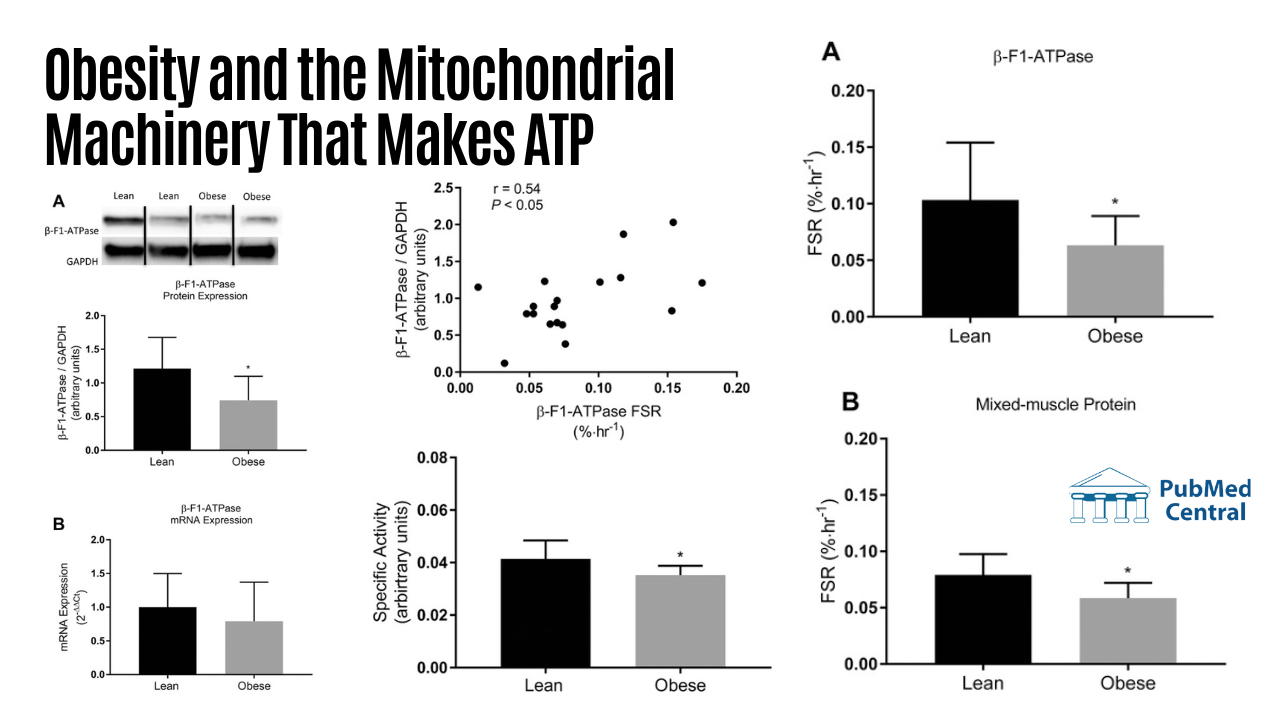
This 2019 study examined skeletal muscle from lean and obese, insulin-resistant adults and found that obesity was associated with reduced production of β-F1-ATPase, a key component of mitochondrial ATP synthase, as well as lower ATP synthase activity. The authors describe these changes as an impairment that reduces the muscle’s capacity to generate ATP.

But there is another way to interpret the finding. The authors themselves note that impaired ATP synthase function may alter reactive oxygen species (ROS) production, although this study did not measure ROS or establish why ATP synthase was downregulated. In the setting of chronic metabolic stress, reduced ATP production could therefore be viewed not simply as broken mitochondrial machinery, but potentially as an adaptive response that limits metabolic damage. The tradeoff is reduced capacity to produce ATP—and ultimately less capacity to perform physical work.

Viewed this way, the study highlights an important distinction: what looks like mitochondrial dysfunction when ATP output is the benchmark may also represent the cell defending itself against an unhealthy metabolic environment. The defense may help the cell survive, but it comes at the cost of the energetic capacity required for optimal function and health.

Read More

COMMENTS

0 COMMENTS 0 COMMENTS 0 COMMENTS SHARE LOGIN PRINT
Log In to leave a comment - Log In?
Go to Top