




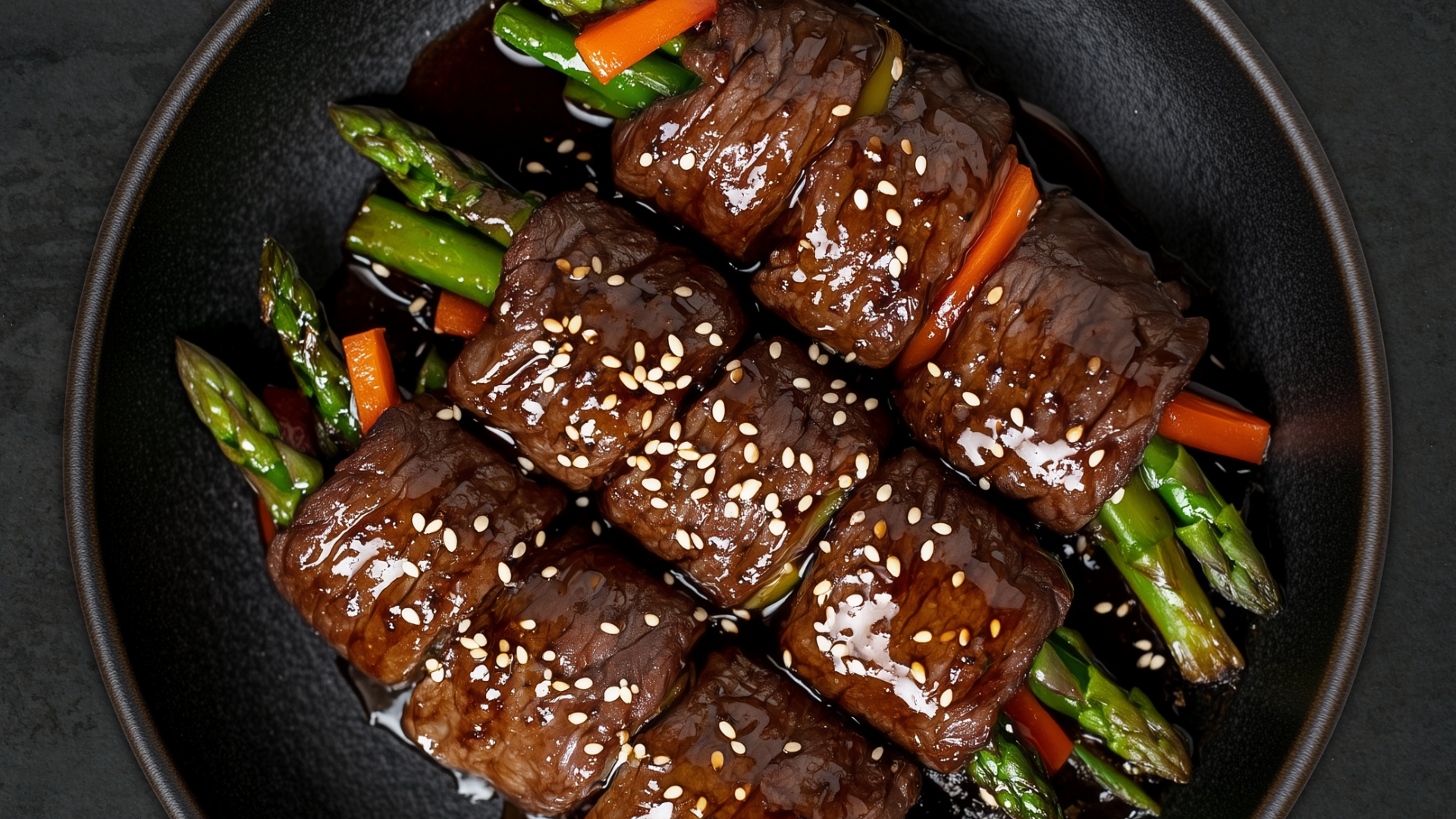
Teriyaki Beef & Asparagus Rolls with Sesame Seeds
Flank steak slices wrapped around a medley of asparagus, red bell pepper, carrot, and zucchini—seared and glazed with a flavorful teriyaki sauce.
Ingredients
1 flank steak, thinly sliced (6 oz)
3 asparagus spears, cut into 1-inch pieces
¼ red bell pepper, sliced
½ carrot, sliced
¼ small zucchini, sliced
2 tsp coconut oil
1 tsp white sesame seeds
2 Tbsp soy sauce
1 Tbsp white vinegar
½ Tbsp ginger, peeled, minced
1 garlic clove, minced
¼ tsp red pepper flakes
Salt and pepper to taste
Macronutrients
Protein: 41g
Fat: 20g
Carbs: 13g
Preparation
Prepare the teriyaki glaze: In a small bowl, whisk together soy sauce (2 Tbsp), white vinegar (1 Tbsp), ginger (½ Tbsp), garlic (1 clove), and red pepper flakes (¼ tsp). Set aside.
Assemble the rolls: Lay the thinly sliced steak pieces on a flat surface. Place a few pieces of asparagus, red bell pepper, carrot, and zucchini at one end of each steak slice. Roll tightly and secure with a toothpick. Season lightly with salt and pepper. Should make 2–3 rolls.
Cook the rolls: Heat coconut oil (2 tsp) in a skillet over medium-high heat. Add the steak rolls and sear on all sides until browned and cooked through, about 2–3 minutes per side.
Add the glaze: Reduce heat to low, pour the teriyaki glaze into the skillet, and let it simmer for 1–2 minutes, turning the rolls to coat them evenly. Allow the sauce to thicken slightly.
Serve: Remove the steak rolls from the skillet and place on a serving plate. Drizzle any remaining glaze over the top and sprinkle with toasted sesame seeds. Serve hot.



225-245
265