




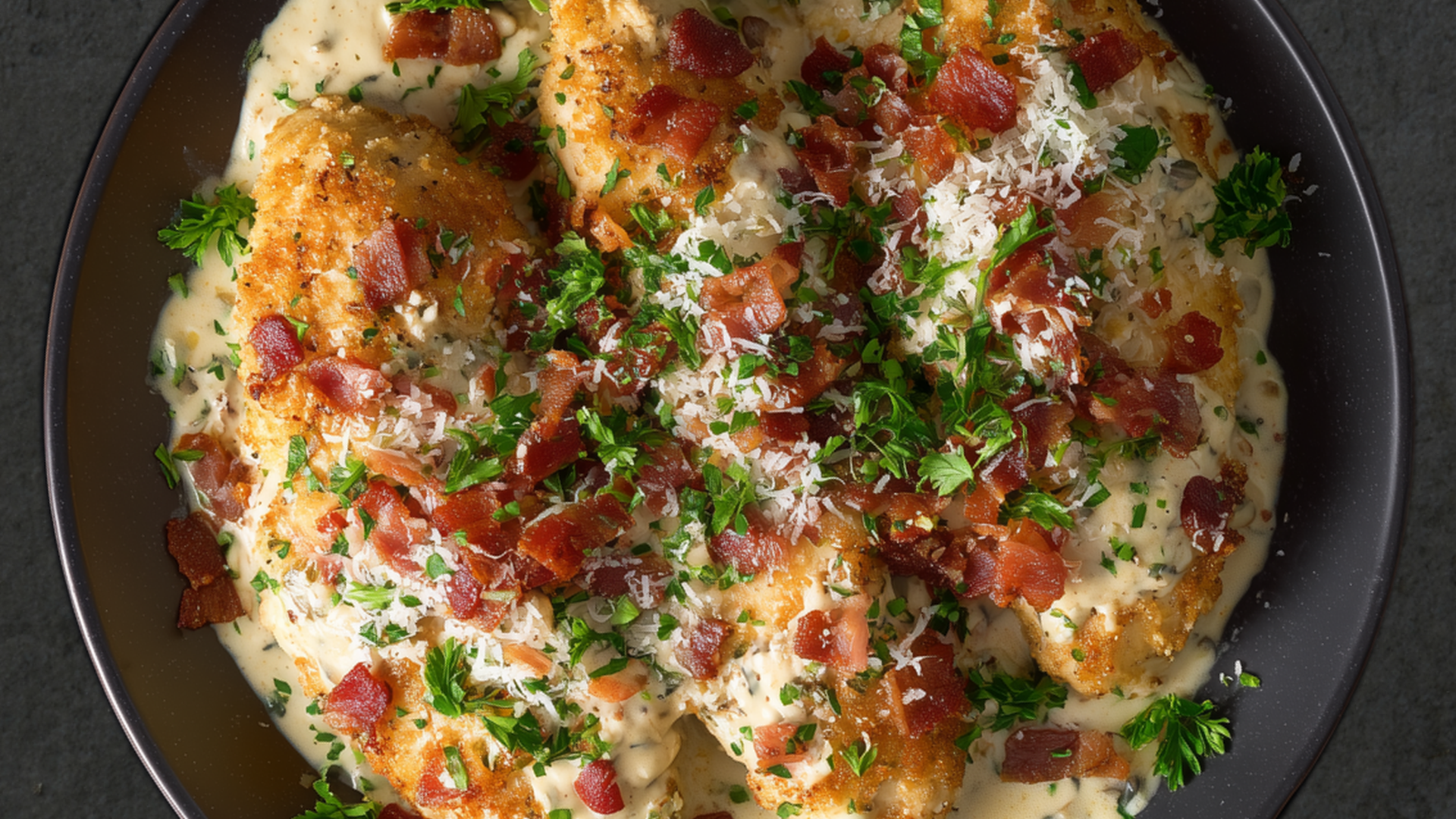
Parmesan-Crusted Chicken
Parmesan-coated chicken breasts, smothered in a creamy mushroom and artichoke sauce, finished with smoky bacon crumbles.
Ingredients
For the Chicken
4 boneless, skinless chicken breasts (6 oz each)
1 cup grated Parmesan cheese
½ cup almond flour
2 large eggs, beaten
3 Tbsp butter or beef tallow (for frying)
Salt and black pepper, to taste
For the Sauce
3 slices thick-cut bacon, diced
2 Tbsp butter or beef tallow
2 cups mushrooms, sliced
1 can (14 oz) artichoke hearts, drained and quartered
3 cloves garlic, minced
½ cup chicken broth (unsalted)
½ cup heavy cream
2 oz cream cheese
½ tsp dried thyme (or 1 tsp fresh)
Salt and black pepper, to taste
Optional Garnish
Fresh parsley, chopped
Extra Parmesan
Macronutrients
(per serving, makes 4)
Protein: 55g
Fat: 50g
Carbs: 9g
Preparation
Pat chicken breasts dry. Season with salt and pepper. Dredge each breast in almond flour, dip in beaten eggs, then coat with Parmesan, pressing to adhere.
Heat 3 Tbsp butter or tallow in a skillet over medium-high heat. Sear chicken 4–5 minutes per side until golden brown and cooked through (165°F internal). Remove and keep warm.
In the same skillet, cook diced bacon until crispy. Remove with a slotted spoon and set aside, leaving bacon fat in the pan.
Add 2 Tbsp butter or tallow to the pan. Sauté mushrooms 4–5 minutes until browned. Stir in artichokes and garlic; cook 2 minutes. Deglaze with chicken broth. Add heavy cream, cream cheese, thyme, salt, and pepper. Simmer 4–5 minutes until thickened and creamy.
Return chicken to the pan, spoon sauce over the top, and simmer 2 minutes to warm through.
Top with crispy bacon crumbles, garnish with parsley and extra Parmesan if desired. Serve hot.



WEDNESDAY 260826