




Asian Chicken & Eggplant Stir-Fry
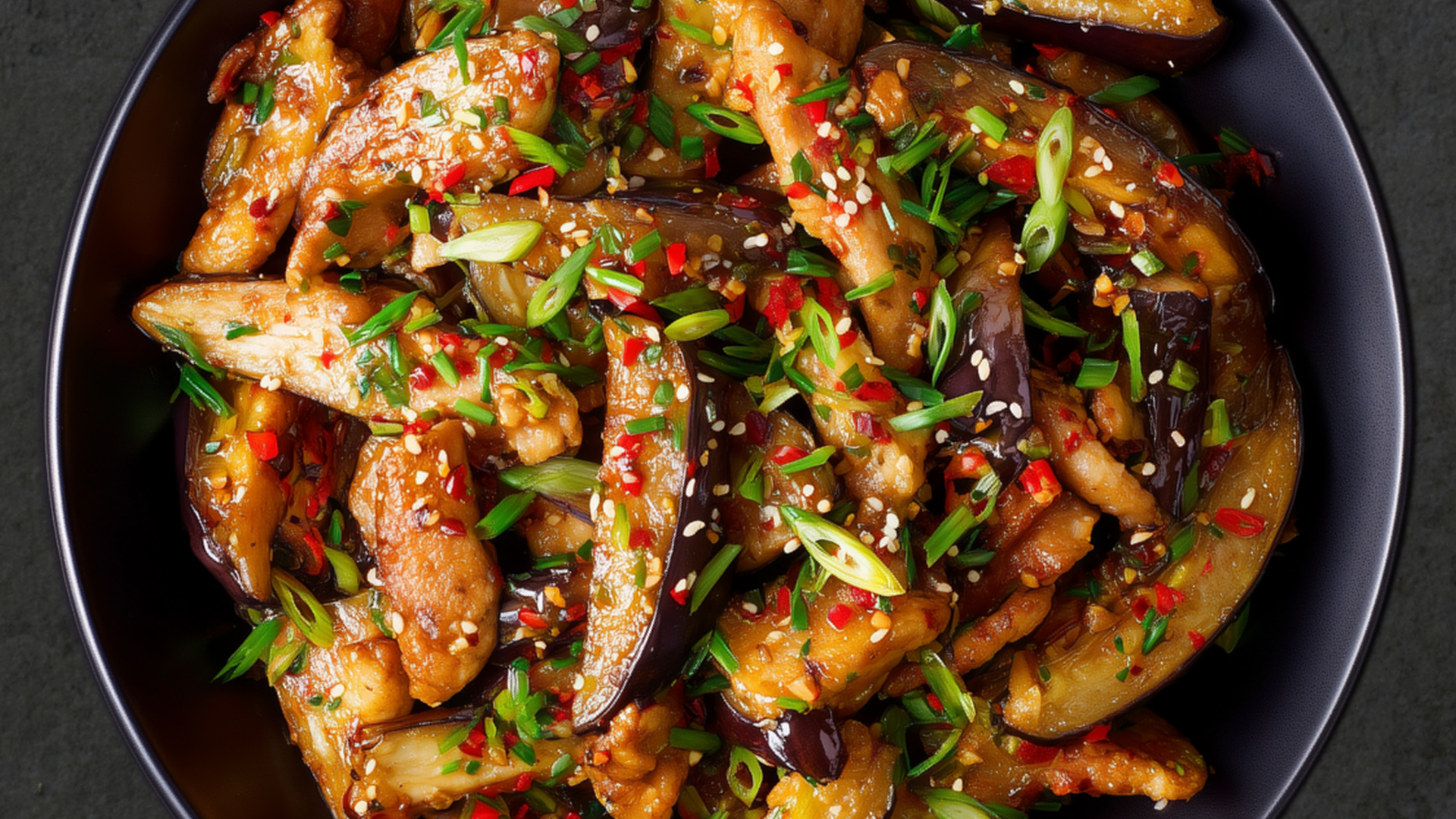
Tender eggplant and juicy chicken thigh sautéed in garlic, ginger, and coconut aminos, finished with scallions and sesame.
Ingredients
2 small Asian eggplants (or 1 large), cut into ½-inch thick wedges
¾ lb boneless, skinless chicken thighs, cut into bite-sized strips
Salt and pepper, to taste
2½ Tbsp ghee or unsalted butter (for cooking)
1 clove garlic, minced
1 tsp fresh ginger, grated
2 Tbsp coconut aminos
1 tsp rice vinegar (optional)
1 tsp toasted sesame oil (finishing only)
1 scallion, sliced
Optional: ½ tsp red pepper flakes or sliced fresh chili for heat
Macronutrients
(makes 2 servings)
Protein: 29g
Fat: 27g
Carbs: 8g
Preparation
Salt the eggplant slices lightly and let them sit for 15–20 minutes to draw out excess moisture. Pat dry with paper towels.
In a skillet or wok, heat 1 Tbsp ghee or butter over medium-high heat. Season the chicken with salt and pepper, then sauté for 4–5 minutes until browned and cooked through. Remove and set aside.
Add the remaining 1½ Tbsp ghee or butter to the pan. Add the eggplant and cook for 4–5 minutes per side until golden brown and tender. Push the eggplant to one side of the pan. Add the garlic and ginger and sauté for 30 seconds until fragrant. Stir in the cooked chicken, coconut aminos, and rice vinegar, tossing everything to coat. Cook 1–2 more minutes.
Turn off the heat, drizzle with sesame oil, and toss gently. Top with scallions and optional chili flakes.



Hanging knee tucks
Row