

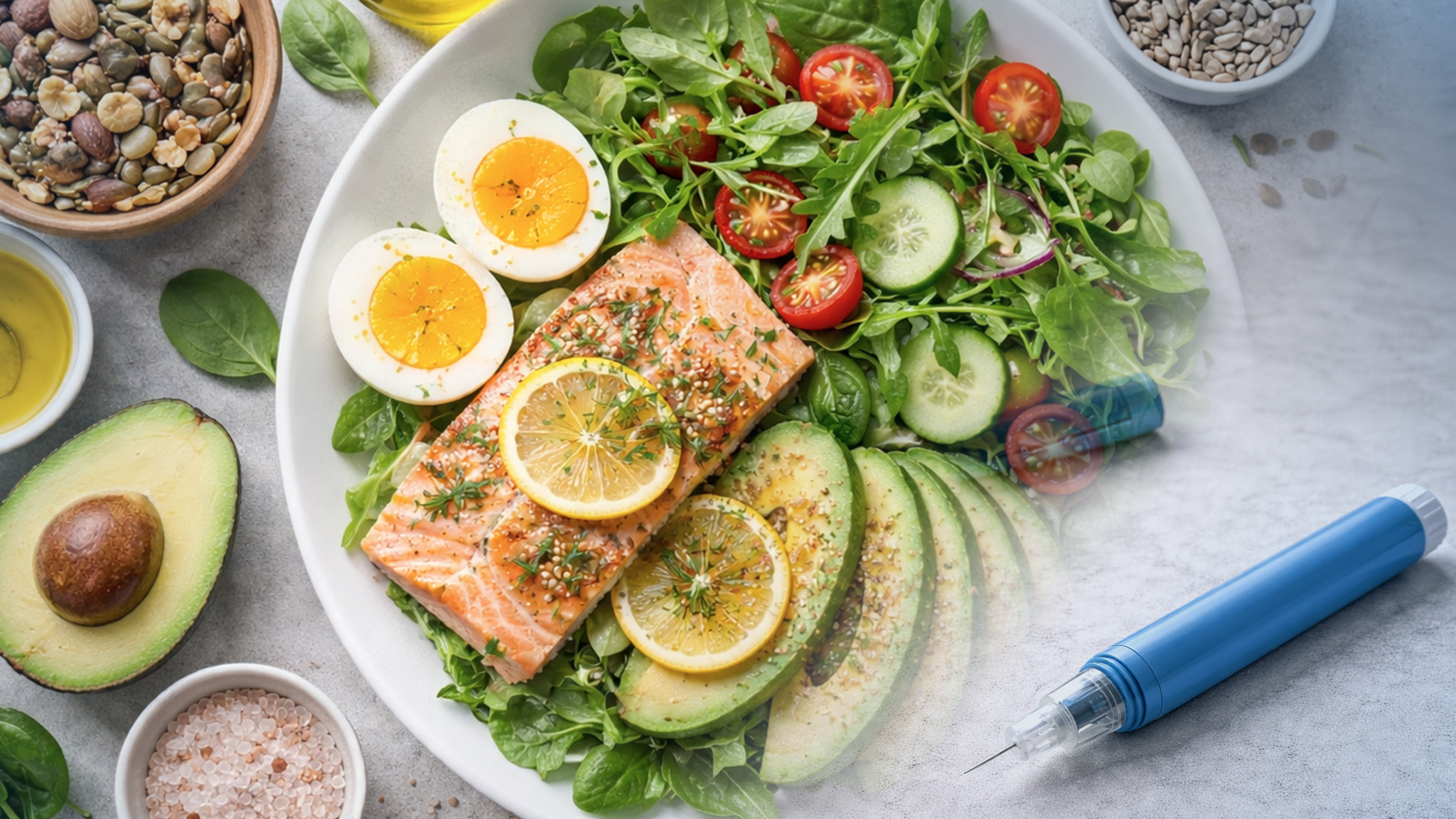
At BSI, of course, we recommend eating a diet of meat, fish, poultry, vegetables, nuts and seeds, little starch, little fruit, and no sugar, for best metabolic response. In other words, a lower carb ketogenic diet that encourages the body to use fat and ketones for fuel rather than glucose.
A notorious early side effect of making the nutritional switch from the Standard American Diet (not acronymed SAD for no reason) or any diet low in fat and high in carbs to a lower-carbohydrate/ketogenic, higher-fat regimen is a period of adaptation commonly known as the ‘keto flu’, in which the affected person feels like someone has pulled the plug and let out all their energy. Like they’ve run out of gas and are operating on fumes. They have trouble climbing a flight of stairs, let alone doing a burpee or a box jump.
It doesn’t happen to everyone, or even to the same degree in those to whom it does, but it happens regularly enough that it’s wise to alert the person making this switch of the possibility it may occur and take a few simple pre-emptive steps to prevent or minimize it.
What causes the keto flu?
Actually there are a couple of biochemical, physiologic, and metabolic reasons it occurs. First is enzymes, or the current lack of the right ones.
All of life is chemistry; everything we do from breathing to moving to thinking depends on an instantaneous, coordinated interplay of jillions of chemical reactions. But we’d basically be just a big bag of inert chemicals sitting there looking at one another without the necessary enzymes to catalyze all those reactions. So we must produce enzymes to live.
Although our DNA can code for every protein and enzyme we are designed to make, the body doesn’t go to the trouble or expense of making them unless we need them—i.e., unless we’re using them. For instance, to metabolize alcohol, you must have alcohol dehydrogenase. If you’ve abstained from it for a period of time, you won’t have much of that enzyme hanging about. And if you suddenly imbibe, you’ll not have much of the needed enzyme around to metabolize it, so you’ll be a cheap drunk.
Likewise metabolizing a diet containing a fair amount of fat and protein. Doing so requires a whole list of enzymes that are not needed at all to metabolize a mainly carb diet.
Here are some of the key enzymes unique to fat metabolism, none of which is involved in carbohydrate metabolism, so they won’t be plentiful if you haven’t been eating much fat:
Acyl-CoA synthetase activates fatty acids by converting them into fatty acyl-CoA, a necessary step before beta-oxidation (‘burning’ for energy) can begin.
Carnitine acyltransferase I and II (CPT I and II) are a pair of enzymes essential for transporting long-chain fatty acids into the mitochondria for beta-oxidation.
Enoyl-CoA hydratase, Hydroxyacyl-CoA dehydrogenase, and Beta-keto thiolase are core enzymes in the beta-oxidation cycle, each catalyzing specific steps in the breakdown of fatty acids.
Acetyl-CoA carboxylase is crucial for fatty acid synthesis (lipogenesis), converting acetyl-CoA to malonyl-CoA.
Fatty acid synthase is a multi-enzyme complex responsible for synthesizing fatty acids from acetyl-CoA and malonyl-CoA.
Enoyl-CoA isomerase and 2,4-dienoyl-CoA reductase are required for the metabolism of unsaturated fatty acids.
When a person makes the switch from eating lots of carbs and little fat to eating a lot more fat and fewer carbs, the enzymatic machinery needed to handle the new macronutrient composition has to be spun up and brought to speed, which can take a few days to even a week. Until that time, the body is replete with all the enzymes needed to make use of the carbohydrates it used to be getting, but when not many of those are showing up to get in the metabolic line there’s something of a relative fuel shortage. The person is not burning fat well yet and not fueling with carbs. It takes a little time to make the needed enzymes to bring the metabolism of fat up to speed.
The second reason people suffer keto flu is the astounding effectiveness of their new diet.
A person who has been eating a diet high in carbohydrate (especially refined, processed carbohydrates), who is metabolically unfit, who may have insulin resistance, may be obese, may even be diabetic or pre-diabetic will usually have elevated insulin levels, and that causes them to retain sodium and excess fluid.
Lowering carbohydrate to a ketogenic level will quickly lower blood sugar. It’s important to be aware in clients taking medication designed to lower blood sugar that the combination of a ketogenic diet and the medication can cause their blood sugar to drop dangerously low.
*Clients on medication for lowering blood sugar or blood pressure must work with their health care professionals to taper these medications safely under supervision as the diet improves their control and lessens their need for them. They shouldn’t remain on them at current doses nor attempt to change doses on their own unsupervised.
And when blood sugar falls, insulin levels fall, and that action has several major effects on the kidneys. The most pertinent to this discussion is that the kidney releases sodium. This natriuresis (increased sodium excretion in urine) occurs because insulin promotes sodium retention by enhancing its reabsorption in the renal (kidney) tubules. Increased insulin means increased sodium retention. But in a state of lowered insulin, this sodium retention effect is blunted, leading to more sodium being passed out in the urine. And water follows sodium out, lowering blood volume slightly.
Insulin also facilitates uptake of potassium into cells (where it is usually more plentiful) by stimulating the shared sodium-potassium pump in the cell membranes. With low insulin, potassium remains more in the extracellular space (in the tissue fluid) and thus more of it can be picked up and excreted in urine. So it’s lost as well with the initial diuresis.
A third important macromineral, magnesium, is also affected when insulin levels fall. Insulin stimulates magnesium uptake into the cells (where it also is most plentiful), so lowering insulin can lead to magnesium depletion inside the cells because of reduced cellular uptake, and perhaps may also increase its loss in urine. Magnesium deficiency is common both in insulin deficiency (such as type 1 diabetes) and insulin resistance (metabolic syndrome). Because it is a mineral essential for muscle contraction, nerve transmission, protein synthesis, and hundreds of enzymatic reactions in the body, replacing the loss brought on by the initial diuresis brought about by returning insulin and blood glucose to normal (lower) levels in the early days of the dietary switch over can be not only restorative from but preventive of ‘keto’ flu.
With this pronounced natriuresis and diuresis blood pressure will fall, leaving clients sometimes feeling a little light headed or out of gas because of it.
It’s important to be alert of this effect in clients who are on medication to reduce blood pressure, because the additive effect of low carb or ketogenic diet plus medication can drive pressure so low they can become symptomatic and may even faint or ‘brown out’ upon standing.
What can you do to prevent or remediate the symptoms?
The combination of suddenly lowered sodium, potassium, magnesium, and blood volume can cause fatigue, breathlessness, dizziness, muscle cramping, and foggy-headedness as the body adapts to the new diet – the classic ‘keto’ flu. In most people it lasts a few days to possibly a week or two.
People newly beginning a low-carb, ketogenic, or carnivore diet often need to supplement potassium and magnesium daily for a week or two. In our many years of taking care of patients on this dietary structure, we always recommended supplementing with both of these electrolyte macrominerals during this initial period of change over. We thought it was so important that we told them at least three times to take these. It’s a simple, effective ounce of prevention.
In our clinic we gave our patients a prescription for potassium (being sure beforehand they were not taking a potassium-sparing diuretic medication) and a recommendation for picking up a chelate of magnesium at the health food store. (The reason being chelates cause fewer GI symptoms than inorganic magnesium.)
Nowadays it’s easier to do; there are dozens of electrolyte salts combinations available on the market containing all the electrolyte macrominerals (and sometimes vitamins and sweeteners and other stuff they may or may not need).
And add salt. Especially in the early days, counter-intuitive as it may seem, these clients may need to add back more dietary sodium and water as well. Again, electrolyte salts will work, adding sea salt more liberally to food will work, or sipping naturally salty liquids, such as pickle or olive brine or beef or chicken bouillon will work.
Supplementing with electrolytes has become all the rage in recent years. And although most people don’t lose enough electrolytes routinely just by normal sweating to really need electrolyte supplementation daily, the sudden physiologic changes and fluid dump that occurs when first making this dietary switch is sort of a special case. It can—and does—cause enough loss to bring on symptoms in some people that can last for up to a week or two. Adding essential electrolytes and water (and I would say especially potassium and magnesium) can help ‘immunize them’ in a way to prevent or relieve many of the symptoms of keto flu.
Need help finding healthy meals?
Check The Daily Fix for new recipes everyday, or browse the meal archive.





Physician, author, blogger, and lecturer on the art and science of low-carbohydrate nutrition, using food as a remedy for the diseases of modern civilization: obesity, diabetes, heart disease, and the myriad disorders of the insulin resistance/metabolic syndrome complex.

Support the Broken Science Initiative.
Subscribe today →
3 Comments
Leave A Comment
You must be logged in to post a comment.
recent posts
How whole foods activate the body’s own GLP-1 system—without the drugs.
Journal Club: February, 2026

Understanding why high-intensity effort can send glucose higher before it comes back down.



Excellent article, thank you
Thank you Dr Eades
very helpful
thanks