
One predictable physiological response to a low-carb or ketogenic diet is the establishment of a relatively low, stable blood glucose level. The reduction (and stability) is the result of handing glucose control over to the liver instead of depending on the action of the pancreas, which is more of a blunt instrument approach and far less finely controlled.
To illustrate: when we eat a meal rich in glucose, blood sugar quickly rises. (It doesn’t matter if the glucose comes from sugar or from starch, because remember starch is nothing more than long chains of glucose molecules hooked together by bonds easily and quickly broken by the enzymes of the human GI tract, starting from the jump with salivary amylase in the mouth.)
Insulin is by its nature a disposer of nutrients and fuels, a storage hormone designed to tuck energy away. A rapidly rising blood glucose stimulates its release from the pancreas to dispose of the incoming sugar, moving it out of the blood and into the tissues, where it can either be burned for energy or stored for later use. (Important to note, though, that insulin’s main job is to locally suppress the release of its own counter-regulatory hormone, glucagon, which acts to stimulate glucose production in the liver.)
In the absence of incoming dietary glucose, the body’s metabolic machinery naturally flexes to use fat as its main fuel for energy production and this shift puts the liver in charge of maintaining blood sugar levels, initially by unpacking stored glycogen and then by making new glucose (gluconeogenesis) from amino acids and glycerol to fuel those few tissues that are glucose dependent—the red blood cells, some cells in the retina of the eye, some cells in the brain, and some in the kidney.
Pretty much everything else in the body will happily run on ketones and/or free fatty acids. In response to low incoming carbohydrate skeletal muscle down-regulates its uptake of glucose to leave plenty available for the needy cells. But since the liver has the capacity to make as much as 200 grams of glucose per day in a nice, slow, steady fashion, that will be plenty to fuel the energy needs of those few dependent tissues.
So most people on a low-carb/ketogenic diet, who wear a Continuous Glucose Monitor, will find that their blood sugar remains low and stable and doesn’t bounce about in peaks and valleys in response to meals.
But sometimes long-term low-carb and ketogenic dieters see a paradoxical rise in fasting blood glucose, despite not consuming much dietary carbohydrate. This effect, described as adaptive glucose sparing, has been reported in both human and animal studies.
What causes this phenomenon?
The body has an economy of manufacture for all biochemical products—enzymes and hormones, for instance—producing them when needed, paring back production when not. So, quite naturally, when the incoming diet is carb heavy, the beta-cells of the pancreas (those that produce the insulin) will be geared up and churning out insulin fast and furiously. Conversely, when the diet is carb poor for an extended period, and there’s no need for so much insulin production, the beta-cell mass and its hormone output decline. Their product is not needed so much, so why waste energy producing it?
But suddenly introduce a wad of carbohydrates into a low-carb-adapted metabolism—such as the bolus of glucose given in an oral glucose tolerance test (OGTT)—and you’ll see blood sugar skyrocket like that of a diabetic, because the system isn’t geared up to dispose of so much glucose coming in at once.
Amazingly, at a ‘normal’ blood sugar of 80 mg/dL the amount of glucose dissolved in the 4 to 5 or so liters of an adult human’s blood volume is a mere 4 grams. Less than a teaspoon’s worth (which is 5 grams). So from that perspective, it’s pretty easy to see that suddenly dumping 50 or 100 grams of pure glucose into the system would send the needle off the chart. It’s 10 to 20 times the normal, physiological amount of glucose in the blood.
(Helpful hack: A few days of carb loading prior to taking the OGTT will be sufficient to re-induce beta-cell activity, but it will also be enough to disrupt ongoing ketosis for a time and require a period of re-adaptation to restore nutritional ketosis.)
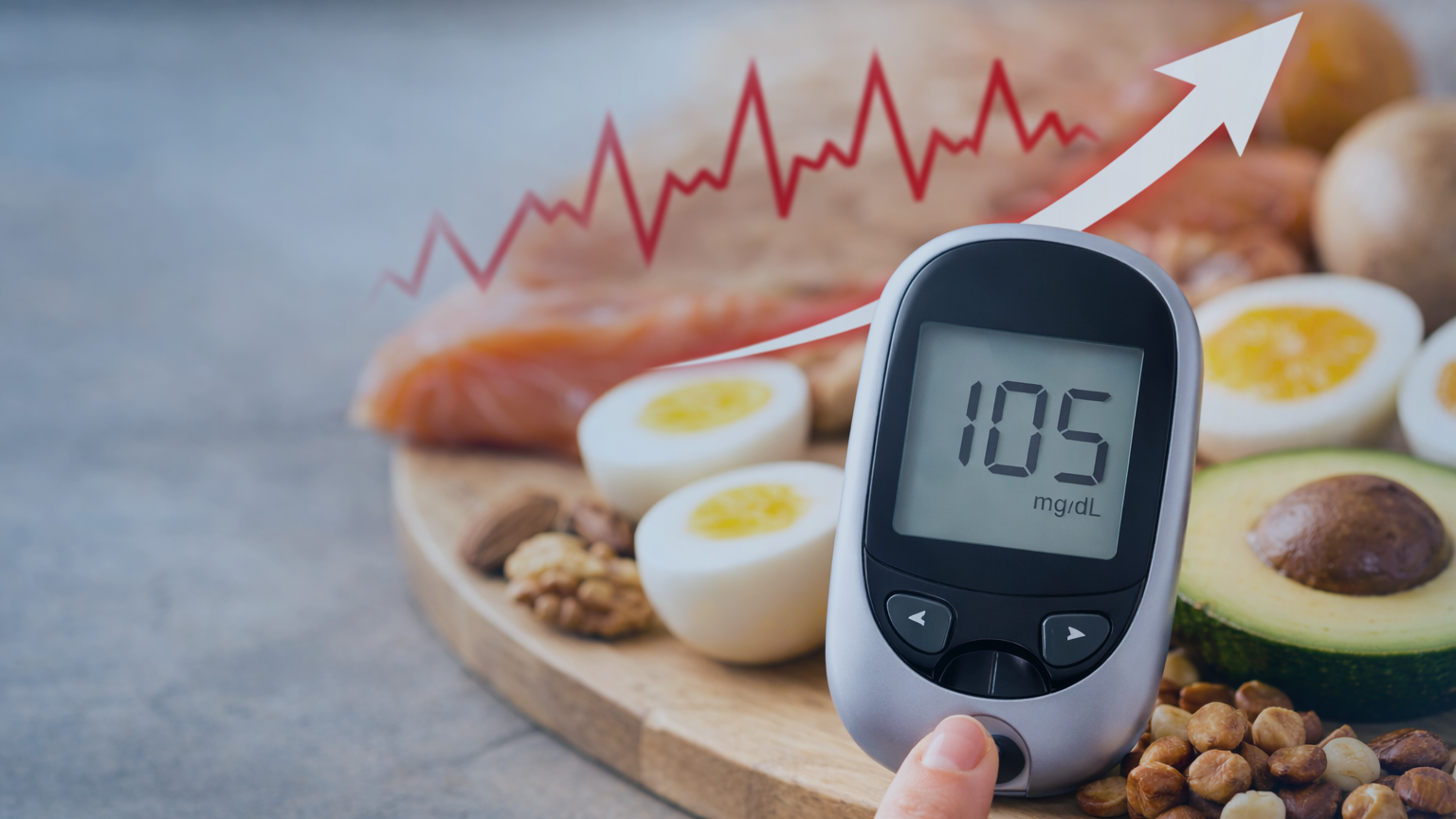
But some people, after an extended time following a low-carb or ketogenic diet, experience regular fasting blood glucose rises to 100, 106, 110, which causes some head-scratching at best and alarm at worst. People panic, fearing they’re becoming diabetic.
Is it a problem?
In most instances, there’s no cause to worry. Look not only at the mildly elevated fasting glucose, but comprehensively at the other markers that reflect overall metabolic health (e.g., HbA1c, triglycerides, insulin sensitivity in the liver, high-sensitivity C-reactive protein). These parameters often remain stable or improve, indicating that this ‘altered’ physiological state does not generally signify pathology.
The rise in fasting glucose among long-term low-carb or ketogenic dieters is primarily due to adaptive, reversible physiological changes in glucose metabolism. The peripheral tissues reduce glucose uptake to conserve it for essential functions, while baseline insulin secretion diminishes due to lower demand. This shift results in mild, non-pathological insulin resistance and higher fasting glucose, which reverses promptly with reintroduction of dietary carbohydrate, though doing that puts the pancreas back in charge.
But some (and I count myself among them) would say the rise is simply the result of a return to a Paleolithic metabolic normal (i.e., the liver in charge of maintaining glucose levels) and is viewed as abnormal only because all the ‘normal’ lab readings were determined in highly carbohydrate-adapted people. It’s nothing more than the brain’s sensing a low blood glucose during the night and asking the liver to correct it, which it does through stimulating gluconeogenesis.
Absent any other markers of inflammation or metabolic dysfunction and as long as the level falls back to its normal low baseline during the feeding hours, fear not the adaptive metabolic shift and the mildly elevated fasting glucose that can occur with it. It’s just a return to your Paleolithic roots.

Physician, author, blogger, and lecturer on the art and science of low-carbohydrate nutrition, using food as a remedy for the diseases of modern civilization: obesity, diabetes, heart disease, and the myriad disorders of the insulin resistance/metabolic syndrome complex.

Support the Broken Science Initiative.
Subscribe today →
3 Comments
recent posts

Cancer as a metabolic disease—and the case against the somatic mutation theory

Metabolic health, medical education, and the case for bringing clinicians and coaches together

Metabolic therapies, mitochondrial dysfunction, and what’s holding back progress



I am gladdened to hear that higher fasting glucose while not “normal”, is not harmful for someone following a ketogenic diet. I am curious about very high glucose spikes during strenuous exercise. I do a CrossFit workout several days a week and my glucose can spike into the 170s. Blood glucose quickly recovers post workout and hovers between 90-100 within 20 minutes. Any nutritional or habitual guidance would be greatly appreciated. Thanks, EB
General labs for me indicate strongly that I’m a LMHR and a CGM indicates that I am persistently in a AGS state. I’m perplexed because I am not on a low-carb or keto diet and never have been although I certainly try to keep sugar intake very low since my HgbA1c hit the 6.3 level a few years ago. I don’t restrict overall carbs though. I’ve refused both metformin (high A1c) and statins (high total and LDL but HDL/trig ratio is 2.0). I’m trying to research for my own health but EVERYTHING keeps pointing me back to low-carb/keto situations that I just don’t fit into. Aren’t there any other examples of normo-diet people who are LMHR /AGS? Not sure if it’s pertinent but I’m a downwinder who hasn’t had a thyroid gland for 20 years due to thyroid cancer which has not reoccured.
I have been on a low sugar/ carb diet for 3.8 years and still have the same high glucose as when I started. EBG is 114 mg/ slur still. I work out daily (1.5) plus daily activity. Recently heard about vs pathological va pathological and really confused. Lost 40 lbs when I started diet and now lost 10 more pounds in the last two months but not wanting to. I want to gain. I apparently am still insulin resistance Ann not metabolic heathy. BMI 130.3/ triglycerides 55/ hd 71 blood sugar never below 103 even after fasting daily for 15-16 hrs. What is wrong with me? Cgm shows my bs comes back to 100+ within 90-100 minutes.