
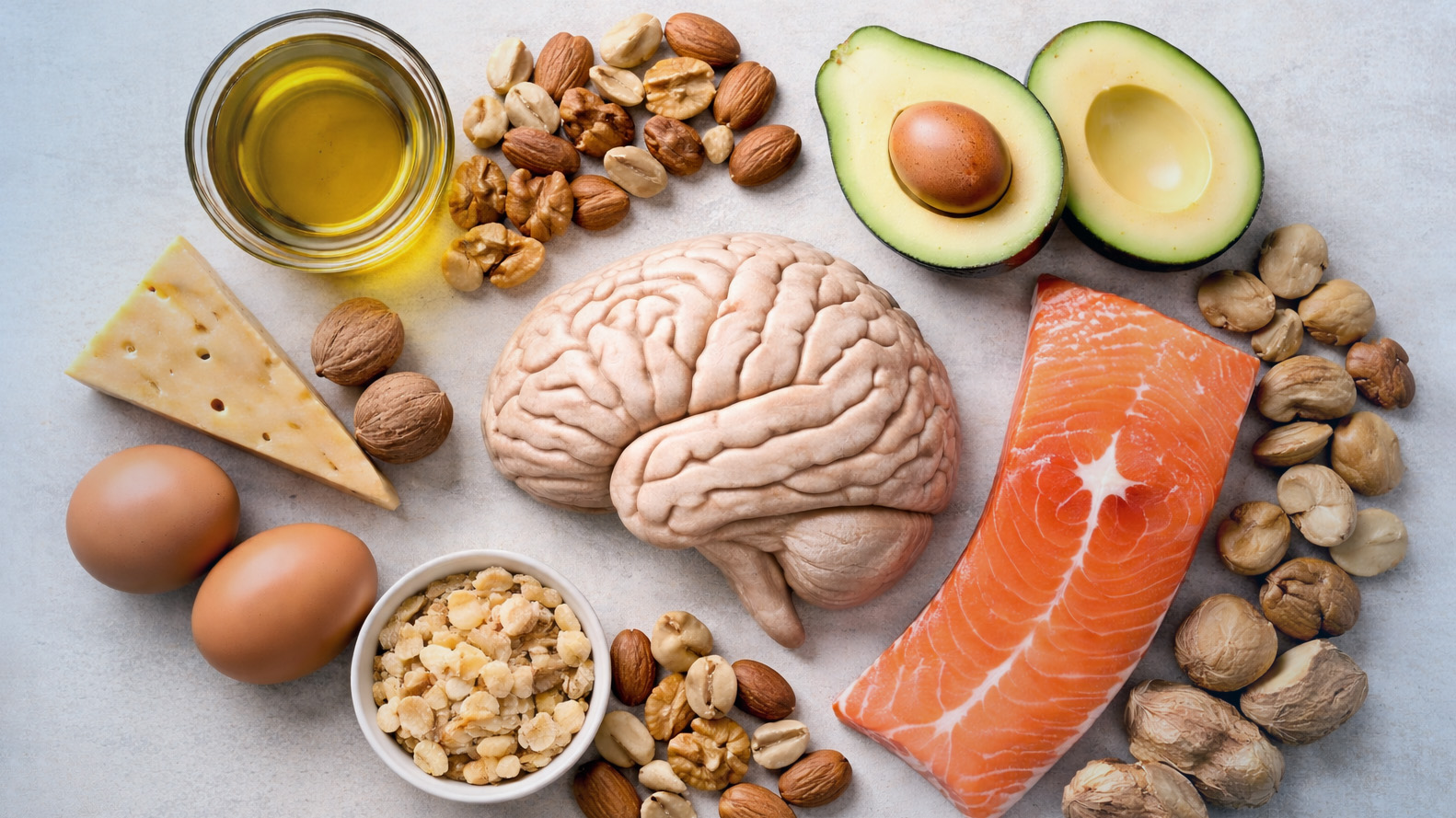
A recently published study in Neurology, titled High- and Low-fat Dairy Consumption and the Risk of Dementia, reached what the authors may have felt was a somewhat startling conclusion: high-fat dairy and cheese consumption appeared to reduce the risk of developing dementia, even that variant related to atherosclerotic cerebrovascular disease. (I suspect at the outset the researchers assumed they’d find the precisely opposite outcome.)
The research is a prospective epidemiological study (therefore weak evidence) from Sweden that identified and then intermittently followed a cohort of 27,670 people over the course of 25 years seeking to uncover a link between dairy intake and dementia risk, trying to elucidate the effect of what they felt was an easily modifiable risk factor. The primary endpoint was development of dementia of any sort, which befell 3,208 of the subjects, and then they further teased out a secondary cohort of those with a diagnosis of Alzheimer’s disease or atherosclerotic vascular-related dementia from the larger all-cause dementia group.
The dietary intake data was collected via 7-day diet diaries, food frequency questionnaires (both notoriously unreliable), and a single in-person dietary interview lasting about 45 minutes to an hour. One caveat here is that extrapolating these few data points to what the person consumed over 25 years can lead only to vague and speculative quantification of dairy intake at best. So, a bit of a grain of salt there.
The conventional wisdom in neurology is that a diet high in saturated fats is toxic to the brain because (so they say) it promotes insulin resistance, puts stress on the endoplasmic reticulum, and leads to neuronal mitochondrial dysfunction. And that a dysfunction in insulin signaling in the neurons impairs cognitive function. Ergo, put simplistically, a diet chronically high in animal fats leads to dementia. But does it?
Earlier studies had seemed to contradict this Swedish study’s beneficial conclusions, suggesting instead that eating a higher fat diet worsened the progression from mild cognitive impairment to outright dementia. The fly in the ointment, however, is that in most of this research the subjects studied were individuals already beset with systemic metabolic dysfunction (metabolic syndrome, insulin resistance, diabetes, obesity, etc.). But a body (or a brain) doesn’t get into that shape by eating saturated fat alone; it’s usually the typical Standard American Diet (SAD) containing saturated fat, to be sure, but also filled with sugar, refined flour, seed oils, and additives. And yet the researchers all seem to zero in on the saturated fat component and tag it as the proximate cause.
Like other organ systems, the brain can develop insulin resistance, and when it does, it can’t effectively use glucose for energy. The energy deficit impairs not only cognition but the other energy-requiring brain functions, such as removal of waste products and senescent brain cells. On a high-carb, sugar-filled, bad-fat-laden diet, if the brain can’t efficiently use glucose as its main fuel, it must turn elsewhere. Fatty acids and ketones are that elsewhere.
The truth is that the brain needs fat. In fact, it is mostly made of fat; after adipose tissue, it’s the fattiest organ in the body with about 60% of its dry weight made of lipids. Phospholipids, cholesterol, long-chain essential PUFA fatty acids, such as DHA (important for neuroplasticity and synaptic function) and arachidonic acid (critical for synaptic plasticity, especially in gray matter – i.e., the thinking brain), are rich particularly in the myelin layers that insulate the axons (the long extensions of the nerve cell body that carry signals away from the nerve center). Myelin is critical to facilitate efficient, smooth, static-free communication between the neuron and its neuron neighbors, muscles, and glands.
Cell membranes, especially neuronal cell membranes, require both a degree of stiffness for integrity and a degree of fluidity or flexibility to allow for movement of receptors and transfer proteins and the like. Saturated fats play a key structural role, especially in myelin, with palmitic acid being the most abundant one. It serves to anchor the phospholipids and sphingolipids (structural membrane lipids built on glycerol or sphingosine backbones that line up in bilayers to form the membranes of neurons, axons, dendrites, synapses, and organelles, such as mitochondria). The palmitic acid keeps the bilayers tightly packed to optimize the insulation capability required for rapid signal transmission across long distances. Remembering, of course, that the length of an axon could extend from the brain to the big toe.
It’s not accidental (though it may come as a surprise to some) that human breast milk is almost 50% saturated fat, which the infant’s brain needs in plenty to build the enormous numbers of new cells and connections and all the insulating myelin attendant to that during the first few years of life.
But as the need to feed the brain for proper growth and cognition doesn’t end with cessation of breastfeeding, neither should the intake of good quality fats, including saturated fats. This is but one of the reasons the new HHS directive to give growing children full fat milk and dairy is such a boon to their nutrition and health. What they don’t need is processed junk full of sugar, concentrated refined starches, seed oils, and additives.
And, if the suggestive data from the Swedish study is any indication, the need of the brain for quality fats (including saturated animal fats) doesn’t stop throughout life. Dietary fat (from natural whole food) will provide the building blocks to keep myelin sheaths in good repair, to build new mitochondrial and cell membranes and keep them fluid but with integrity, and the raw materials to make important signaling molecules. Good fat makes good brains, so it should come as no surprise that eating it would reduce the development of dementia as we age. This study is observational and thus can only suggest hypotheses and avenues for future investigation, but it’s intriguing. Those kinds of ‘further’ studies would be difficult (and expensive) to undertake, if they could reasonably be done at all.
The brain is not a low-fat organ, and it was never designed to be fed like one. From the first months of life, when myelin is being laid down at a furious pace, to the last decades, when its maintenance determines whether the mind stays sharp or fades, fat is not the enemy of the brain — it is its substrate. Demonizing dietary fat, particularly saturated fat from whole food sources, while the modern diet drowns the brain in sugar and industrial oils, has been one of the more consequential misdirections in nutritional science. The Swedish study is one small corrective signal in a long-overdue recalibration.

Physician, author, blogger, and lecturer on the art and science of low-carbohydrate nutrition, using food as a remedy for the diseases of modern civilization: obesity, diabetes, heart disease, and the myriad disorders of the insulin resistance/metabolic syndrome complex.

Support the Broken Science Initiative.
Subscribe today →
recent posts

How whole foods activate the body’s own GLP-1 system—without the drugs.

Journal Club: February, 2026

Understanding why high-intensity effort can send glucose higher before it comes back down.