




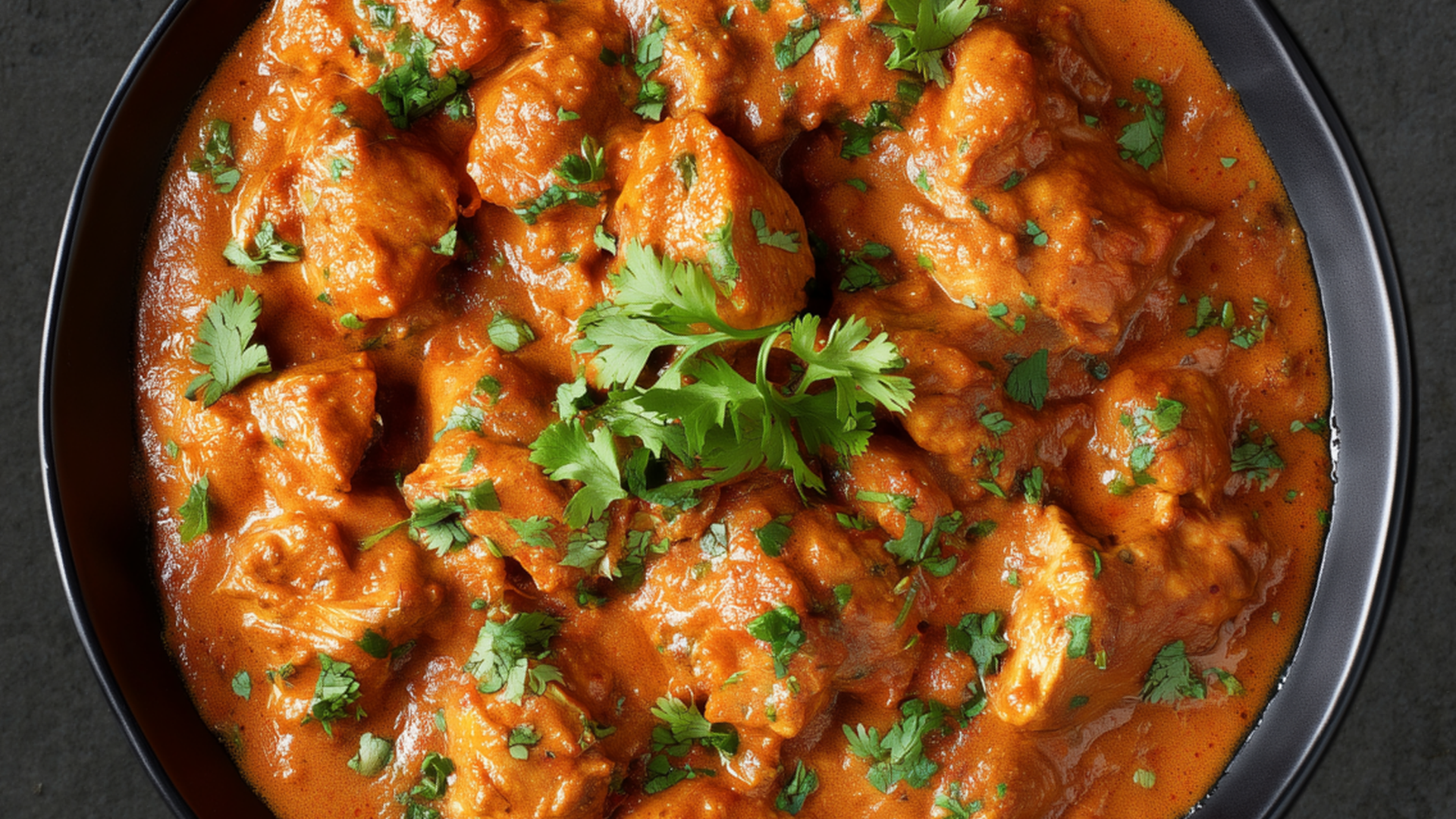
Indian Butter Chicken
Tender chicken simmered in a rich, creamy, and spiced tomato-butter sauce.
Ingredients
For the Chicken Marinade:
1 ½ lbs chicken thighs or breasts, cut into bite-sized pieces
½ cup full-fat Greek yogurt
1 Tbsp lemon juice
1 tsp ground cumin
1 tsp garam masala
1 tsp smoked paprika
½ tsp turmeric
½ tsp salt
For the Butter Sauce:
3 Tbsp butter or tallow
2 cloves garlic, minced
1 Tbsp grated fresh ginger
1 cup tomato puree (no added sugar)
1 tsp ground cumin
1 tsp garam masala
½ tsp chili powder (adjust for spice preference)
¾ cup heavy cream
Salt and black pepper, to taste
1 Tbsp chopped cilantro (for garnish)
Macronutrients
(per serving, serves 4)
Protein: 40g
Fat: 36g
Carbs: 7g
Preparation
In a bowl, combine chicken, yogurt, lemon juice, cumin, garam masala, paprika, turmeric, and salt. Mix well, cover, and marinate at least 30 minutes or up to overnight in the refrigerator.
Heat 2 Tbsp butter or tallow in a skillet over medium-high heat. Add the chicken and cook for 4–5 minutes until browned on all sides (it doesn’t need to be fully cooked yet). Remove and set aside.
In the same skillet, melt the remaining 1 Tbsp butter. Add garlic and ginger, cooking for 30 seconds until fragrant.
Stir in tomato puree, cumin, garam masala, chili powder, salt, and pepper. Simmer 3–4 minutes until slightly thickened.
Add the chicken back into the pan and pour in heavy cream. Stir to combine and simmer for 8–10 minutes, until the sauce is rich and the chicken is cooked through.
Taste and adjust seasoning with salt or spice as needed.
Garnish with chopped cilantro and serve hot — ideal with cauliflower rice or sautéed greens for a low-carb pairing.



MONDAY 260323