



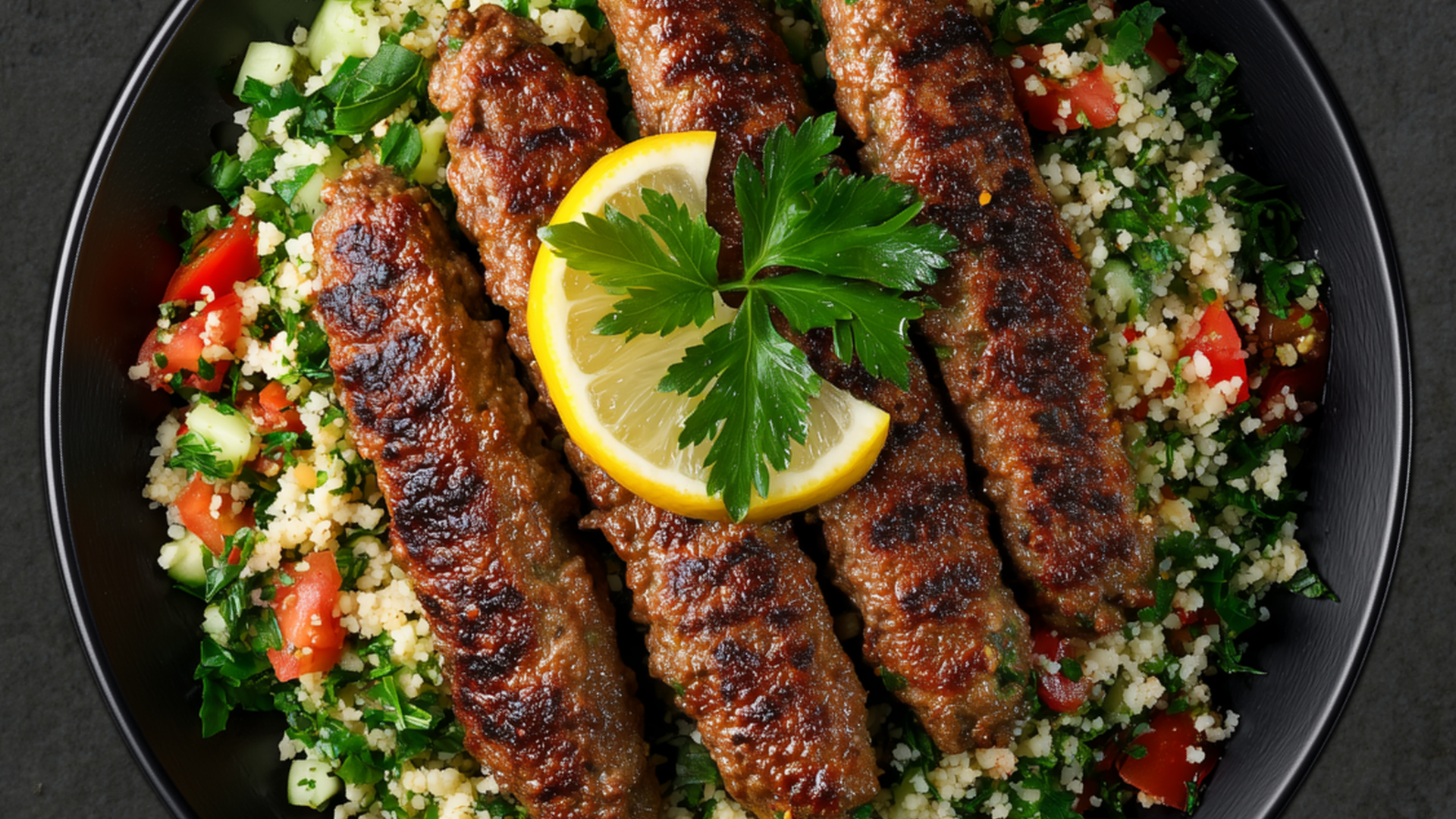
Ground Beef Kebabs with Cauliflower Tabbouleh
Spiced beef kebabs paired with a refreshing cauliflower-based tabbouleh for a Mediterranean favorite.
Ingredients
For the Kebabs:
1 lb ground beef (80–85% lean)
2 cloves garlic, minced
½ small onion, finely grated
1 tsp ground cumin
½ tsp ground coriander
½ tsp smoked paprika
¼ tsp cayenne pepper (optional)
1 tsp sea salt
½ tsp black pepper
1 Tbsp fresh parsley, finely chopped
1 Tbsp butter or tallow (for cooking)
For the Cauliflower Tabbouleh:
3 cups cauliflower florets (about ½ head), riced in a food processor
½ cup fresh parsley, finely chopped
¼ cup fresh mint, finely chopped
1 cucumber, diced
1 small tomato, diced (optional)
2 Tbsp fresh lemon juice
2 Tbsp extra virgin olive oil (for finishing only)
Salt and pepper, to taste
Optional Garnish:
Lemon wedges
Extra chopped herbs
Macronutrients
(per serving, serves 4)
Protein: 25g
Fat: 28g
Carbs: 6g
Preparation
In a large bowl, combine ground beef, garlic, onion, cumin, coriander, paprika, cayenne, salt, pepper, and parsley. Mix until evenly combined without overworking the meat.
Divide into 8 equal portions and shape each around a skewer into a long, oval kebab.
Heat butter or tallow in a skillet or grill pan over medium-high heat. Cook kebabs 3–4 minutes per side until browned and cooked through. Transfer to a plate and let rest.
For the tabbouleh, lightly steam or sauté the riced cauliflower for 2–3 minutes until just tender, then let cool.
In a bowl, combine cauliflower, parsley, mint, cucumber, and tomato (if using). Add lemon juice, olive oil, salt, and pepper, then toss well.
Serve kebabs over a bed of cauliflower tabbouleh with lemon wedges and a drizzle of olive oil.



1mile Echo Bike
10 DL(255lbs)