



The
Daily
Fix

260506

WEDNESDAY 260506
0 0 0

Rest

Beet, Squash & Chicken Bowl

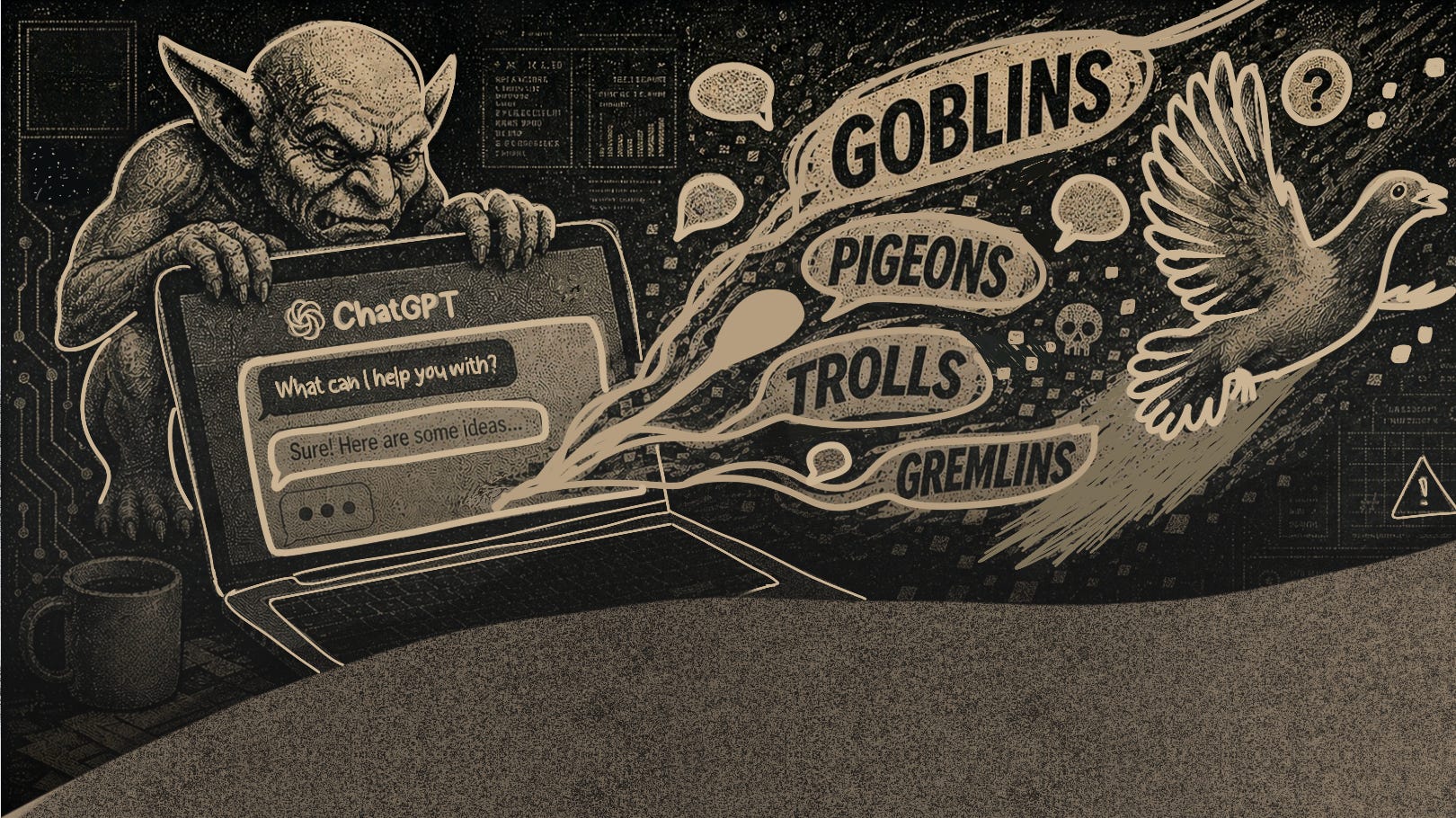
ChatGPT is Banned from Saying "Goblins"

Article Heading Photo
Photo of Beet, Squash & Chicken Bowl

Rest day

A warm, hearty bowl of roasted squash and beets, topped with balsamic-glazed chicken and crunchy pistachios, finished with a drizzle of olive oil.

The weird story of how OpenAI accidentally trained its chatbot to obsess over mythical creatures and what it teaches us about AI literacy

Tab Photo

The
Daily
Fix

Photo of Beet, Squash & Chicken Bowl Article Heading Photo

Enjoy the recovery time, or make-up anything you missed from last week.

Ingredients

6 oz boneless, skin-on chicken thighs
½ cup yellow squash, diced
½ cup red beets, peeled and cubed
1 Tbsp butter or tallow (for roasting)
1 Tbsp butter (for cooking chicken)
1 Tbsp balsamic vinegar
2 tsp Dijon mustard
1 garlic clove, minced
2 Tbsp shelled pistachios, chopped
Salt and pepper, to taste
1 tsp olive oil (for finishing)

Macronutrients
(makes 1 serving)

Protein: 40g
Fat: 40g
Carbs: 12g

Preparation

Preheat oven to 400°F (200°C). Toss diced squash and beets with 1 Tbsp melted butter or tallow, salt, and pepper. Roast on a sheet pan for 25–30 minutes, until tender and slightly caramelized.

Season chicken thighs with salt and pepper. Heat 1 Tbsp butter in a skillet over medium-high heat. Sear chicken thighs skin-side down for 4–5 minutes until golden, flip and cook another 3–4 minutes until cooked through. Remove and rest.

In the same skillet, lower heat and add balsamic vinegar, Dijon mustard, and minced garlic. Stir and simmer for 1–2 minutes until slightly thickened. Return chicken to the pan, coat with glaze, and turn off heat.

Divide roasted squash and beets into a bowl. Slice balsamic chicken and place on top. Sprinkle with chopped pistachios and finish with a drizzle of olive oil.

This article explains how a seemingly bizarre rule—telling ChatGPT not to mention goblins or similar creatures—actually reveals something important about how AI systems are trained. The behavior traces back to a “nerdy” chatbot personality introduced by OpenAI, where human reviewers consistently rewarded playful metaphors like “gremlins in the system.” Through reinforcement learning from human feedback (RLHF), the model learned that these references were desirable, causing them to appear far more often than intended. Over time, this small preference became exaggerated and embedded in later versions of the model.

Because retraining models is costly and complex, OpenAI addressed the issue by adding a rule in the system prompt rather than rebuilding the model from scratch. The article uses this example to highlight a broader point: AI systems don’t “understand” in the human sense—they learn patterns based on what is rewarded during training. Small, seemingly harmless signals can become amplified into widespread behaviors, a phenomenon known as the alignment gap. Part of AI literacy is understanding that responses are shaped by training data, feedback loops, and human biases—not necessarily objective truth.

Read More

COMMENTS

0 COMMENTS 0 COMMENTS 0 COMMENTS SHARE LOGIN PRINT
Log In to leave a comment - Log In?
Go to Top