




Eggplant & Pork Stir-Fry
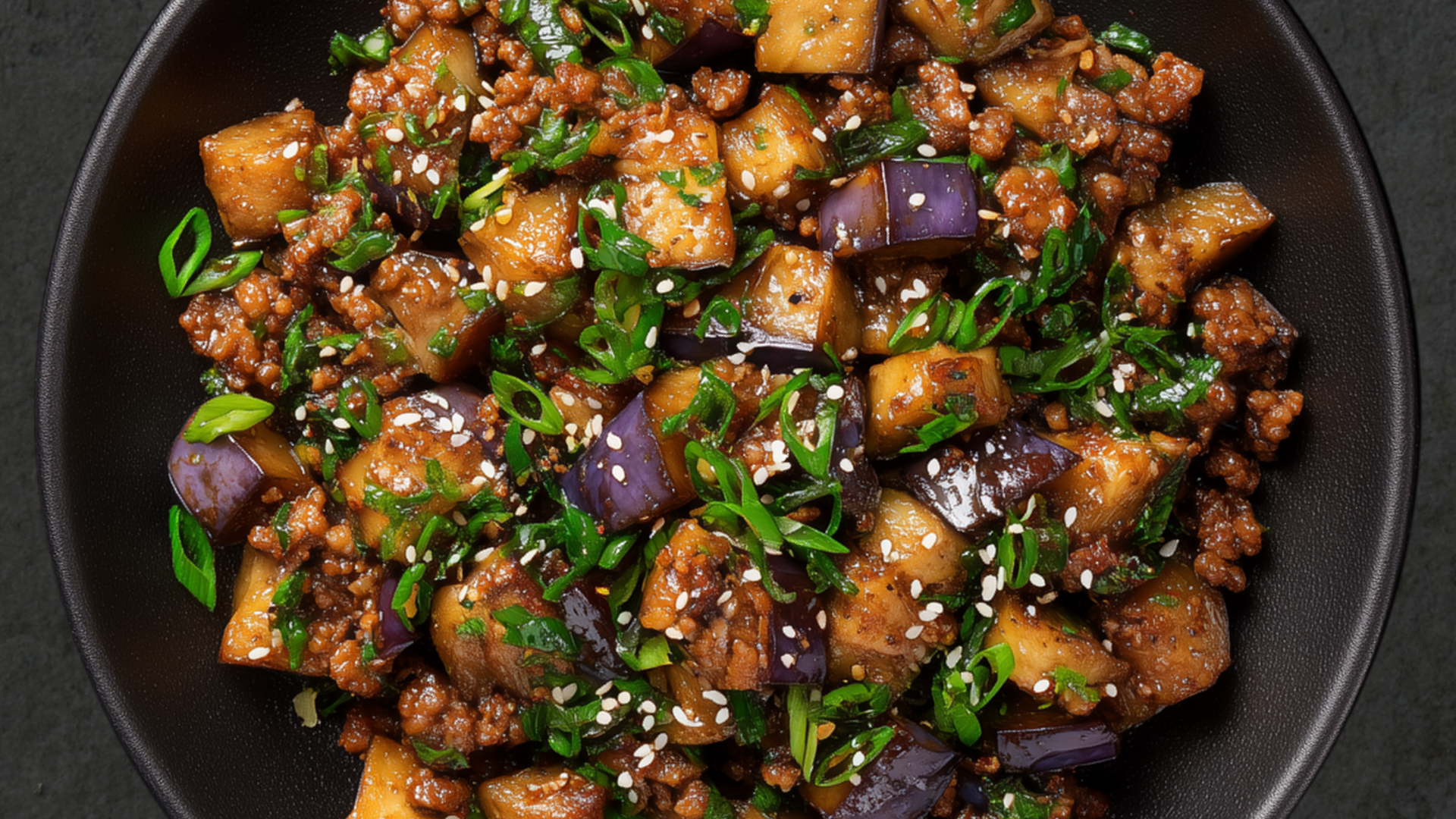
A rich and savory stir-fry featuring tender ground pork, silky eggplant, and aromatic ginger, all cooked in butter and finished with a drizzle of olive oil.
Ingredients
6 oz ground pork
1½ Tbsp butter or tallow (for cooking)
1 cup eggplant, diced into 1-inch cubes
1 clove garlic, minced
1 tsp fresh ginger, grated
1 tsp coconut aminos (optional, for added umami)
Salt and pepper, to taste
1 tsp olive oil (for finishing)
Optional garnish: chopped scallions or sesame seeds
Macronutrients
(makes 1 serving)
Protein: 40g
Fat: 45g
Carbs: 7g
Preparation
Lightly salt the diced eggplant and let sit for 10 minutes to draw out excess moisture. Pat dry with a paper towel.
In a large skillet, heat 1 Tbsp butter or tallow over medium heat. Add the eggplant and sauté for 6–8 minutes until softened and lightly browned. Remove from the pan and set aside.
Add the remaining ½ Tbsp butter or tallow to the skillet. Add ground pork and cook over medium-high heat for 4–5 minutes, breaking it up with a spatula until browned and cooked through.
Reduce heat to medium. Add garlic, ginger, and coconut aminos (if using) to the pork. Stir for 30 seconds. Return the eggplant to the pan and toss everything together for 1–2 more minutes. Adjust seasoning with salt and pepper.
Transfer to a bowl or plate. Drizzle with olive oil and garnish with scallions or sesame seeds, if desired. Serve hot.



2min HS Hold Running Clock
800m Run