




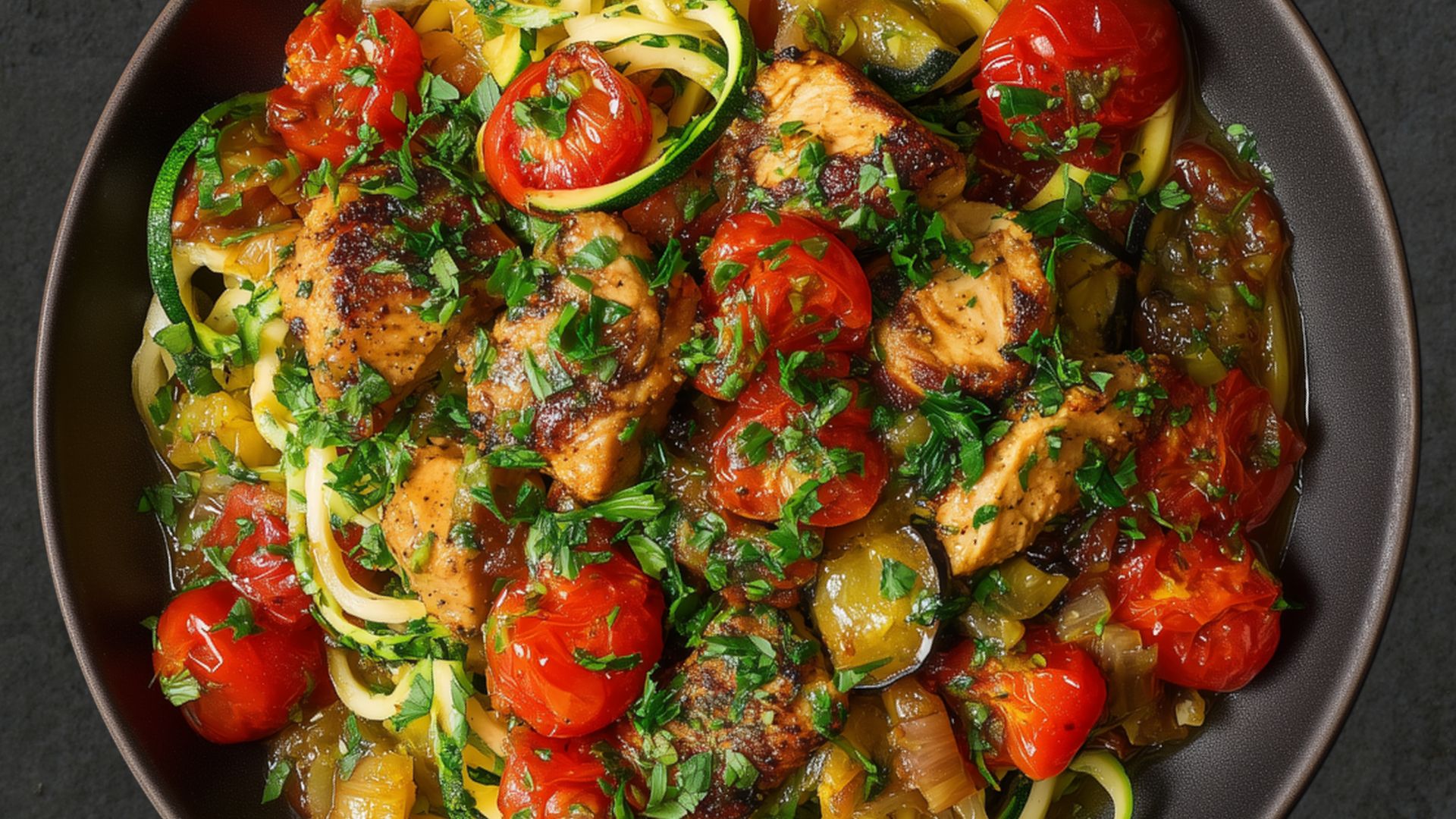
Mediterranean Chicken Zoodles
Chicken sautéed with eggplant, tomato, onion, and garlic, simmered into a rich, rustic skillet sauce and served over buttery zucchini noodles.
Ingredients
For the Chicken & Vegetable Skillet:
1.5 lbs boneless, skinless chicken thighs, cut into bite-sized pieces
1 small eggplant, diced (salted and drained*)
1 small yellow onion, thinly sliced
1 cup cherry tomatoes, halved (or ¾ cup canned crushed tomatoes, no sugar)
3 cloves garlic, minced
2 Tbsp butter (for cooking)
½ tsp dried oregano
½ tsp smoked paprika
Salt & pepper, to taste
Optional: 1–2 Tbsp chopped fresh basil or parsley
For the Zoodles:
2–3 medium zucchini, spiralized into noodles
1 Tbsp butter
Salt, to taste
Optional Finishing:
1 tsp olive oil (for finishing, off heat only)
Grated parmesan or feta cheese (optional)
Macronutrients
(per serving, makes 4)
Protein: 31g
Fat: 27g
Carbs: 7g
Preparation
Dice eggplant and sprinkle it with salt. Let sit in a colander for 15–20 minutes to draw out bitterness. Pat dry with paper towels.
Heat 1 Tbsp butter in a large skillet over medium-high heat. Season chicken with salt, pepper, oregano, and paprika. Sear chicken until browned and just cooked through, about 5–6 minutes. Remove and set aside
In the same pan, melt the remaining 1 Tbsp butter. Add onion and eggplant and cook for 6–8 minutes until softened and lightly browned. Add garlic and cook 1 minute. Stir in cherry tomatoes and cook 3–4 more minutes, until they begin to break down into a chunky sauce.
Return chicken to the skillet and stir everything together. Simmer on low for 5 minutes to let flavors meld. Taste and adjust seasoning. Stir in fresh herbs if using.
In a separate pan, melt butter over medium heat. Add zucchini noodles and sauté for 2–3 minutes until just tender. Season with salt.
Plate zoodles and top with the chicken-vegetable mixture. Drizzle with olive oil and top with cheese or more herbs if desired.



30#
Did 3 Turkish getups on last set