



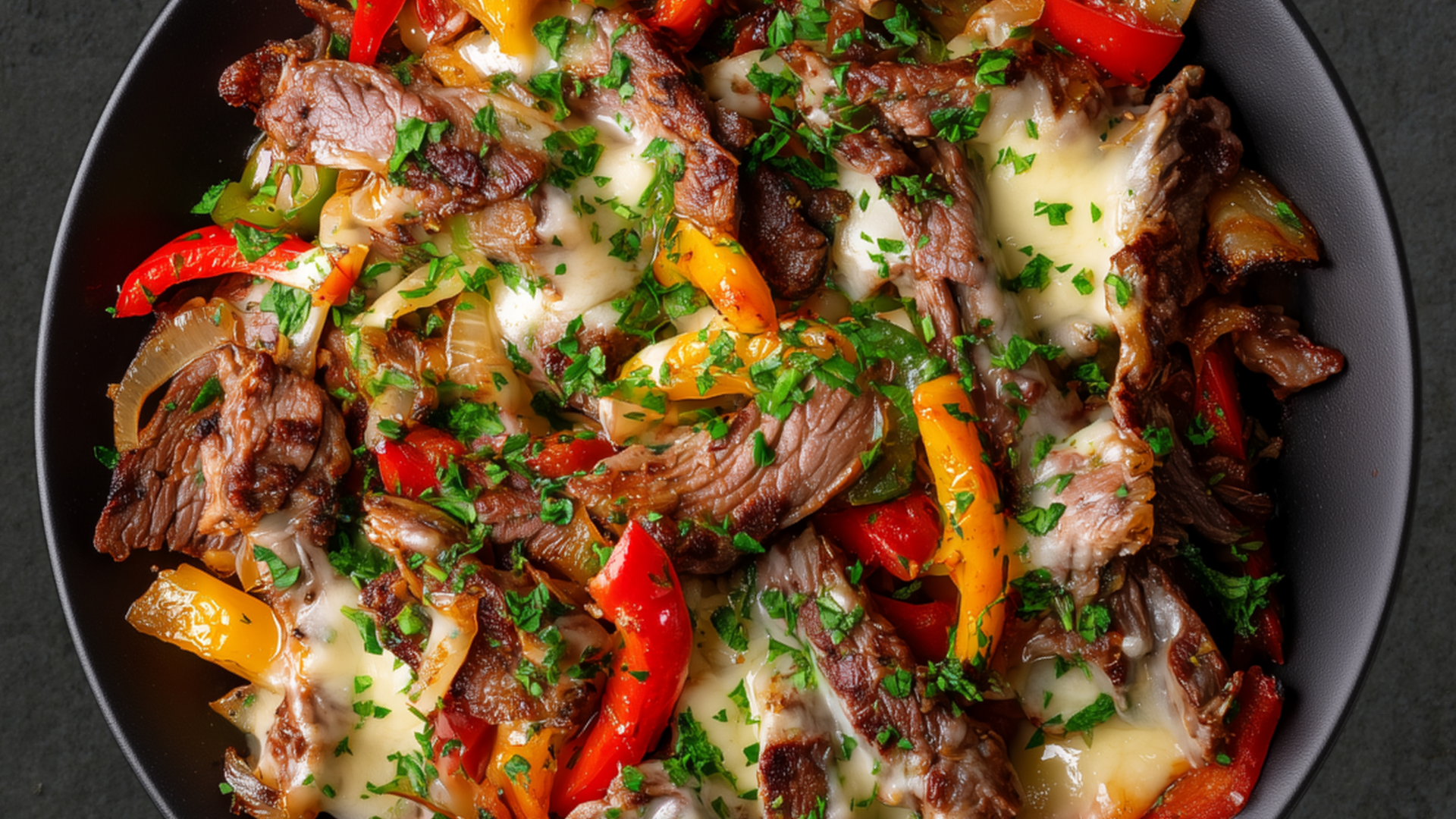
Philly Cheesesteak Skillet
Thinly sliced beef sautéed with onions and bell peppers in butter, smothered in melted provolone and served skillet-style.
Ingredients
1 lb ribeye or sirloin steak, very thinly sliced (freeze slightly for easier slicing)
2 Tbsp butter (for cooking)
½ large yellow onion, thinly sliced
½ green bell pepper, thinly sliced
½ red bell pepper, thinly sliced
2 cloves garlic, minced
1 tsp Worcestershire sauce (optional, check for sugar-free)
1 tsp paprika
Salt & black pepper, to taste
4 oz provolone cheese, sliced or shredded
Optional: 1 tsp olive oil (for finishing), chopped parsley for garnish
Macronutrients
(per serving, makes 2)
Protein: 48g
Fat: 45g
Carbs: 7g
Preparation
In a large skillet over medium heat, melt 1 Tbsp butter. Add sliced onion and peppers, season with salt and pepper, and sauté for 6–8 minutes until soft and slightly caramelized. Add garlic and cook for 1 minute more. Remove veggies and set aside.
Increase heat to medium-high. Add the remaining 1 Tbsp butter to the pan. Sear the thinly sliced steak in batches if necessary — cook for 1–2 minutes per side until just browned. Season with paprika, Worcestershire (if using), and salt and pepper.
Return sautéed veggies to the skillet with the beef. Toss everything together evenly. Spread into an even layer and top with provolone slices. Cover the skillet and reduce heat to low. Let sit for 2–3 minutes until the cheese is melted and bubbly.
Drizzle with a little olive oil off heat if desired. Garnish with parsley. Serve hot straight from the skillet, or spoon into lettuce wraps, over cauliflower mash, or into a low-carb bowl.



SUNDAY 260906