
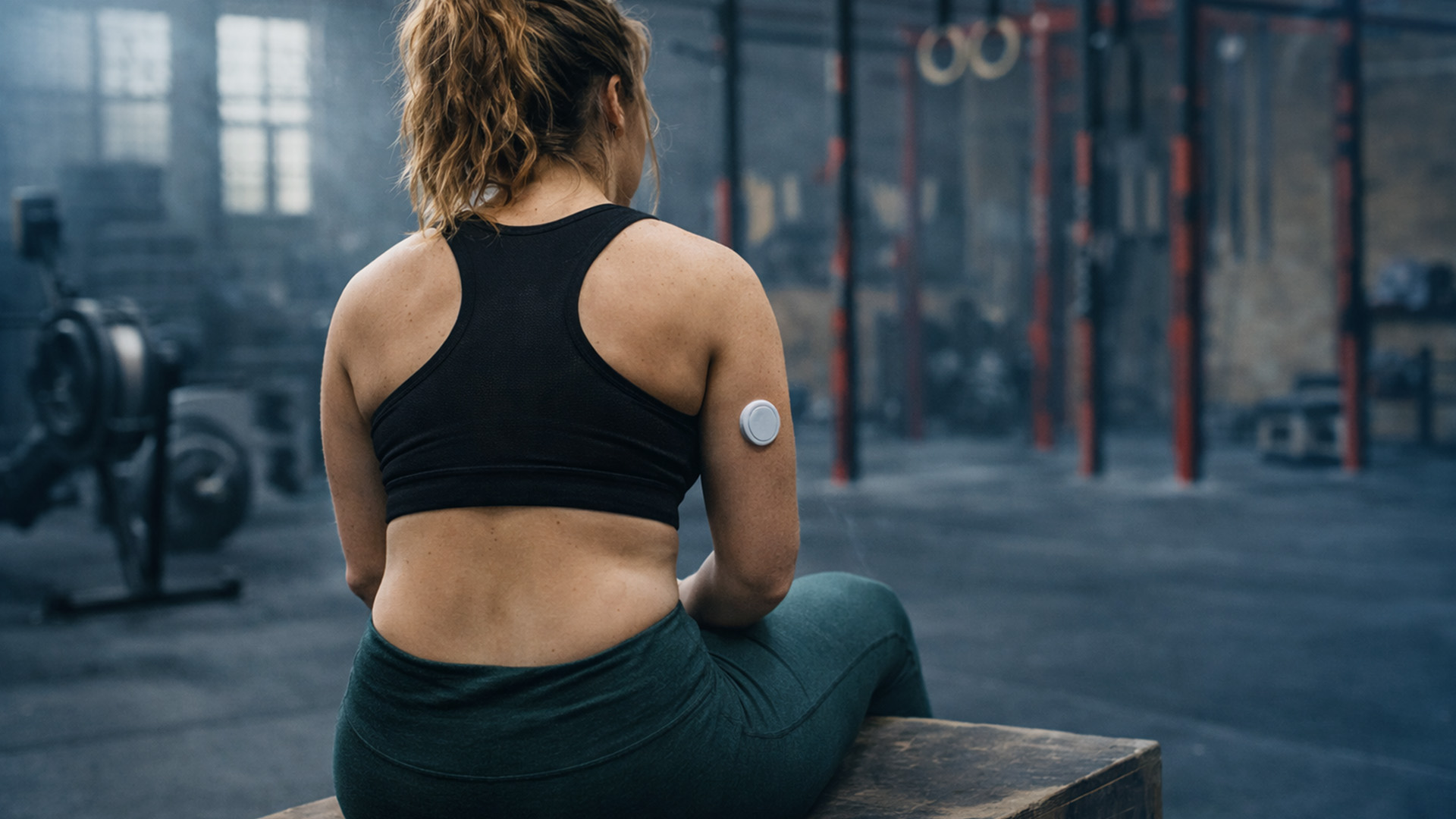
Physicians and nutritionists often advise patients (particularly those with diabetes or prediabetes) to engage in regular physical activity to lower blood glucose. And, for low-to-moderate effort, that is usually what happens. But anyone who has pushed through a hard interval session, a sprint workout, or a near-maximal effort on a rowing machine may have experienced the opposite effect and been surprised to watch their continuous glucose monitor (CGM) trend upward, sometimes sharply, during and even after the bout.
Just such a question came up in last month’s The Doctor Is In live Q&A session, so I thought it might be enlightening to explore the underlying physiology and the evidence for the most effective measures to counter it.
This phenomenon is not random, and it is not a sign that something has gone wrong. It is a normal, predictable consequence of well-understood, scientifically-documented physiology. And that means it can, to a meaningful degree, be anticipated and, if need be, managed.
Why does high-intensity exercise raise blood glucose?
The CliffsNotes version is that this phenomenon arises from a mismatch between how fast the liver puts glucose into the bloodstream and how fast the muscles can clear it, but let’s delve a little deeper to examine what is happening.
During exercise intensities above 80% of maximal oxygen consumption (VO₂max), the sympathetic nervous system begins to fire vigorously, flooding the blood with fight-or-flight hormones—the catecholamines epinephrine and norepinephrine—raising their levels to about 14 times, which strongly stimulates gluconeogenic (glucose-producing) pathways and leads to a 7- to 8-fold increase in blood glucose.
Epinephrine and norepinephrine work in concert with glucagon (insulin’s opposing hormone) almost immediately (and, over a longer period of time, with growth hormone and cortisol as well) to push blood glucose higher. At the same time, the catecholamine surge blunts the normal release of insulin from the pancreatic beta cells that a blood glucose rise would normally inspire.
In people without diabetes, this suppression of insulin is partial and temporary, and the beta cells will ultimately respond, releasing a bolus of insulin to bring the glucose back down. However, in those with Type 1 diabetes (T1D), where beta cell function is absent, there is simply no endogenous insulin available to counteract the surge of glucose, so that sugar spike can persist for hours, frustrating otherwise excellent glucose management.
The origin of all this extra glucose is the liver. Within the liver cells, the rise in catecholamines and glucagon quickly activates the enzyme systems that break down stored liver glycogen into free glucose and also inhibits glycogen synthesis (the glycogen-making pathways) to prevent glucose from being stored again.
At the same time, this surge of catecholamines and glucagon upregulates the gluconeogenic (glucose-producing) enzymes that turn lactate, certain amino acids, and glycerol into new glucose. The net effect is a dramatic increase in hepatic glucose output that sends blood sugar levels skyrocketing to 7- to 8-fold their normal resting state. The sugar spike occurs because while all this glucose is pouring out from the liver, glucose utilization in muscle increases by only about 4-fold even at exhaustion. So when blood glucose rises during and after intense exercise, it’s because production is outpacing clearance.
What the Muscles Can (and Cannot) Do
A hard-working, contracting muscle increases its own glucose uptake independent of insulin, through two non-insulin pathways, creating an enhanced skeletal muscle and whole-body insulin sensitivity that can persist for up to 24–48 hours after one intense exercise session. But during very high-intensity work, this contraction-stimulated uptake has an upper ceiling imposed by blood flow, glucose transporter density in the cellular membranes, and intracellular metabolic capacity. Though the system is working as it should, the sugar spike signals that the liver’s capacity to generate glucose is simply outrunning the muscle’s capacity to use it.
Users of CGMs—diabetic and non-diabetic alike—may notice a glucose peak ten minutes to a half hour post-workout, then a plateau lasting one to several hours, depending on circulating insulin levels. So the glucose elevation does not necessarily end when intense exercise stops, especially for those with insulin-dependent diabetes. In these individuals, glucose utilization is matched by continued production through most of the recovery period, resulting in sustained hyperglycemia, because, unlike people with functioning beta cells, the person with T1D cannot mount the rapid post-exercise insulin surge that is designed to normalize blood glucose. (They could, of course, add extra exogenous insulin to bring it down, but that, itself, can be fraught with insulin dose overshoot and the risk of subsequent hypoglycemia.)
Psychological stress and competitive environments add a further layer of complexity. The surge of fight-or-flight hormones that accompanies an especially hard training session or a high-stakes race or event amplifies catecholamine release and can produce an even larger and longer spike than an identical session performed in a relaxed setting.
But the transient spike need not be feared, even in diabetics (so long as it is not too high for too long). The bottom line is that acute high-intensity exercise (even if it briefly raises glucose) ultimately improves insulin sensitivity and glucose tolerance for a day or two or even three; it reduces overall glycemic variability and lowers average glucose (HgbA1c) over time.
Studies do not show adverse inflammatory or cardiovascular effects from these short‑lived, exercise‑induced peaks. On the contrary, high‑intensity exercise, even in T1D and T2D, is linked to improved glycemic profiles and cardiometabolic markers when programmed safely.
Why T1D Makes Management Much Harder
In a person without diabetes performing the same high-intensity bout, the spike is self-correcting: the pancreas senses rising glucose and secretes a brisk pulse of insulin, glucose disposal accelerates, and the sugar curve comes back down within 30–60 minutes. The post-exercise hyperinsulinemia is required for the metabolic clearance rate response and to return plasma glucose concentrations to pre-exercise levels.
However, different therapeutic strategies are required in those with diabetes, particularly insulin-dependent diabetes, when undertaking strenuous exercise, because of their inability to generate the normal, physiologic post-exercise insulin pulse.
In T1D, that self-correcting mechanism is absent. The only insulin available is whatever was injected or infused before or during the bout. If the amount of insulin-on-board is low—as it often is when someone has deliberately reduced their basal rate or pre-workout bolus to prevent hypoglycemia during the workout—the liver’s glucose output is virtually unopposed, and the spike is both higher and more prolonged.
This creates a genuine clinical dilemma: reduce insulin to prevent the hypoglycemia that is common during moderate aerobic exercise, and you risk a prolonged hyperglycemic overshoot after high-intensity work. Leave insulin at normal levels, and you court the dangers of glucose bottoming out during the session. There is no single universal solution, but several evidence-based strategies, used in combination, can substantially narrow the window.
One reasonable method is to adjust the amount of insulin (which should only be done in concert with and with the approval of that person’s diabetes management team) to prevent hypoglycemia with moderate work and to cover the post-workout spike following intense work.
But on a practical level, apart from tweaking the insulin delivery schedule pre- and post-workout, what can be done in the gym to help blunt the sugar spike?
Resistance Exercise
One of the most actionable and well-supported tools for managing post-HIIT hyperglycemia is something a gym is perfectly positioned to provide: resistance exercise.
Unlike sustained aerobic exercise, which characteristically lowers blood glucose and raises hypoglycemia risk, glucose levels tend to decline less during resistance exercise compared with during aerobic exercise, and resistance exercise may result in a decreased mean glucose and increased time in range during the 24 hours after exercising.
The mechanism is both mechanical and molecular. Heavy resistance work relies primarily on intramuscular glycogen rather than circulating blood glucose as its fuel source. The resulting metabolic state—glycogen-depleted muscle—creates a powerful and prolonged glucose sink that persists well after the session ends. The duration of increased insulin sensitivity following exercise may persist from 3 to 48 hours and is dependent on dietary status.
The most robust evidence for a single intervention for glycemic stability lies in combined-modality exercise sessions in T1D for prevention of hypoglycemia (low blood sugar) during training. In this case, performing resistance exercise for 45 minutes prior to 45 minutes of aerobic exercise attenuates the drop in blood glucose observed during continuous aerobic exercise in people with T1D.
On the other side of the spectrum, for someone whose primary problem is a post-HIIT spike rather than intra-session hypoglycemia, doing 10 to 20 minutes of compound resistance exercise (squats, deadlifts, rows) immediately after the high-intensity aerobic bout can exploit the depleted-glycogen window to accelerate glucose clearance, provided there is adequate circulating insulin to enable muscle uptake.
A note of caution on one popular recommendation as it relates to the diabetic athlete: a brief aerobic cooldown after resistance exercise. Although investigators recognized that the brief glucose-lowering effect of a cooldown can have some utility for hyperglycemia treatment, they concluded that by itself, it is ineffective at preventing hyperglycemia or blood glucose increases after fasted resistance exercise. A short cooldown can modestly help, but it is not a substitute for appropriate insulin management.
Because individual responses to exercise vary enormously in T1D—influenced by fitness level, insulin sensitivity, stress hormones, time of day, training status, recent carbohydrate intake, and many other factors—no single protocol fits everyone. But an understanding of the basic physiology involved can help a given individual (and the care and training team working with them) to devise a program better tailored to their specific exercise demands.

Physician, author, blogger, and lecturer on the art and science of low-carbohydrate nutrition, using food as a remedy for the diseases of modern civilization: obesity, diabetes, heart disease, and the myriad disorders of the insulin resistance/metabolic syndrome complex.

Support the Broken Science Initiative.
Subscribe today →
One Comment
recent posts
A new paper proposes a single ratio, read off a fingerprick, that tells you where your metabolism is headed. It started in a cancer clinic. Its authors think it belongs in every MetFix affiliate.

Mark Sisson separates longevity fads from the habits that consistently improve health and performance
Flawed scientific thinking lies at the heart of postmodern scientific, medical, and institutional failures



This has interested me since I wore my first CGM as a matter of curiosity in 2017. A young entrepreneur named Josh Clemente, who is now well-known as the founder of Levels, had this device on, and I wanted to learn what he was learning. I discovered that every time I completed an extremely high-intensity exercise, I would have a very narrow, peaked glucose response that was brief in duration. I began using this spike as a barometer for how much effort I had put forth. The taller and narrower the spike, the more satisfied I was with my level of intensity. One question that I did not have answered was how this might affect HgA1c and if it did, should it call into question the true meaning of HbA1c in a CrossFit athlete? HbA1c is a measure of average blood sugar over a period of 2-3 months. If you are completing a number of high-intensity workouts during that time, it stands to reason that the HbA1c will reflect that. Since none of the blood lab ranges used CrossFitters as their standard population, I am hesitant to accept some of the standard blood panel results that are out-of-range or in a CrossFitter. Our CrossFit training often produces physiological adaptations that will appear out-of-range on a standard panel, even though they may not only be expected, but desired.