
A healthy immune system is our bulwark against disease, and it may surprise you to know that roughly 70% of our immune system lives in our gut. So when a common food additive thins the protective mucus layer that lines it—for instance—that’s probably something worth paying attention to..
Most of us scan food labels for seed oils or added sugar, starch, or HFCS. But there’s a whole category of additives most people may never have thought twice about—emulsifiers—and the emerging science around them is, frankly, a little unsettling.
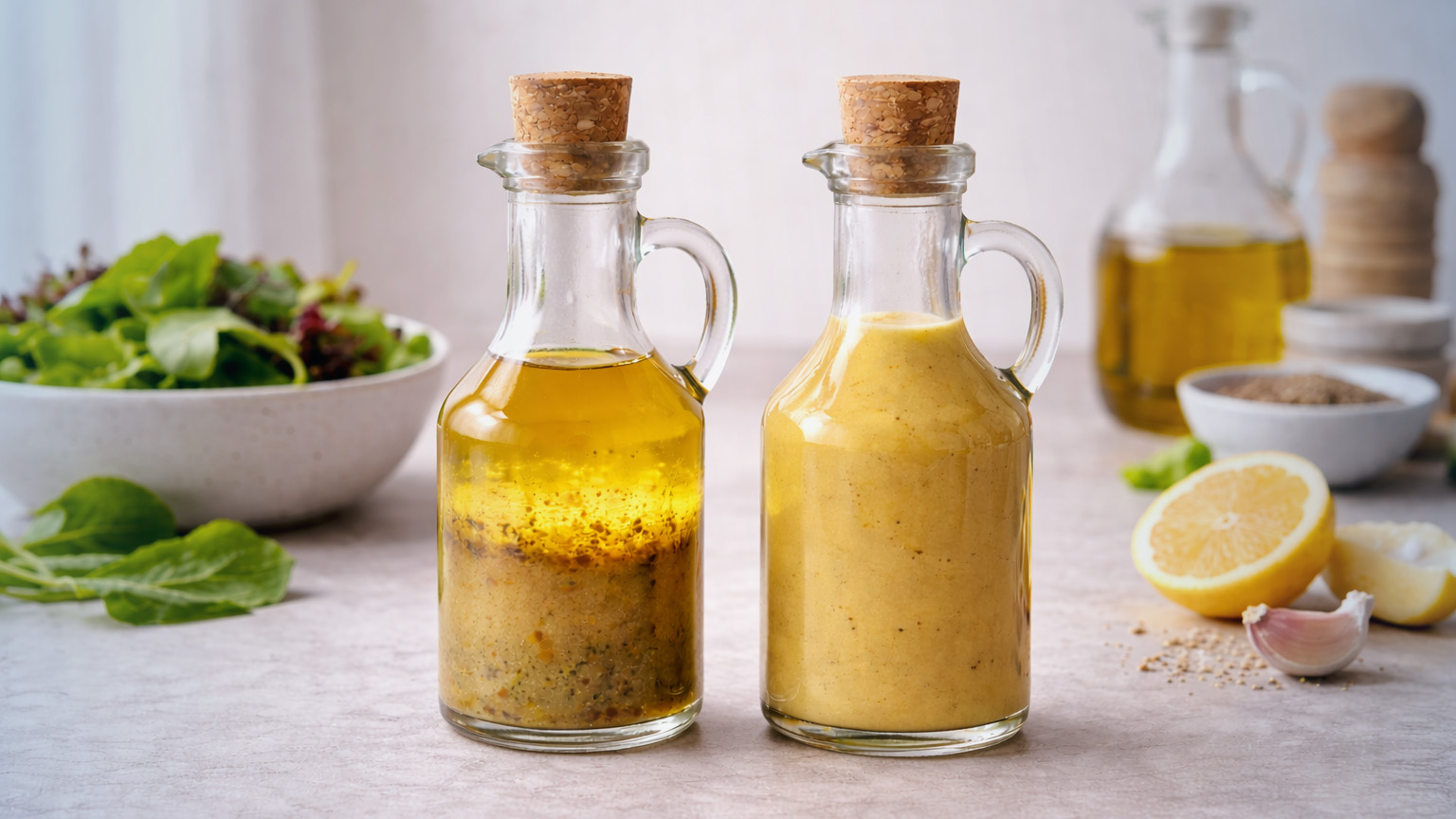
Emulsifiers are what make oil and water play nice. And as a consequence, they show up everywhere—in ice cream, margarine, chocolate, plant-based milks, salad dressings, bakery products, processed meats, and the vast universe of ready-to-eat packaged foods. Their job is textural; they create creaminess, prevent separation, extend shelf life, and generally make food feel and look better for longer. From a purely technological standpoint, they’re excellent at what they do. The question is what else are they doing? More specifically, what are they doing to your gut? And the unsettling answer may be that they’re emulsifying it, too.
What does the research show?
The most compelling evidence so far comes from animal studies, with human data only now starting to catch up. Two emulsifiers in particular—carboxymethylcellulose (CMC, sometimes listed on labels as E466) and polysorbate 80 (PS80, listed as E433)—have been studied extensively. In mouse models, chronic exposure to both compounds produces a recognizable and worrisome pattern: the inner mucus layer of the intestine thins out, bacteria migrate closer to the gut wall than they should, and the gut becomes more leaky, allowing inflammatory microbial products to slip between the (normally) tight junctions between gut lining cells and gain access to the bloodstream.
The downstream effects look a lot like metabolic syndrome – weight gain, increased body fat, insulin resistance, and low-grade systemic inflammation – even without the mice being overfed. The leading mechanistic hypothesis at present is that these emulsifiers also disrupt the gut microbiome, reducing beneficial bacteria that produce short-chain fatty acids (primarily butyrate, among others), which then drives the metabolic and inflammatory consequences.
But it isn’t just lab rats. In humans, a large French prospective cohort study called NutriNet-Santé has found associations between higher intakes of specific emulsifiers and increased risks of cardiovascular disease, coronary heart disease, and stroke, and possibly obesity. The purported culprits in those analyses include CMC (E466), certain fatty acid esters (E472b and E472c), and some phosphate-based additives often found alongside emulsifiers in processed foods. To be clear, these are observational findings—they can’t prove causation—but they’re consistent with the proposed mechanistic story, which makes them harder to dismiss. And these preliminary findings will (hopefully) spur more robust and rigorous clinical research to validate (or negate) the hypothesis.
What about natural emulsifiers?
This is where things get more reassuring. Not all emulsifiers are created equal, and the naturally-derived ones—particularly lecithins—appear to be a genuinely different story.
The two most common ones, soy lecithin and sunflower lecithin, are phospholipid complexes derived from their respective plant sources. Sunflower lecithin is increasingly favored as a soy-free, non-GMO alternative, but both are widely used in chocolate, baked goods, protein powders, and other health supplements. Unlike their synthetic counterparts, lecithins have a much longer history of human consumption; we eat phospholipids naturally in eggs, soybeans, and other whole foods, and they don’t appear to carry the same gut-disrupting profile.
Regulatory bodies like EFSA (the European Food Safety Authority, which has traditionally been far less yielding to technology’s wish list than their US counterparts, though that looks like it may be changing for the better) have evaluated them repeatedly and found no meaningful safety concerns to date. There’s even some evidence that certain phospholipid fractions in lecithin may support cell membrane integrity, the opposite of what CMC and PS80 appear to do at the gut wall.
The main caveat with soy lecithin is for people with severe soy allergies, though the refining process apparently removes most soy protein, and reactions are uncommon. Sunflower lecithin sidesteps even that concern. If you’re going to eat something with an emulsifier in it, one containing sunflower lecithin rather than a synthetic surfactant is the better bet.
A rough hierarchy of how concerning these emulsifiers might be vis-à-vis health detriment would flow from carboxymethlycellullose, polysorbate 80, and fatty acid esters on the most worrisome end to the other cellulose derivatives in the middle and the sucrose esters and lecithins at the end of least (though perhaps not zero) concern.
It’s worth saying that these are population-level signals and mechanistic inferences, not a verdict. The science is still developing, individual responses vary, and a single scoop of ice cream containing an emulsifier isn’t going to restructure your microbiome. (And if ice cream is your go-to treat, you could always find a brand without them or make your own.) Remember the maxim of Paracelsus: the dose makes the poison. Dose, frequency, and the overall quality of your underlying daily diet all matter enormously.
This intriguing but preliminary information, while gaining strength, is not an SOS to read every label in a blind panic or a sign that you should foreswear consumption of all packaged food (although there’s certainly a case to be made for making a vigorous stab at the latter.) We’re strong advocates for trying to eat what we like to refer to as food with NBS (No Bad Sh*t). And that certainly includes products filled with artificial flavors, dyes, gums, nutrient enrichment, and perhaps most of all synthetic emulsifiers. Consider it more of a nudge to think more critically and closely about what’s in what you’re eating, and what that might mean for your overall health.
Here’s what that nudge might look like practically as it pertains to emulsifiers:
- If you do buy packaged foods, scan the label for CMC/E466 and PS80/E433 specifically—these have the strongest health-detriment evidence against them
- Prefer products with lecithin (E322) over synthetic emulsifiers when there’s a choice
- If you have specific gut issues, such as IBD, IBS, or persistent GI dysregulation, bloating, and discomfort, a trial of reducing CMC and PS80 is a reasonable experiment with little downside.
- Cook more at home—perhaps the most important step of all—not because home cooking is virtuous, although it may be, but because it automatically removes this entire category of exposure. When you cook it yourself, you know what’s in it…and what’s not.
Don’t let emulsifier-hunting distract from the bigger picture of what builds the foundation of optimal health. A diet built around whole and minimally processed foods—that oft-cited magic formula of meat, poultry, fish, eggs, dairy, fresh green and leafy vegetables, low-sugar fruits, nuts, seeds, little starch and no sugar or seed oils—is almost certainly more protective than any single additive is harmful.
Emulsifiers are a perfect illustration of a recurring theme in nutrition science. Something can be technologically useful, extensively safety-tested, and still turn out to have biological effects that weren’t on anyone’s radar when it was first approved. The traditional toxicology that government regulators use to evaluate food additives wasn’t designed to detect subtle, chronic effects on the gut microbiome, for example. And often a single serving of commercially prepared food won’t exceed their tested ‘safe’ limits, but again, the dose makes the poison. Adding serving upon serving of this, that, and the other thing containing these ingredients can easily blow through that safe ceiling and may cause issues.
That doesn’t mean every emulsifier is dangerous; but it does mean we’re starting to ask sharper questions than we used to, and the answers we get are worth paying attention to.
The practical upshot on emulsifiers is straightforward—eliminate or minimize the synthetic ones, don’t stress too much about lecithin, and let the overall quality of your diet do the heavy lifting. The gut is remarkably resilient when you give it half a chance.

Physician, author, blogger, and lecturer on the art and science of low-carbohydrate nutrition, using food as a remedy for the diseases of modern civilization: obesity, diabetes, heart disease, and the myriad disorders of the insulin resistance/metabolic syndrome complex.

Support the Broken Science Initiative.
Subscribe today →
recent posts

Cancer as a metabolic disease—and the case against the somatic mutation theory

Metabolic health, medical education, and the case for bringing clinicians and coaches together

Metabolic therapies, mitochondrial dysfunction, and what’s holding back progress